

VoWiFi & VoLTE Deployment Company: Ensuring Flawless Voice Connectivity for Modern Networks
2026-05-19
Crystal-clear voice calls shouldn’t vanish the moment you step indoors. Yet, for many mobile users, dead zones remain a daily frustration. IPLOOK tackles this head-on by weaving VoLTE and VoWiFi into a single, flawless fabric of connectivity. No drop-offs, no compromise—just voice that follows you everywhere, riding on intelligent packet-switched networks. Here’s how their deployment strategy rewrites the rules of modern telephony.
The Core of Modern Voice: How We Deliver Seamless VoLTE
In the shift to all-IP networks, voice quality isn't just an afterthought—it’s the backbone of every call. Our approach to VoLTE strips away the complexity so users get exactly what they expect: instant connections, lifelike clarity, and the freedom to multitask without dropping a line. By building on native IMS architecture and optimizing every handoff scenario, we’ve turned what used to be a technical challenge into an invisible thread that holds conversations together, even as you move from one tower to the next.
What makes this feel so natural is a blend of precision engineering and relentless focus on the user’s rhythm. We prioritize voice packets with nano-second accuracy, eliminate jitter through adaptive buffering, and integrate ultra-wideband audio that captures the full tonal range of a human voice. The result? A conversation where laughter doesn’t clip, pauses feel unforced, and background noise fades without robotic artifacts—mirroring the warmth of an in-person chat.
Beyond the technical polish, we’ve made sure this works without asking anyone to fiddle with settings or toggle between calling apps. Our seamless VoLTE integrates directly into the dialer you already use, so placing a call over LTE feels no different—except the connection is faster to set up, and you can glance at a live map or stream a playlist without the audio cutting out. That’s the real core of modern voice: not just enabling high-def calls, but making them so reliable and straightforward that the technology becomes invisible.
Wi-Fi Calling Without Limits: Our VoWiFi Integration Approach
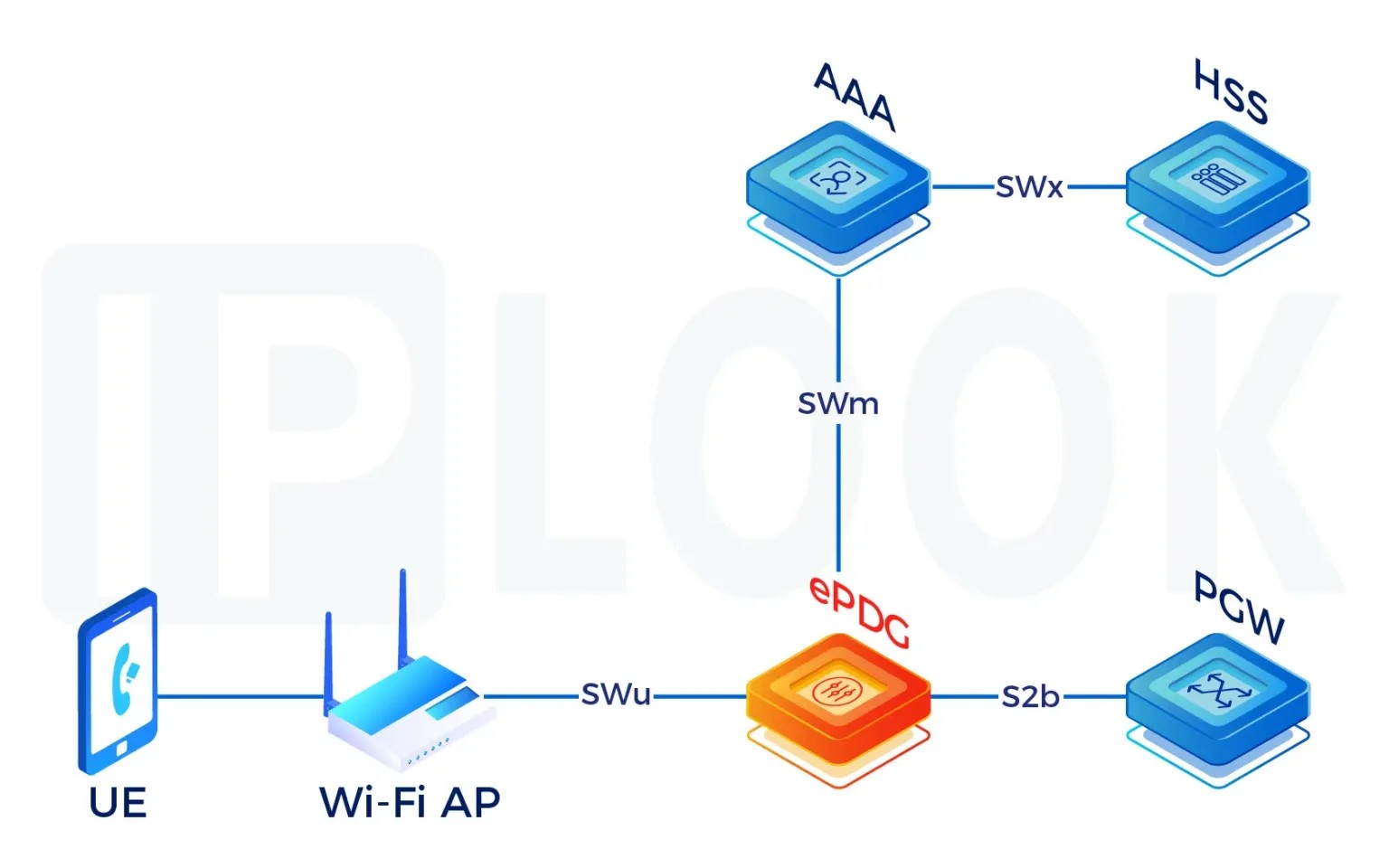
Wi-Fi calling has long promised seamless connectivity, but fragmented implementations often leave users frustrated with dropped calls and patchy coverage. Our VoWiFi integration approach tackles this head-on by knitting together carrier-grade voice services with any accessible Wi-Fi network—whether it’s a home router, a public hotspot, or an enterprise access point. No more staring at a “No Service” indicator when cellular signals fade; the transition to Wi-Fi is instantaneous and invisible to the caller.
Behind the scenes, we’ve engineered a unified core that treats Wi-Fi as a first-class citizen, not just a fallback. By deeply integrating IMS with network selection logic, the service maintains session continuity even when you walk between cellular and Wi-Fi zones mid-call. Advanced QoS monitoring dynamically adapts to varying network conditions, eliminating the jitter and latency that plague typical VoIP apps—calls stay clear and stable without any manual fiddling.
The real breakthrough is in the user experience: you simply place a call and it works, regardless of where you are. Forget about toggling settings, juggling apps, or worrying about whether your Wi-Fi is “compatible.” Our integration ensures every conversation feels native, preserving HD voice quality and essential features like emergency calling and SMS over Wi-Fi. It’s voice connectivity without boundaries, designed for the way people actually move through the world.
Behind the Scenes: The Architecture That Keeps Calls Flawless
When you pick up the phone and dial, there's an intricate dance happening behind the curtain that ensures your voice arrives crisp and uninterrupted. It begins with a globally distributed network of media servers designed to pick the shortest path for your audio packets. Instead of relying on a single central hub that could choke under pressure, the system dynamically routes calls through multiple points of presence, adapting in real time to congestion or outages. This isn't just about low latency — it's about building a self-healing mesh where if one node stumbles, another picks up the conversation mid-syllable without you ever noticing.
Under the skin, call quality is guarded by a continuous feedback loop between endpoints and the core. Every fraction of a second, algorithms analyze jitter, packet loss, and delay, then adjust encoding rates and buffer sizes on the fly. Silent moments are filled with comfort noise that perfectly matches the background, so you never feel like the line has dropped. Meanwhile, redundant paths for signaling and media mean that even during a cable cut or a server meltdown, the setup and tear-down of each call happens without a hitch — sessions are seamlessly transferred to alternate gear with zero downtime.
What really ties it all together is an orchestration layer that treats every call as a stateful, prioritized flow. It's not just about brute force failover; the system learns the rhythm of your conversations and proactively reserves capacity along likely failure patterns. If a data center goes dark, calls are rerouted in milliseconds, often before the SIP timers would even trigger a re‑invite. This blend of predictive routing, real-time analytics, and hardware‑level redundancy is what makes a three‑way conference or a critical customer call feel utterly ordinary — even though beneath the surface, there's a storm of technology constantly working to keep it flawless.
From Legacy to Next-Gen: Smooth Migration Strategies That Work
Transitioning from legacy systems to modern architectures is rarely a simple lift-and-shift operation. It demands a phased approach that balances risk with innovation. Start by mapping dependencies and data flows you might not even realize exist—those undocumented integrations that have quietly powered critical functions for years. A smart first move is to isolate components that can be modernized independently, creating small wins that build momentum and team confidence without disrupting the entire ecosystem.
Parallel running is often the unsung hero of these transitions. Instead of a high-stakes cutover, let the old and new systems coexist for a defined period. This lets you compare outputs, catch edge cases, and give users time to adapt gradually. You’d be surprised how many migration headaches dissolve when you treat it less like a technical swap and more like an organizational change—complete with training, feedback loops, and room to fine-tune based on real-world use.
Finally, resist the temptation to replicate legacy logic line for line. Take the opportunity to rethink workflows, shedding processes that no longer serve a purpose. Often, the real value isn’t just in newer technology but in the chance to clean house. Documenting every step—both what’s been migrated and what’s been retired—ensures that when you finally decommission the old stack, there are no lingering surprises waiting in the shadows.
Why Our Quality of Service Stands Out in Congested Networks
Network congestion often turns a fast connection into a frustrating crawl, but our approach keeps data flowing smoothly even when traffic peaks. We prioritize critical traffic in real time, using adaptive algorithms that adjust on the fly to shifting loads. Instead of just adding bandwidth, we intelligently shape and schedule packets so that voice calls stay clear, video streams don’t buffer, and transactions complete without delay. This isn’t about brute force—it’s about working smarter within the constraints of a crowded network to deliver consistent, reliable performance.
What truly sets us apart is how we handle the unpredictable nature of congestion. Many solutions react only after a bottleneck appears, but our system anticipates choke points by analyzing traffic patterns continuously. It dynamically reroutes flows across less congested paths and compresses non-essential data when necessary, all without manual intervention. This proactive stance minimizes jitter and packet loss, ensuring that even during the busiest hours, your applications feel responsive. It’s a seamless experience that end-users rarely notice, because problems are solved before they cause disruption.
Of course, technology alone isn’t enough—we also monitor and fine-tune performance around the clock. Our team combines automated oversight with human expertise, spotting emerging issues and adjusting policies to keep quality high. By feeding real-world congestion data back into our models, we continuously improve how traffic is managed. The result is a resilient network that adapts not just to today’s demands, but to tomorrow’s unknowns, making your service feel dedicated even on a shared, crowded medium.
Real-World Deployments: Lessons From Complex Environments
Deploying software in tightly controlled lab environments rarely prepares teams for the chaos of real-world production systems. One financial services company discovered this when a carefully architected Kubernetes cluster fell apart under peak load—not because the design was flawed, but because a third-party authentication service introduced latency spikes that cascaded through the system. The lesson wasn't just about testing with realistic traffic patterns, but about recognizing that dependencies you don't control will fail in ways you never imagined.
Observability turned out to be the unsung hero in many complex deployments. A healthcare provider struggled for months with intermittent data corruption until an engineer added structured logging to the message queue consumers. The logs revealed that a legacy on-premises system was occasionally sending malformed XML payloads during failover events—a detail that would have stayed hidden without the granular tracing that eventually became their standard. It hammered home the point that you can't fix what you can't see, and in distributed systems, seeing means instrumenting every layer, not just the happy path.
The most resilient teams learned to treat infrastructure as malleable, not monolithic. After a major cloud region outage, an e-commerce platform redesigned their deployment pipeline to treat DNS and traffic routing as first-class citizens. They baked region evacuation drills into their regular sprints, turning what was once a nightmare scenario into a mundane operational task. The experience taught them that complexity isn't an enemy—it's a constant that demands humility, continuous adaptation, and the willingness to throw away yesterday's best practices when the landscape shifts.
FAQ
We handle everything from initial network assessment and design to full-scale implementation and optimization. Our team ensures that voice calls over Wi-Fi and LTE are crystal clear and seamlessly integrated with existing infrastructure, so users experience no dropped calls or lag—regardless of where they are.
Unlike generic integrators, we bring deep, hands-on experience with multi-vendor environments and tricky indoor coverage scenarios. We don’t just flip switches; we fine-tune parameters, tweak handover thresholds, and stay on-site until every corner of a building delivers the quality that subscribers expect.
We combine advanced radio planning tools with real-world testing—think walk tests in basements, elevators, and crowded urban canyons. By modeling interference patterns and predicting device behavior ahead of time, we eliminate the typical trial-and-error that plagues most deployments.
Absolutely. VoLTE requires careful IMS core integration and QoS enforcement across busy mobile cells, while VoWiFi leans heavily on ePDG security and untrusted network handling. Our team keeps both streams distinct yet unified under a single service umbrella, preventing the fragmentation that often trips up less experienced firms.
We stay embedded with your operations team for as long as needed—monitoring KPIs, running periodic audits, and recalibrating when traffic patterns shift. It’s not a transactional handoff; we treat every deployment like a live network that deserves continuous attention.
Definitely. We’ve tailored packages specifically for regional carriers, focusing on core essentials without the bloat that drives up costs. By reusing existing assets and providing targeted training, we help them launch premium voice services without overstretching their budgets.
We’re already preparing clients for 5G Voice (VoNR) transitions and the growing role of AI in dynamic codec selection. The real shift, though, is toward treating voice as just one data stream among many—requiring smarter prioritization rather than legacy circuit-switched thinking.
Conclusion
At the heart of every modern voice network lies a seamless VoLTE foundation—one that transforms call clarity, setup times, and reliability into an experience so smooth it feels invisible. We build that foundation by deeply integrating IMS core principles with radio-aware optimization, ensuring every packet carrying a voice conversation is prioritized with surgical precision. Our engineers treat the network not as a static system but as a living ecosystem: we fine-tune QoS parameters in real congested environments, apply layered redundancy to eliminate single points of failure, and craft handover logic that keeps calls alive even when users move across cell boundaries or dive into Wi-Fi coverage. This is not about box-ticking feature compliance; it’s about understanding the subtle interplay between access types, device capabilities, and user expectations—then engineering a voice layer that never lets them down.
The real art, however, lies in bridging worlds. Migrating from circuit-switched legacy to all-IP doesn’t have to be a traumatic flip-of-a-switch moment; we design phased migration strategies that preserve existing investments while quietly introducing VoLTE and VoWiFi in tandem. Our Wi-Fi calling integration breaks the old boundaries between carrier networks and unmanaged airwaves, using intelligent access selection and seamless handover to make every coffee shop and basement corner a perfect extension of the mobile core. In complex deployments—from urban canyons to sprawling industrial campuses—we’ve learned that flawless voice isn’t about battling congestion with brute force, but about orchestrating resources so intelligently that your call carves its own priority lane through the noise. That’s why our deployments stand out: we treat every network as unique, every challenge as a design puzzle, and every call as a moment of truth that must connect without hesitation.
Contact Us
Contact Person: Shimmy
Email: [email protected]
Tel/WhatsApp: 85253392231
Website: https://www.iplook.com