

USB4 Cable OEM: Choosing the Right Partner for Reliable Production
2026-10-19
USB4 cables are the backbone of next-gen connectivity, promising blistering speeds and powerful power delivery—but only if every strand inside meets exacting standards. For OEMs, the difference between a flawless rollout and a costly recall often comes down to one decision: choosing a manufacturing partner who treats reliability as a non-negotiable. At EBCYX, we’ve seen too many projects stumble when suppliers cut corners on shielding, soldering, or certification. This guide cuts through the jargon to help you evaluate USB4 cable OEM partners with a critical eye—because your product’s reputation rides on every connector you ship.
What Separates a Cable OEM That Ships on Time From One That Doesn’t
On-time cable manufacturers don’t leave delivery dates to chance. They lock in raw copper and polymer supplies weeks before a production run, maintain a small buffer stock of common connectors, and run a daily line-level schedule that flags any workstation falling more than fifteen minutes behind. This kind of granular visibility gives them room to shift capacity or reroute a batch without turning a minor delay into a missed shipment.
The second difference shows up in how problems are handled. A reliable OEM catches a crimping defect during first-article inspection, not at final QC. They quarantine the affected reel, trace it back to the specific die or operator, and fix the root cause before the line keeps moving. The ones that slip dates typically discover the same issue after 10,000 feet are already on a truck, forcing a costly recall and a reschedule.
Finally, there’s the communication side. Teams that ship on time send a short weekly update with actual production photos, current yield numbers, and any shift in ETD—even when the news is uncomfortable. That beats a glossy PDF promise every time because it gives buyers enough lead time to adjust their own assembly plans instead of finding out about a delay from a freight forwarder.
USB4 Signal Integrity Is Where Cheap Partners Cut Corners
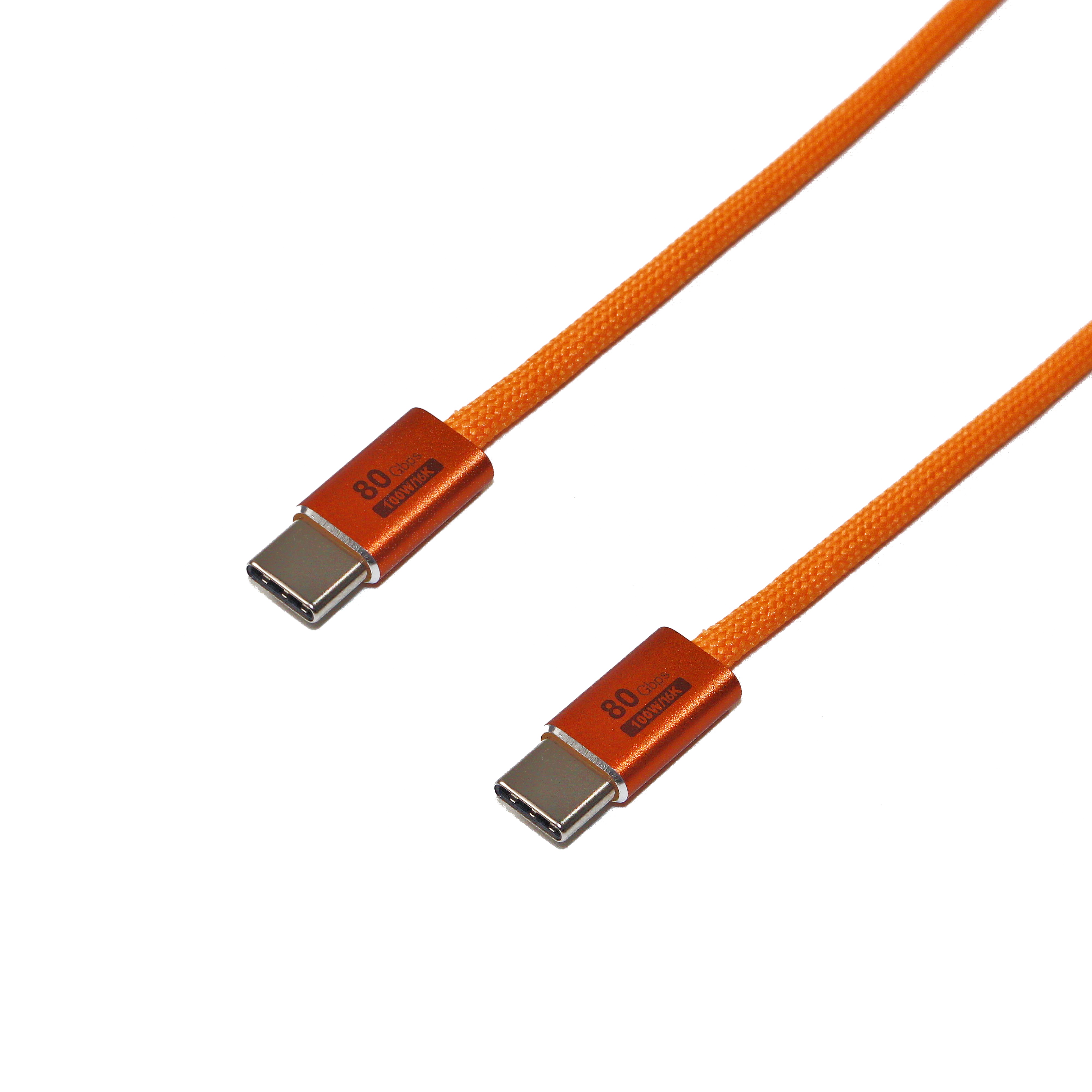
Signal integrity in USB4 isn't just a spec checkbox—it's the make-or-break factor that separates reliable high-speed data from flaky connections. When you push 40 Gbps over a cable, every millimeter of trace length, every solder joint, and every connector impedance mismatch starts to matter. Cheap manufacturing partners often treat these as minor details, swapping in lower-grade PCB materials or skipping the fine-tuning of via stubs. The result? A cable that passes a quick bench test but falls apart under real-world thermal cycling or when plugged into a slightly out-of-spec port. You won't see the problem on day one, but after a few months of daily use, random dropouts and re-enumeration errors become the norm.
The real cost shows up in eye diagrams and bit error rates. Proper USB4 signal integrity requires careful attention to insertion loss, return loss, and crosstalk across the entire link—from the host PHY to the connector and through the cable assembly. Budget suppliers often skip the expensive simulation and tuning steps, relying on generic layouts that work for USB 3.2 but fall short at USB4's tighter margins. They might use connectors with looser tolerances or thinner shielding, which introduces mode conversion and jitter. In short bursts, the link trains and runs, but sustained transfers—like moving large video files or driving a dock with multiple displays—trigger retraining loops and throughput collapse. That's not a rare edge case; it's the core use case for USB4.
If you're sourcing USB4 products, don't judge by the shiny aluminum housing or the braided cable jacket. Ask for TDR measurements, S-parameter plots, and compliance test reports from an independent lab. Look for evidence of per-lane tuning, not just a pass/fail on a single prototype. The difference between a partner who invests in signal integrity and one who doesn't is invisible on a spec sheet but obvious in the field: one keeps your devices connected at full speed for years, the other leaves you wondering why your external SSD sometimes crawls at USB 2.0 speeds. In USB4, cutting corners on signal integrity isn't saving money—it's shifting the cost to your customers.
Why Your OEM’s Test Data Should Make You Nervous
OEM test data often looks reassuring on paper, but the conditions behind those numbers rarely mirror the messy reality of your production line. Lab tests tend to run under ideal temperatures, clean power, and fresh components, which can mask how a part behaves after months of vibration, thermal cycling, or electrical noise. When a supplier hands you a perfect pass/fail sheet, it usually means the test was designed to confirm a specification, not to expose the edge cases that will eventually bite you in the field.
Another reason to pause is the selective nature of what gets shared. You might see a single average value or a best-case waveform, while the full distribution of results, the outliers, and the failed runs stay locked in the vendor’s internal reports. That missing context is exactly where early warning signs hide—a gradual drift in capacitance, a rising leakage current, or a weak solder joint that only fails under combined stress. Without access to raw data and test setup details, you’re trusting someone else’s summary instead of verifying the risk yourself.
The real danger is treating OEM test data as a guarantee rather than a starting point. Your application likely pushes components in ways the standard qualification never anticipated, from inrush currents to humidity swings to load dumps. If you aren’t nervous enough to run your own bench validation and review failure modes, you may discover the gap between the datasheet and reality only after units start coming back from customers.
The Component Sourcing Questions Most Brands Forget to Ask
Most brands focus on price and lead time when sourcing components, but they rarely dig into the long-term availability of a part. A connector that works perfectly today might be discontinued eighteen months from now, and that single oversight can force a costly redesign or trigger a panic buy at inflated rates. Asking suppliers about their end-of-life roadmap and alternate source options is not just prudent—it’s survival for any hardware product with a lifespan beyond a year.
Another blind spot is environmental tolerance. A capacitor rated for 85°C might seem fine on paper, but if your device sits in direct sunlight or near a heat source, that margin evaporates quickly. Brands often skip real-world thermal testing and then wonder why field returns spike in summer. A better question: “What happens to this component at 95°C, and how does its performance curve degrade under sustained load?” The answer rarely appears on a datasheet.
Supply chain transparency is also frequently overlooked. You might assume a third-party distributor carries authentic parts, but counterfeits are more sophisticated than ever. Instead of just asking for a certificate, request batch traceability and ask how the supplier vets their upstream channels. If they hesitate to share that information, that hesitation is itself an answer.
When a Factory’s Certifications Aren’t Enough
A factory can hang certificates on the wall for environmental compliance, fair labor, and quality management, yet still fall short when auditors leave. The real test unfolds in the daily rhythm of production—whether workers on the night shift bypass safety checks, whether suppliers quietly swap approved materials for cheaper alternatives, or whether waste streams find an unlicensed route off-site. Paper credentials capture a moment of alignment, not the drift that follows.
The gap between certification and practice often widens in the margins: subcontracting layers that hide underreported hours, machinery maintained only when inspectors are expected, or documentation written to satisfy a checklist rather than to reflect messy reality. Certifications can create a false sense of closure, convincing buyers that due diligence ended with the audit report. But without ongoing, unannounced observation and a culture that treats compliance as a baseline rather than a peak, the badge becomes a mask.
What matters more is how a factory behaves when no one is watching—the supervisor who halts a line for a loose guard without being asked, the procurement team that refuses a substandard lot despite delivery pressure, the maintenance log that records a near-miss instead of erasing it. Those signals rarely appear on a certificate, but they tell you whether the paper means anything at all.
Building a Production Line That Doesn’t Drift After the First Batch
Most lines start tight, but somewhere between the tenth cycle and the end of the week, small shifts creep in. A fixture loosens a fraction of a millimeter. An operator compensates for a noisy sensor by leaning on the same button twice. A new material lot behaves just differently enough that the old offsets no longer hold. These changes rarely announce themselves; they accumulate in the margins, until scrap rates climb or a customer flags a dimension that was never supposed to move.
The fix isn’t more inspection at the end. It’s building the line so that each station defines its own stable baseline and re-checks it without waiting for a batch report. Put the measurement where the variation starts, not where the part finishes. Use simple, physical references that operators can verify in seconds — a torque mark that doubles as a go/no-go, a clamp position that locks with an audible click, a vision template that recalibrates on a known master every morning. When the line trusts its own anchors, small drifts get caught as small adjustments instead of full shutdowns.
Equally important is what you record. Instead of logging every parameter into a database nobody reads, track the three or four that actually predict trouble — and make them visible on the line, not in a weekly report. A greaseboard with the last five measurements beats a dashboard that requires a login. When the person running the station can see the trend shifting in real time, they’ll correct it before it becomes a defect. That’s the difference between a line that holds its first-batch quality and one that slowly forgets how it was built.
FAQ
Look beyond brochures and ask for golden-sample test data that includes S-parameter measurements, eye diagrams, and compliance results from USB4 Gen 3 signaling. A capable partner will also show you the test fixtures and procedures they use on every production run, not just during development.
Request the USB-IF TID for the cable assembly, full bench characterization reports for insertion loss, return loss, and crosstalk, plus evidence of e-marker programming logs and interoperability results with Thunderbolt 3 hosts and docks.
Visit their lines or ask for a video walkthrough showing automated shield termination, controlled solder paste printing, and in-line electrical testing at multiple stations. After that, place a pilot order and compare its first-article reports against later production lots for statistical consistency.
The e-marker advertises cable speed and power limits to the host. If an OEM uses uncertified or poorly programmed e-markers, the cable may end up limited to USB 2.0 speeds or fail to negotiate 5A power delivery, even when the physical construction is good.
Pay attention to the coax shield termination, pair length matching, connector grounding, and strain relief design. An experienced OEM will use time-domain reflectometry to catch impedance discontinuities at the connector-to-cable transition before they cause bit errors at 40Gbps.
Ask how they handle high-frequency testing and whether the quote includes certified e-markers, USB-IF compliance, and full electrical validation. If the answer is vague or the price does not cover those costs, you are likely buying a cable that passes visual inspection but not actual USB4 signaling.
Many USB4 laptops and docks still need to interop with Thunderbolt 3 devices, so compatibility is critical. A trustworthy OEM will provide test logs from Intel-certified Thunderbolt 3 peripherals, not just USB4 reference boards, to show stable 40Gbps and DisplayPort tunneling.
They should keep e-marker firmware under version control, share failure analysis reports for returned units, give advance notice of component end-of-life, and support minor design changes such as new cable lengths or connector finishes without a full requalification cycle.
Conclusion
Finding a USB4 cable OEM that can actually deliver means looking past slick sales pitches and verifying how they manage the unglamorous parts of production. A partner worth trusting doesn't just promise on-time shipments; they have raw material buffers and realistic capacity planning so one delayed reel of copper doesn't idle your entire order. You also need to dig into their signal integrity process. USB4 runs at 40Gbps, so even minor impedance mismatches or poor shielding turn into returns and field failures. Cheap vendors skip the expensive network analyzers and hand you a sample that passes once but drifts in mass production. Ask for test data from every batch, not just a golden sample, and make sure that data covers eye diagrams, insertion loss, and crosstalk across the full frequency range.
Then look at how they source components. A surprising number of brands never ask whether the OEM buys connectors, PCBs, and wire from approved suppliers or from whoever quotes the lowest price that week. That lack of traceability is how you end up with a USB4 cable that only negotiates USB 3.2 speeds. Factory certifications like USB-IF compliance or ISO 9001 matter, but they don't automatically mean the line running your order is under control. You want evidence that they lock process parameters after the first production run and audit them regularly, because heat, tool wear, and operator changes can shift soldering and twisting quality without anyone noticing. Reliable production isn't a certificate on the wall. It's the boring discipline of measuring the same things every day and refusing to ship anything that falls outside the window you both agreed on.
Contact Us
Contact Person: David Yang
Email: [email protected]
Tel/WhatsApp: 8615814734054
Website: https://www.ebcyx.com/