

Ultrasonic Atomizing Nozzle Brands Worth Considering for Fine Mist and Coating Applications
2026-08-22
If you've spent any time tuning a coating or humidification process, you know the nozzle is rarely the first thing you suspect—but it's often the culprit when mist turns patchy or drift becomes a problem. That's why the brand behind your ultrasonic atomizing nozzle matters more than the spec sheet suggests. In this shortlist, we'll look at several names worth keeping on your radar, including Siansonic, a manufacturer gaining steady ground in fine mist and precision coating work.
What Makes an Ultrasonic Nozzle a Better Fit Than Air-Assisted Spraying
Air-assisted nozzles push fluid through a small orifice and blast it with compressed air to break the stream into droplets. That works fine for many thick coatings, but the moment you need a soft, controlled mist—especially on delicate or three-dimensional surfaces—the air stream works against you. It bounces off the target, kicks up overspray, and wastes material. An ultrasonic nozzle doesn't fight the liquid. It uses high-frequency vibration at the tip to form droplets that are remarkably uniform and exit at low velocity, so they settle onto the part instead of ricocheting off it.
The difference shows up most clearly in transfer efficiency and edge definition. Ultrasonic spray produces a narrow, focused pattern with very little bounce, which means you can coat tight recesses or small electronic components without masking off half the assembly. You also avoid the constant fiddling with air pressure, fluid pressure, and fan width that air-assisted setups demand. Once the ultrasonic nozzle is dialed in for a given fluid, it holds its droplet size and flow rate with almost no drift, even over long runs.
There's also the matter of what happens to the fluid itself. Compressed air can dry out solvent-based coatings, cool the surface unpredictably, or introduce moisture and oil from the air line. Ultrasonic atomization is a purely mechanical process—no added air, no shear forces tearing at polymers or suspended particles. That makes it a better fit for shear-sensitive materials like conductive inks, protein solutions, or nanoparticle suspensions, where preserving the integrity of the formulation matters as much as the coating quality.
Brands That Have Earned a Reputation in Precision Coating Work
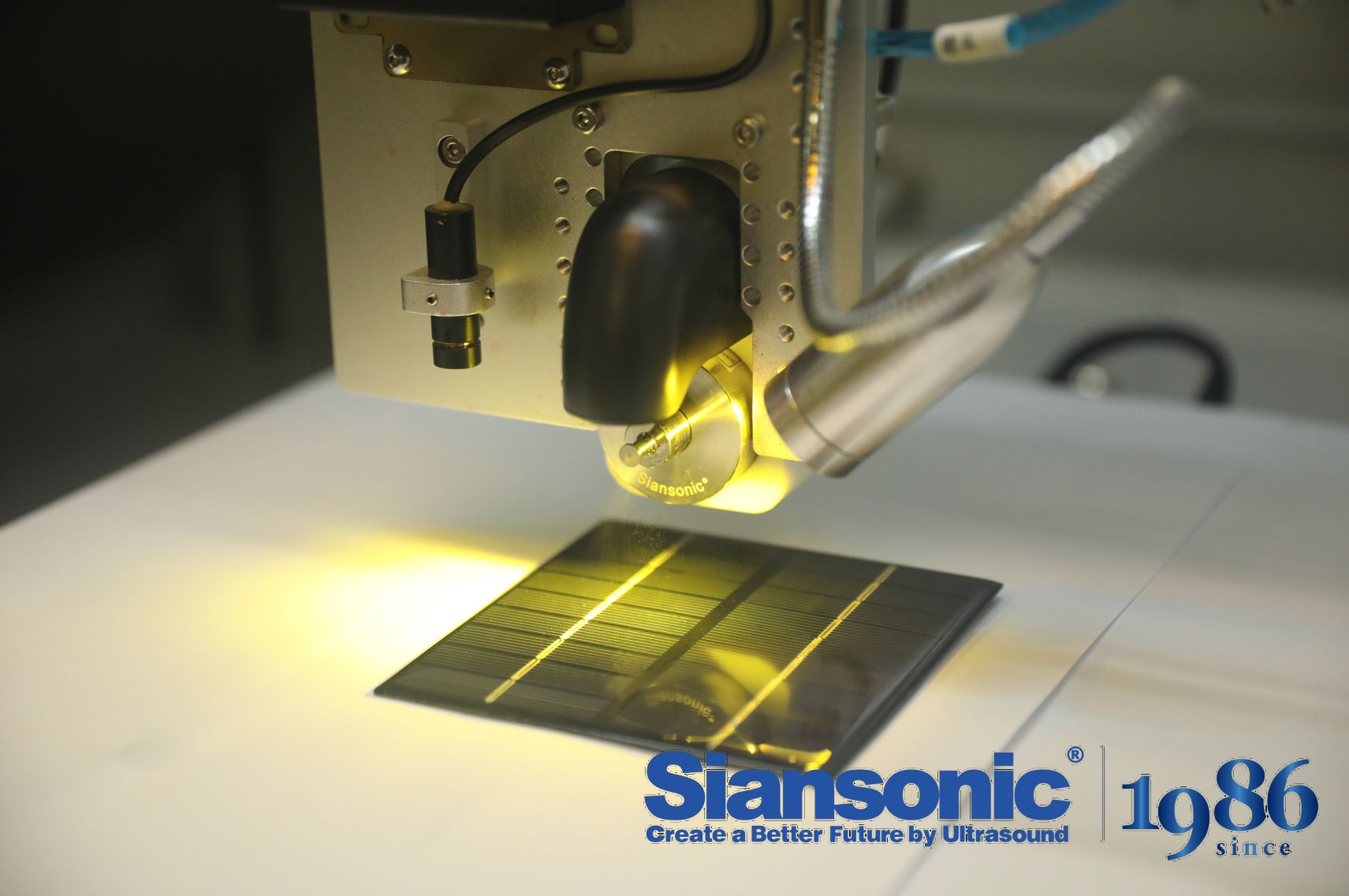
Precision coating isn't a skill you pick up overnight. The brands that truly stand out in this niche have spent years refining their processes, often starting with aerospace or medical components where a micron-level mistake can ruin an entire batch. They invest in cleanroom environments, automated spray systems, and rigorous inspection protocols that go far beyond what a general metal shop would consider acceptable.
What separates these companies is their willingness to share failure data. Instead of hiding rejected parts, they publish case studies showing how they solved adhesion problems on complex geometries or how they adjusted viscosity for a new polymer blend. This transparency builds trust faster than any marketing claim because it demonstrates an engineering mindset rather than a sales pitch.
You'll also notice that reputable precision coaters rarely chase high-volume commodity work. They intentionally limit their client list to projects where tolerances are tight and consequences of delamination are severe. This selectivity isn't arrogance—it's a quality control strategy that keeps their best technicians focused on challenging applications rather than burning out on repetitive low-margin jobs.
Handling Low Viscosity Fluids Without Overspray or Drift
Low viscosity fluids turn into a fine mist the moment they leave a conventional nozzle, and that mist drifts before it ever reaches the target. The first fix is to drop the fluid pressure rather than crank it up. With water-thin coatings, 10 to 20 psi at the tip often gives enough energy for a clean fan pattern without atomizing the fluid into airborne droplets. A narrow-angle flat fan tip or a low-pressure airless tip holds the droplets larger, so they fall onto the surface instead of floating away.
Switching to air-assisted airless or HVLP equipment helps even more when the job allows it. Air-assisted setups add a small amount of shaping air at the cap, which keeps the spray pattern tight and stable without creating the fine fog typical of full air atomization. HVLP guns work well for small areas because the lower air velocity reduces bounce-back and drift, though they require a slower hand speed to maintain an even wet film.
In open or drafty environments, a short fluid hose length and a whip-end check valve at the gun prevent pressure spikes that cause spitting and overspray. If drift remains a problem, a small amount of a compatible rheology modifier can increase viscosity just enough to keep the droplets cohesive, but only after checking the coating manufacturer's reformulation limits. Holding the gun perpendicular and moving at a constant 12 to 14 inches per second also reduces the chance of heavy edges that force extra passes and more overspray.
Where Nozzle Longevity and Tip Design Actually Matter
In high-volume dispensing lines, a worn nozzle doesn't fail abruptly—it drifts. The orifice edge rounds off, flow rate creeps up, and coating thickness maps start showing hot spots. Operators chase viscosity adjustments and pressure tweaks, never suspecting the real culprit is a six-micron erosion pattern on a part that costs less than a lunch. That's where longevity stops being a spec sheet bullet and becomes the difference between a stable shift and a slow-motion quality bleed.
Tip geometry is rarely about the obvious. A chamfered exit versus a sharp-edged bore changes how a droplet detaches, and in piezoelectric inkjet heads, that determines whether satellite droplets pepper the substrate or merge cleanly. When you're printing functional inks—conductive traces, bioassays—those satellites aren't cosmetic. They bridge circuit lines or contaminate reaction wells. Design choices made at the sub-millimeter scale ripple outward into yield numbers that no amount of post-process inspection can rescue.
In abrasive slurry spraying or blast nozzle applications, the pairing of tip material and internal contour decides whether you replace the nozzle every third shift or every third month. Tungsten carbide lasts longer but changes spray angle as it wears unevenly; ceramic resists erosion but fractures under thermal shock. The smart move isn't picking the hardest material—it's designing the tip so that wear stays symmetric and predictable, letting you schedule replacement before the pattern shifts. That kind of foresight only comes from treating the nozzle not as a consumable, but as a metering instrument.
Choosing Between Integrated Generators and Standalone Driver Units
The decision between an integrated generator and a standalone driver unit often hinges on how much flexibility you need in the long run. Integrated models pack the signal source and driver electronics into one compact chassis, which simplifies wiring and reduces the chance of mismatched impedance or grounding loops. They tend to work well in fixed installations where the load characteristics remain stable and the operator doesn't need to swap components frequently. However, if your project involves testing multiple transducer types or adjusting output stages on the fly, the extra bulk of an all-in-one unit can feel limiting.
Standalone driver units separate the waveform generation from the power amplification stage, giving you the freedom to mix and match based on voltage, current, or frequency requirements. This modular approach appeals to labs that already own signal generators or want to upgrade one section without replacing the entire chain. The trade-off is that you take on more responsibility for cable selection, termination, and potential interference between boxes. A poorly matched standalone pair can introduce noise or phase shifts that an integrated design would have already accounted for inside a single enclosure.
Cost and maintenance also pull in different directions. Integrated generators usually come with a single warranty and one service point, but a failure in the amplifier section may require shipping the whole unit back. Standalone drivers let you swap out a faulty module in minutes, assuming you keep spares or can borrow from another setup. For field work where ruggedness and quick setup matter, the integrated route often wins. For bench work demanding precise control and future reconfiguration, standalone units remain the more practical choice.
Real-World Coating Lines That Benefit Most from Ultrasonic Atomization
The coating lines that gain the most from ultrasonic atomization tend to be those where fluid cost, edge uniformity, and nozzle uptime outweigh raw deposition speed. A roll-to-roll line applying conductive inks to flexible sensors, for instance, can lose hours to clogged air-atomizing nozzles when the ink’s solvent flashes too early. Ultrasonic nozzles run without narrow air caps, so the liquid path stays open and the spray pattern remains stable across a full shift. Operators on those lines often see overspray drop by a third or more, which matters when the ink costs more per liter than the substrate it lands on.
Battery electrode and membrane coating lines are another clear fit, especially in pilot and mid-volume production. The low-velocity mist produced by ultrasonic tips lets a wet film settle gently onto fragile separators without blowing the coating sideways or creating pinholes at the edges. On lines that coat catalyst layers for fuel cells or thin electrolyte films, the ability to hold a consistent 50–100 micron wet film across a moving web directly reduces scrap in downstream drying. Because ultrasonic energy also keeps lightly agglomerated particles dispersed, these lines can run longer between cleaning cycles without sacrificing thickness uniformity.
Medical device and food packaging lines benefit when the coating is thin, functional, and difficult to rework. A catheter coating line applying a hydrophilic layer, or a food-grade release coating on baking paper, cannot tolerate pulsation from a piston pump or the wide droplet distribution of a hydraulic nozzle. Ultrasonic atomization gives a narrow droplet band and a soft plume that follows the contour of the part, so edges get the same film build as the center. For those lines, the payback is not always in line speed but in repeatability: fewer rejected lots, fewer touch-ups, and less time spent chasing viscosity changes from shear or solvent evaporation.
FAQ
Sono-Tek tends to lead in precision coating applications, especially for medical device and electronics work. Siansonic is a solid pick if you need reliable performance without the top-tier price tag. Sonaer has a strong reputation for custom nozzle setups and unusual flow rates. Hielscher pops up more in lab and pilot-scale work where flexibility matters.
Frequency stability is probably the biggest factor. A nozzle that drifts even a few hundred hertz will change droplet size and spray pattern. The transducer quality matters too, along with how well the liquid feed system handles low flow rates without pulsing. Cheap clones often fail on the driver electronics, not just the nozzle body.
If you need extremely tight droplet uniformity and have a budget for it, Sono-Tek is hard to beat. Siansonic gets you close in many general coating tasks, and the cost difference can be significant when you are outfitting multiple stations. Check whether the local distributor can provide replacement tips and driver boards quickly.
Most nozzles will handle both, but you need to confirm the wetted materials and seals are compatible with your solvent. Some solvent blends will swell standard O-rings or degrade the adhesive bonding between the transducer and the tip. It is often cleaner to dedicate one nozzle per chemistry family instead of swapping fluids constantly.
Never run it dry for more than a few seconds. Clean the tip and feed line after each shift, especially if you are spraying suspensions. Check the electrical connections and cable shielding for wear because a noisy signal will make the spray pattern look out of tune. Periodically verify the operating frequency against the driver display.
Sonaer and a few Sono-Tek models have wider internal passages plus integrated mesh filters before the atomizing tip. That helps with agglomerates. However, no ultrasonic nozzle is immune to clogging if your suspension is poorly dispersed. The brand matters less than the pre-filtration and continuous stirring of your supply tank.
Most brands claim a range around 20 to 50 microns for typical frequencies, but real-world results depend on viscosity, surface tension, and flow rate. Higher frequency nozzles, like 120 kHz or 180 kHz, will produce smaller droplets but have lower maximum flow capacity. Do not trust a single spec sheet number without testing your actual fluid.
Conclusion
Ultrasonic atomizing nozzles earn their place in precision coating when air-assisted spraying starts to fight against you—overspray, drift, and wasted chemistry on low-viscosity fluids become daily annoyances. A nozzle driven by a piezo transducer breaks liquid into a soft, low-velocity mist, so a thin conformal layer lands where it should instead of floating off into booth filters. Among brands worth a close look, Sono-Tek and Siansonic tend to surface most often in production environments, largely because their tip designs and driver electronics have been refined across enough coating lines to expose weak points. The difference shows up most clearly with fluids below roughly 50 cP: water-thin release agents, fluxes, or primers that would otherwise bounce or fog under air pressure hold a tight pattern. Longevity also hinges on the front end—look for one-piece titanium tips and protected O-ring seats rather than multi-part assemblies that trap residue. That choice matters more than wattage specs when a line runs two shifts.
Integrated generators have become the quieter workhorses for benchtop and pilot lines, while standalone driver units still make sense when a machine builder needs to mount the electronics away from spray booths or coordinate several nozzles through a PLC. Real-world lines benefiting most include stencil coating for medical devices, anti-fingerprint coatings on glass, fuel cell catalyst layers, and selective fluxing on PCB assemblies—applications where repeat edge definition and minimal fluid consumption justify the higher initial cost. A well-matched ultrasonic nozzle can cut liquid use by half or more on narrow webs, not because of marketing numbers but because the mist cloud stays predictable. If you are comparing brands, ask for trial tips with your actual chemistry, not just water. The right choice often comes down to how transparent a supplier is about nozzle wear, transducer cooling, and the ability to swap tips without recalibrating the entire atomization setup.
Contact Us
Contact Person: Ivy Zhang
Email: [email protected]
Tel/WhatsApp: +86 1081502288
Website: https://www.siansonic.com/