

Top Water Chiller Systems Worth Considering for Consistent Cooling Performance
2026-10-21
When cooling demand never takes a break, settling for inconsistent performance isn't an option. The right water chiller system can mean the difference between stable operations and costly downtime. Among the contenders, shairko has been earning attention for its balanced approach to reliability and efficiency. But with so many systems claiming top-tier performance, how do you separate the workhorses from the hype? Here are the water chiller systems worth a closer look when every degree matters.
What Separates a Truly Consistent Chiller from an Average One
The difference often hides in how the unit behaves after weeks of continuous load, not in the spec sheet at first glance. An average chiller can hold temperature within a degree or two on a clean test bench, but a truly consistent one maintains that band even as condenser fouling builds up, ambient temperature swings by fifteen degrees, and the process demand shifts from 20% to 90% without warning. It comes down to control logic that anticipates thermal inertia rather than simply reacting to it, plus refrigerant metering that stays stable under partial load instead of hunting back and forth.
Component-level choices matter just as much as software. Consistent chillers use compressors with wide modulation ranges and oil management designed for frequent cycling, rather than fixed-speed units that bang on and off. The evaporator is sized for the worst-case heat transfer coefficient, not the nominal one, so that even when flow drops or glycol viscosity rises in winter, there is no frost band forming on the lower tubes. You can hear the difference too: a stable chiller runs with a steady, low-frequency hum, while an average one rattles through short cycles, each one wearing down the contactors and reversing valves a little more.
Finally, the proof shows up in maintenance records. After three years, a consistent chiller still has clean oil, tight electrical connections, and refrigerant charge within a few percent of factory. An average one has a log full of nuisance trips, a condenser coil half-blocked with scale, and a control board that has been reset more times than anyone wants to admit. True consistency is not a single feature but an accumulation of small design decisions that keep thermal performance boringly predictable, season after season.
The Hidden Impact of Temperature Drift on Sensitive Processes
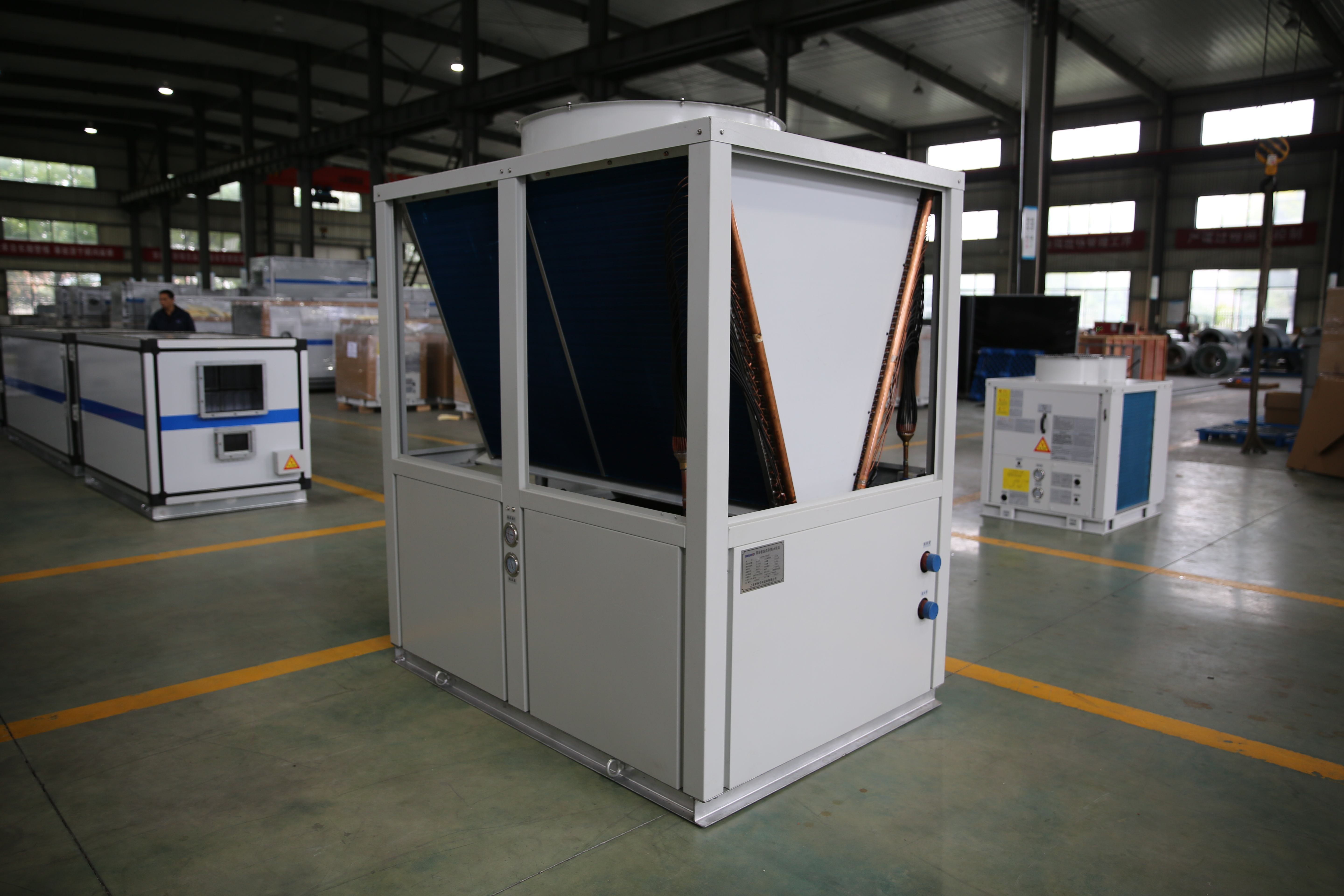
Temperature drift rarely announces itself with a sudden spike. Instead, it creeps into a process as a slow, almost imperceptible shift—often a few tenths of a degree over several hours. For equipment that operates at the edge of tolerance, that small change is enough to push a dimension, a reaction rate, or an optical alignment past its acceptable limit. A semiconductor stepper, for example, relies on a stable thermal environment to keep its lens and wafer stage in precise geometric agreement. When the ambient temperature drifts by just 0.3°C, differential expansion between the granite base, steel guides, and glass optics can introduce overlay errors that don't show up until wafers are tested downstream.
What makes temperature drift especially insidious is that its effects are not always local. A drift in one part of a system can travel through thermal conduction, change a coolant's viscosity, or alter the refractive index of air in a metrology path. In chemical processes, a half-degree drift may shift equilibrium enough to change yield or selectivity without tripping any alarm, because the reaction still appears to be within normal operating range. Over an eight-hour shift, that drift compounds: components expand at different rates, feedback loops slowly chase a moving baseline, and the process drifts away from its validated state long before anyone notices the trend on a chart.
Recognizing this hidden impact requires moving beyond spot checks and fixed setpoints. Sensitive processes often need continuous thermal mapping, not just a single sensor near the controller. The most revealing data usually comes from comparing temperature at the point of interest with the temperature at the reference sensor—because the difference, not the absolute value, is what drives thermal stress. Some teams find that simply stabilizing the room temperature is not enough; heat from a nearby exhaust fan cycling on and off can create a repeating drift pattern that no amount of PID tuning can fully correct. Until the thermal environment is treated as part of the process itself, rather than as an external condition, small drifts will keep eroding precision in ways that are difficult to trace back to their source.
Why Some Cooling Setups Drift While Others Hold the Line
Drift usually begins with small, almost imperceptible losses—pump bearings wearing down just enough to cut flow by a few liters per hour, or thermal paste developing micro-cracks after dozens of heat cycles. None of these changes trigger an immediate alarm, but their cumulative effect slowly bends the temperature curve upward. A stable setup, by contrast, uses redundant sensors and a closed-loop control that corrects those deviations before they become visible on a chart.
Coolant evaporation and trapped air bubbles are another quiet culprit. In open-loop systems, water molecules escape through tubing walls over months, lowering the fluid's heat capacity; stray bubbles cling to cold-plate micro-fins and act as a thin insulating blanket. Sealed systems with low-permeation tubing and periodic bleed valves keep the drift to within a single degree, season after season.
Fan curve lag in software plays a part too. Many motherboard defaults apply heavy smoothing to avoid constant speed changes, so under a sudden load spike the temperature overshoots and then crawls back down. More refined controllers predict power draw from CPU telemetry and ramp airflow ahead of the demand, which is why their temperature lines stay almost ruler-flat while budget builds wander.
Compressor and Condenser Choices That Shape Long-Term Reliability
The compressor sits at the heart of any refrigeration circuit, but not all designs age the same way. Hermetic reciprocating units remain common in smaller systems, yet their valve plates and piston rings wear predictably under high compression ratios. Scroll compressors, by contrast, tolerate liquid slugging and thermal cycling with less internal stress, often outlasting reciprocating models in comfort cooling applications. For larger chillers, semi-hermetic or open-drive screws offer rebuildable internals, turning a major failure into a scheduled overhaul rather than a full replacement. The real reliability win comes from matching the compressor type to the expected load profile: a compressor forced to start and stop dozens of times a day will fail earlier than one sized for continuous, modulated operation, regardless of brand reputation.
Condenser selection quietly dictates how hard the compressor must work. Air-cooled condensers with microchannel coils shed heat efficiently but become brittle in corrosive or coastal environments, leading to leaks that go unnoticed until charge loss triggers compressor overheating. Water-cooled condensers keep head pressures stable and allow lower compression ratios, yet they introduce a second fluid loop with its own scaling, fouling, and pump failure risks. Evaporative condensers excel in arid climates but demand rigorous water treatment; neglecting basin cleaning for a single season can coat the tubes with biofilm, raising condensing temperature and forcing the compressor into a permanent high-stress state. The most dependable systems often pair oversized heat rejection with conservative approach temperatures, leaving headroom for partially fouled coils or hotter-than-design ambient days.
Long-term field data shows that seemingly minor choices—like adding a crankcase heater to prevent refrigerant migration, or specifying a condenser with wider fin spacing to slow dirt accumulation—have outsized effects on reliability. A compressor that starts with liquid refrigerant in its oil sump suffers bearing washout within months, while a condenser that can be cleaned with a garden hose rather than a chemical bath gets maintained more often. The durability of the entire package hinges not on any single component rating, but on how gracefully the compressor and condenser tolerate real-world neglect. Installers who plan for dirty coils, voltage swings, and short cycling from the outset end up with systems that quietly run for fifteen years instead of five.
Sizing Without Guesswork: Aligning Capacity to Real Heat Loads
Oversizing HVAC equipment has long been the industry's quiet default—a cushion against uncertainty that too often becomes a permanent energy penalty. The practice traces back to an era when load calculations were rough approximations and engineers hedged their bets with generous safety factors. Today, that cushion translates into short-cycling compressors, uneven humidity control, and utility bills that never quite match the building's actual footprint. The solution starts with abandoning the guesswork: real heat load data, gathered from on-site measurements or high-resolution interval metering, gives you a baseline that no rule-of-thumb table can replicate.
Instead of starting with equipment capacity and working backward, begin with the building's thermal profile across a full year—not just the peak summer afternoon. Capture not only the design-day extremes but also the shoulder seasons where part-load performance dominates. This approach reveals how often the system actually runs near its maximum, allowing you to right-size for efficiency without sacrificing comfort on the hottest days. When you align capacity to measured loads rather than speculative peaks, you avoid the trap of paying for unused tonnage while still meeting every degree of setpoint demand.
The payoff extends beyond energy savings. A properly sized unit runs longer, steadier cycles that wring more moisture out of the air and keep temperature swings to a minimum. Maintenance intervals stretch out because compressors aren't hammered by constant starts and stops. And when the next renovation or tenant change arrives, you have a documented load history to inform smart, incremental adjustments instead of another oversized replacement. That's the real difference: capacity decisions grounded in evidence, not tradition.
Small Maintenance Habits That Keep Cooling Performance Predictable
Most cooling systems don’t fail without warning—they drift. A handful of small checks can keep that drift from turning into a midsummer shutdown. Wiping down the condenser fins every couple of weeks, for instance, does more than clear airflow. It gives you a chance to notice bent blades, oil spots, or the first signs of corrosion before they push head pressure up. Keeping the outdoor unit clear of leaves, pollen, and clutter works the same way. None of this takes long, but it removes a lot of uncertainty about how the system will run tomorrow.
Another habit worth sticking with is logging the temperature split between supply and return air once a month. If that gap narrows while the filter is clean, it often hints at slow refrigerant loss or a coil starting to ice over. Noticing it early costs far less than waiting for a full breakdown. Changing or washing filters on a set date rather than when they look dirty also stops the evaporator from overworking. These small routines won’t make a cooling system perfect, but they keep its behavior steady enough to plan around.
FAQ
Start with the heat load you need to remove, not just the room size or tank volume. Look at the chiller's cooling capacity at your target temperature, because many units lose efficiency as the setpoint drops. Pay attention to the compressor type—scroll and screw compressors tend to handle continuous operation better than reciprocating ones. Also check the pump's flow rate and pressure, since a chiller won't perform well if the pump can't push water through your entire loop. Noise level, footprint, and whether you need a built-in reservoir or can use an external tank all matter more than people expect.
Air-cooled units are easier to install and don't need a cooling tower or constant water supply, which makes them popular for smaller labs and light industrial work. They do dump heat into the surrounding room, so you need decent ventilation. Water-cooled chillers are quieter and more efficient at higher capacities, but they require a reliable source of condenser water and additional plumbing. If your facility already has a chilled water loop, a water-cooled model can tie in cleanly. Otherwise, air-cooled is often the simpler choice unless you're dealing with very large heat loads or strict noise limits.
Clean the condenser fins or coils every few weeks, especially if the chiller sits in a dusty area. Check the water filter and strainer monthly—clogged filters are one of the most common causes of poor cooling performance. Monitor the coolant or water level in the reservoir and top it off with the correct mixture to prevent corrosion and biological growth. Inspect hoses and fittings for cracks or leaks, and listen for unusual noises from the compressor or pump. Once or twice a year, have a technician check the refrigerant charge and electrical connections. A simple log of temperatures and pressures can help you spot small problems before they turn into downtime.
Look for a PID controller rather than a basic on-off thermostat, because it modulates cooling output to avoid temperature swings. A larger reservoir acts as a thermal buffer, smoothing out fluctuations when the load changes quickly. Variable-speed compressors or hot gas bypass valves help to match cooling capacity to real-time demand instead of cycling constantly. Insulated plumbing and a well-matched pump also prevent heat gain and flow instability. Digital readouts with adjustable alarm setpoints are useful, but avoid getting distracted by touchscreen gimmicks—solid control logic beats fancy displays every time.
Yes, several manufacturers now offer low-noise models specifically for labs, medical clinics, and office-adjacent spaces. Look for units with sound ratings below 55 dBA at one meter. Centrifugal fans are typically quieter than axial fans, and scroll compressors tend to run smoother than reciprocating types. Some chillers have night mode or variable fan speed that reduces noise during low-load periods. Placing the unit on vibration isolation pads and using flexible hose connections can cut transmitted noise further. If the chiller will sit in an occupied room, ask for a sound test report rather than trusting marketing labels.
Calculate the actual heat load from your equipment and process, including any heat added by pumps and ambient gains. Convert that load to BTU/hr or kW, then add a safety margin of about 20%, not 50% or more. Oversizing leads to short cycling, poor temperature control, and higher energy bills. If your load varies during the day, consider a chiller with capacity control so you don't need to size for the absolute peak. Get a few quotes with different capacity points and ask suppliers to show you the performance curve at your required water temperature, not just the nominal rating.
I'd rather point you toward the underlying specs than a single brand, because the right choice depends on your temperature range, flow rate, and environment. That said, companies like Koolant Koolers, SMC, Dimplex Thermal Solutions, and Advantage Engineering consistently produce well-built industrial chillers. For lab-grade precision, Thermo Fisher and Huber have strong reputations. If you're on a tighter budget, look at Chinese manufacturers like TopChiller or Lando, but verify their after-sales support in your region. Always check warranty terms, spare parts availability, and real user reviews before committing.
It's possible but usually not ideal unless the two loads are very close in temperature. A process chiller is usually set to deliver water at a specific temperature, like 15°C or 20°C, while space cooling often needs chilled water around 7°C for fan coil units. Running one chiller at a compromise temperature can make both systems inefficient. If you really want to combine them, a primary-secondary loop with separate temperature control or a buffer tank with mixing valves can work. But in most cases, you're better off using a dedicated process chiller and a separate HVAC chiller to avoid fighting the controls.
Conclusion
Finding a water chiller that stays steady under real-world loads is less about brand promises and more about how the unit manages small, constant corrections. Average systems often let temperature swing a degree or two before responding, which might sound minor but can quietly ruin sensitive work like laser alignment, bioreactor batches, or semiconductor metrology. Truly consistent chillers use tighter control loops, better thermal mass, and compressors that ramp rather than slam on and off, holding the line where cheaper setups drift. Compressor and condenser selection matters far more than peak specs: scroll and screw designs with microchannel condensers tend to deliver smoother, longer-lasting performance than bargain reciprocating units, especially when heat loads fluctuate throughout a shift.
Sizing is another place where guesswork causes invisible problems. An oversized chiller short cycles, wears out compressors early, and never reaches steady-state efficiency; an undersized one runs flat out and still lets temperature creep. The best installations start with a realistic heat load calculation—pumps, process heat, ambient gains, not just nameplate watts—then leave a little headroom. After that, consistency becomes a maintenance habit. Clean condenser fins, treated water, checked flow rates, and logged approach temperatures keep performance predictable month after month. The top systems worth considering aren't necessarily the most expensive; they're the ones sized correctly, built around durable compressor and condenser choices, and supported by simple routines that prevent drift before it starts.
Contact Us
Contact Person: Crystal
Email: [email protected]
Tel/WhatsApp: 8613524235353
Website: https://www.airkohvac.com