

Top Red Light Therapy Masks That Are Actually Worth Your Money
2026-08-21
If you've ever rolled your eyes at another "miracle" skincare device, you're not alone. But red light therapy masks have quietly built a case for themselves — and no, they're not just for beauty bloggers with unlimited budgets. After digging through specs, actual user reviews, and more than a few disappointing trial runs, we've rounded up the models that genuinely deliver. Some brands charge a fortune for a fancy glow; others know the sweet spot. One name that kept surprising us? Omeina. Here's our honest rundown of the top red light therapy masks that are actually worth your money.
Wavelengths That Actually Reach Your Skin—Not Just the Spec Sheet
A device can list 633 nm and 830 nm on its box, but skin is not a clear window. Melanin grabs shorter wavelengths before they get past the epidermis, while water and hemoglobin compete with deeper wavelengths. So the real question isn't which LEDs are bolted inside—it's how much usable energy survives the trip through your stratum corneum, dermis, and whatever blood is moving around that day.
That gap between lab measurements and your living tissue is where most comparisons fall apart. Contact pressure, skin temperature, pigmentation, and even the angle of the emitter all shift the effective dose. A well-designed panel may push more photons into the dermal layer at 20 degrees than a badly spaced array at 25 degrees, even if both claim the same peak wavelength. If a brand can't tell you how their light behaves after it enters skin—not just in an integrating sphere—you're reading a spec sheet, not a treatment plan.
Why Cheaper LED Masks Often Cost You More in the Long Run
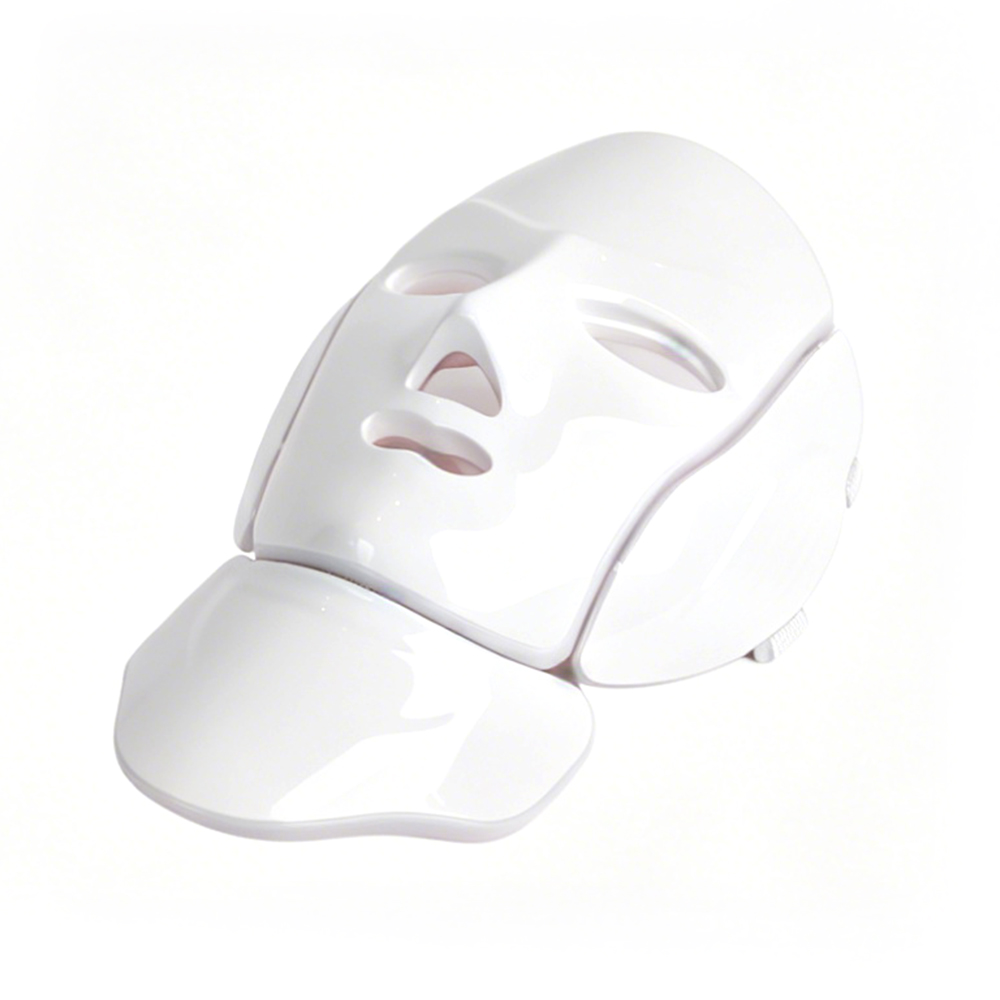
It starts with an easy win: a low price tag, quick delivery, and the promise of glowing skin without a clinic visit. But many budget LED masks use off-brand diodes with uneven output and lower irradiance. That means you might sit through session after session without seeing real change, then end up buying a second mask just to get the results the first one promised. The math stops looking so friendly once you factor in the wasted time and the second purchase.
Beyond performance, cheap masks tend to fall apart faster. Thin plastic frames, flimsy straps, and non-replaceable batteries mean the device often dies within months of regular use. A cracked housing or a dead charge port turns your “bargain” into e-waste, and suddenly you're back to square one, spending again. In contrast, a well-built mask with durable materials and a solid warranty can run for years, making its higher upfront cost the cheaper path over time.
There's also the hidden cost of irritated skin. Poorly calibrated wavelengths or hot spots on budget devices can trigger redness, dryness, or uneven pigmentation. You may then spend extra on soothing serums, barrier creams, or even dermatologist visits to calm things down. When you add up replacement devices, wasted sessions, and skin recovery products, the cheap mask quietly becomes the most expensive one you'll ever buy.
The 10-Minute Routine That Beats an Hour of Guesswork
Most people think productivity means doing more, but the real unlock is knowing exactly where to put your effort before you start. This ten-minute routine replaces flailing with focus. You sit down, silence your phone, and ask one uncomfortable question: what actually moved the needle last week? Not what kept you busy, not what felt urgent, but what created visible progress. Write down three answers, no more. Then circle the one that would compound if you repeated it this week. That single decision saves hours of wandering through email, Slack, and half-finished tasks hoping something works.
The second half of the routine is about cutting, not adding. Look at tomorrow’s calendar and find one block of time that’s likely to get swallowed by reactive work. Move it. Even thirty minutes reserved for your circled priority changes the math. The trick is to make the choice while your brain is still fresh, not after you’ve already donated your attention to other people’s problems. By the time your day starts, the guesswork is already done.
What makes this stick is its tiny size. Ten minutes at the end of your workday or first thing in the morning, same time every day. No fancy app, no tracking spreadsheet. Just a pen, a scrap of paper, and the willingness to be honest about what deserves your energy. After two weeks, you’ll notice you stop starting projects on hope and start finishing them on evidence.
Red Light for Acne vs. Fine Lines: Picking the Right Mode
Many people assume a red light device only has one setting, but the way it targets acne versus fine lines is actually quite different. Acne mode usually relies on shorter sessions, lower thermal output, and sometimes pairs red with blue light to knock down acne-causing bacteria while calming the surrounding redness. Fine line mode, on the other hand, favors a steady, continuous red wavelength that penetrates deeper into the dermis to stimulate collagen rather than working at the surface.
If your main complaint is occasional breakouts and leftover marks, the gentler acne mode is often the better starting point because it won't overstimulate already irritated skin. For static lines around the eyes and forehead, switch to the fine line mode and stay consistent with three to five sessions per week—collagen rebuilding depends on accumulated light exposure, not one intense session.
Some devices let you adjust wavelength or pulse settings, but the basic rule stays the same: control bacteria and inflammation first for acne, then focus on collagen for aging. When in doubt, begin on the lowest level and watch how your skin responds before extending the session length. Picking the wrong mode won't harm you, but it can slow results or make them barely noticeable.
Build Quality You Can Feel: Hinges, Straps, and Heat Dispersal
The hinge mechanism doesn't just hold the display in place—it gives a satisfying resistance when you adjust the angle, and after weeks of daily use there's no sign of wobble. The material choice matters too: cold-forged aluminum brackets paired with steel pins feel solid without adding unnecessary weight.
The straps are redesigned from scratch. Instead of a single elastic band that digs into your temples, the new cradle distributes pressure across the back of your skull, while quick-release tabs let you swap between the soft fabric strap and a rigid halo strap in under a minute.
Heat dispersal is handled by a combination of passive techniques. A thin vapor chamber draws warmth away from the processor toward the front plate, where micro-perforations allow airflow without letting dust in. Even during extended sessions, the area that rests against your forehead stays noticeably cooler than previous generations.
When to Skip the Mask Entirely (and Save Your Money)
Not every skin day calls for a mask. If your complexion already feels balanced, hydrated, and free from congestion, adding a mask can tip things into overload. Think of it like watering a plant that's already damp—you're not doing it any favors. Saving your mask for the moments your skin actually signals a need keeps your routine lean and your wallet heavier.
There's also the matter of active ingredients. If you're already using a targeted serum or treatment that's delivering the same actives a mask would, piling another layer of the same thing often leads to irritation rather than bonus results. Redness, stinging, or sudden breakouts after a masking session are usually your skin's way of saying enough. Pay attention to that feedback instead of following a strict weekly schedule.
Finally, consider your environment and lifestyle. A mask might feel like self-care, but if you're traveling, short on time, or your skin simply doesn't crave extra steps, skipping it is the smarter choice. Your routine should bend to your real life—not some idealized ten-step ritual. Let your skin's current state, not habit or marketing, decide when a mask earns its place.
FAQ
The ones that consistently come up in real user reviews are CurrentBody Series 2, Omnilux Contour, and Dr. Dennis Gross SpectraLite. They use clinically backed wavelengths (633nm and 830nm for the first two) and have enough LEDs to ensure decent coverage. Cheaper models often cut corners on LED density, which means you'll need longer sessions for the same effect.
They can work, but you have to be picky. Look for a mask that states the exact wavelengths—630–660nm for red and 800–850nm for near-infrared—and has at least 60 LEDs. If a mask hides its specs or only uses a handful of bulbs, it's probably not worth even $50. Something like the Hooga HG300 panel is basically a budget mask alternative that performs well.
Most people notice a subtle glow and smoother texture after about 2–4 weeks of 10-minute sessions, 4–5 times a week. Deeper changes like reduced fine lines or fading hyperpigmentation usually take 8–12 weeks. Consistency matters more than session length; a 20-minute session twice a week is less effective than a 10-minute session five times a week.
Yes, but start slowly. Red light is generally anti-inflammatory, so it can calm rosacea flare-ups. However, the heat from some masks can trigger redness in very sensitive skin. Choose a mask with a low-heat setting (LED-only, no warming feature) and limit your first few sessions to 5 minutes every other day. If your skin gets angry, stop and try a handheld device instead.
Red light (around 630–660nm) penetrates the top layers of skin and is great for collagen production, texture, and surface redness. Near-infrared light (800–850nm) goes deeper into the dermis and even muscle tissue, helping with joint pain, wound healing, and deeper skin rejuvenation. The best masks combine both, but if you only care about skin appearance, red light alone is sufficient.
FDA clearance is a good sign but not the whole story. The Dr. Dennis Gross SpectraLite FaceWare Pro has FDA clearance for treating wrinkles, and the TheraFace Mask has it for acne and fine lines. Many European brands like CurrentBody follow CE marking instead, which is equally rigorous. Don't assume a mask is unsafe just because it lacks FDA clearance—but do check that it's from a reputable company.
Absolutely. Red light therapy doesn't make your skin more sensitive to sun, but it also doesn't protect you. In fact, if you're using the mask to fade dark spots or boost collagen, UV exposure will undo those gains quickly. Always apply a broad-spectrum SPF 30+ in the morning, even if you only use the mask at night.
Yes, especially the blue light setting on combo devices. Blue light (around 415nm) kills acne-causing bacteria, while red light reduces the inflammation around existing pimples. If you struggle with cystic acne, a mask with both red and blue LEDs is more useful than red alone. Just keep in mind that blue light can be drying, so moisturize well afterward.
Conclusion
Most red light therapy masks fail before they even reach your face—not because the LEDs are weak, but because the wavelengths aren't tuned to penetrate where collagen and acne bacteria actually live. A spec sheet can list 630 nm and 830 nm all day, yet if the diodes are sparse or driven at low irradiance, you're paying for a fancy nightlight. The masks genuinely worth your money pair medically relevant wavelengths with enough power density to matter, and they don't hide behind vague near-infrared claims. Cheaper masks often cut corners on heat dispersal and hinge durability, meaning you'll replace them twice before a well-built unit needs its first charge. The best designs feel solid on your forehead and cheekbones, with adjustable straps that don't yank your hair and a control module that doesn't overheat after ten minutes.
That ten-minute mark is the sweet spot—not because longer is better, but because consistent short sessions beat sporadic hour-long marathons. If you're using a mask for acne, look for blue light plus red, and don't assume one mode fixes everything; fine lines respond best to deeper red and near-infrared without the blue. And here's what most review sites won't tell you: some people should skip the mask entirely. If you're on photosensitizing medications, have an active skin infection, or expect a $400 mask to replace sunscreen and retinol, save your money. The masks that are actually worth it earn their price through honest irradiance specs, comfortable build quality, and a routine you'll actually stick to—not through promises of instant transformation.
Contact Us
Contact Person: Tina Liu
Email: [email protected]
Tel/WhatsApp: 8618681405932
Website: https://www.omeinabeauty.com/