

Top Industrial Heating and Cooling Solutions to Maximize Plant Performance
2026-11-02
Every degree matters when your plant's output, energy costs, and equipment lifespan are on the line. Industrial heating and cooling are often treated as separate headaches, yet the plants that outperform their targets treat them as one integrated system. This guide breaks down the top solutions that do exactly that, with proven approaches from Tongbaote to help you stop chasing temperatures and start controlling them.
Heat Exchanger Upgrades That Slash Energy Bills
Replacing worn gaskets and scraping scale off tube bundles can feel like routine maintenance, but the payoff often shows up faster than expected. A thin layer of fouling—barely visible to the eye—forces pumps to work harder and cuts thermal transfer enough to add several percentage points to your monthly fuel or electric spend. Upgrading to corrugated tube inserts or installing automated brush systems keeps surfaces cleaner for longer without shutting down the whole loop.
On the controls side, swapping fixed-speed circulation for variable-frequency drives lets the exchanger match actual load instead of running flat out. Pair that with an economizer or a second pass on the hot side, and you recover heat that used to go straight out the vent. These changes rarely demand a full replacement; most pay for themselves within two heating or cooling seasons.
Cooling Tower Automation for Uninterrupted Operations
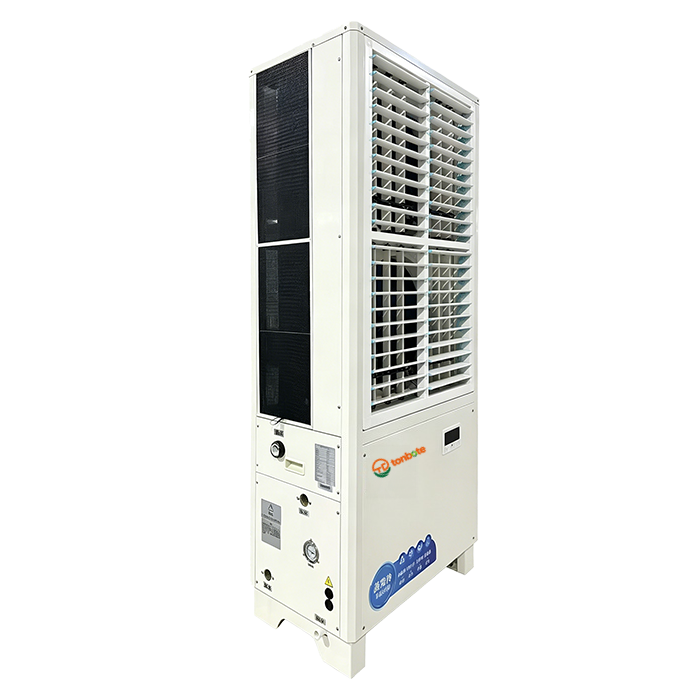
Traditional cooling tower management relies heavily on manual checks of water levels, fan speeds, and basin temperatures. When shifts change or workload spikes, small oversights quickly cascade into pump cavitation, scaling, or even complete thermal shutdowns. Facilities that cannot afford downtime need the tower to respond to load swings on its own, not wait for an operator to notice a rising return temperature.
A practical automation layer starts with placing sensors on the incoming and outgoing water lines, drift eliminators, and vibration points on gearboxes. The controller then adjusts fan speed and bypass valves based on the actual heat rejection demand rather than a fixed setpoint. For example, during low ambient nights, the system can reduce airflow to prevent overcooling and freezing, while a sudden process heat spike triggers faster fan ramp-up before return water temperatures cross safety thresholds.
Beyond immediate control, the real value lies in tying automation to maintenance triggers. Vibration trends, motor current draw, and water conductivity data feed into simple rule-based alerts that flag bearing wear or biological growth long before they force a shutdown. By automating both the thermal response and the condition monitoring, the cooling tower stops being a passive heat sink and becomes a self-adjusting subsystem that keeps the entire operation running through seasonal extremes and unexpected load changes.
Recovering Waste Heat: A Hidden Revenue Stream
A surprising amount of industrial energy ends up as heat that simply drifts out of the building. Instead of paying to reject that heat through cooling towers or ventilation, plants can route it through a heat exchanger and put it to work. One food processing facility, for example, preheats wash water with heat recovered from its refrigeration compressors, cutting boiler fuel use by nearly a fifth.
The revenue angle isn't always obvious at first. Waste heat can be converted to electricity with an organic Rankine cycle unit, or sold as thermal energy to a nearby greenhouse, district heating loop, or drying operation. The infrastructure cost is often recovered in two to four years, after which the savings flow directly to the bottom line.
What makes this stream "hidden" is that it never appears on a standard utility bill. Once it is quantified with simple temperature and flow measurements, it becomes a manageable resource. Treating waste heat as a product rather than a problem changes the economics of operations without requiring a single new production line.
Boiler Modernization for Consistent High-Heat Processes
Older boilers rarely fail all at once—they drift, and that drift shows up first in processes that demand sustained high heat. A unit that once held 900°C without complaint now swings by 15 degrees, forcing operators to compensate with manual damper changes or extra fuel. Modernization replaces this guessing game with closed-loop combustion controls and variable-speed drives that track thermal load in real time. The burner no longer runs at a fixed firing rate; instead, it adjusts air and fuel delivery every few seconds to keep the flame temperature inside a tight band.
What often gets overlooked is how much of that inconsistency comes from worn refractory and outdated tubes. Retubing with thinner, high-alloy materials improves heat transfer rates, so the same Btu input produces a sharper, more stable output. Adding an oxygen trim system and a stack economizer recovers heat that previously escaped, which supports high-heat operations without pushing the boiler past its efficient range. These are not cosmetic upgrades—they change the way the pressure vessel responds to sudden load changes from downstream equipment.
The practical payoff is fewer rejects from thermal variation and a steam supply that stays predictable even when multiple high-temperature processes run at once. Plants report that after modernization, the gap between setpoint and actual temperature narrows to less than 2°C, and fuel consumption drops because the boiler no longer cycles through wasteful overfire periods. It is a return to process certainty, built with controls and materials that are designed to hold a high-heat line rather than merely reach it.
Precision Thermal Regulation in Specialty Manufacturing
Maintaining exact thermal conditions is what separates a flawless crystal pull from a ruined wafer lot. In semiconductor lithography, temperature swings of just a few millikelvin across the chuck can distort pattern alignment, driving scrap rates through the roof. Unlike general HVAC, specialty manufacturing treats heat as a process variable with tolerance bands measured in fractions of a degree, demanding active compensation for tool-generated heat, ambient drift, and even operator movement near sensitive stations.
The real work happens in the control loop, where custom PID tuning meets multi-zone ceramic heaters and microchannel cooling plates. For example, in optical fiber drawing, a feedback cycle adjusting furnace current every ten milliseconds holds the neck-down region within ±0.2°C, preserving core geometry across kilometer-long pulls. Such systems rarely rely on a single thermocouple; instead, they fuse data from infrared pyrometers, resistance temperature detectors, and sometimes ultrasonic thermometry to build a thermal map that updates faster than the process can drift.
The toughest challenge is not hitting a setpoint but staying there when batch loads change. A vacuum coating chamber might idle at 180°C, then absorb a room-temperature substrate sled that temporarily drops the chamber by fifteen degrees. Rather than overshooting with brute force, modern regulators pre-cool the sled and use model-based feedforward to ramp heater output before the door even opens. That kind of anticipatory control, coupled with redundant sensors and fail-safe thermal switches, is what keeps yield curves flat while competitors chase phantom temperature faults.
Proactive HVAC Care to Avoid Costly Downtime
Unplanned HVAC failures rarely announce themselves politely. They tend to strike during peak demand, when cooling loads are highest or heating systems are running full tilt. The result is often a scramble: uncomfortable occupants, emergency repair bills, and hours of lost productivity. A proactive care plan flips that narrative. By monitoring performance trends, cleaning coils before they clog, and replacing worn belts on a schedule rather than after they snap, you keep the system within its designed operating envelope. The goal isn't just avoiding breakdowns—it's maintaining stable temperatures, stable energy costs, and stable operations.
Think of proactive HVAC care as a form of insurance that pays you back in uptime. Contractors who rely on reactive fixes often see the same equipment return again and again, each time with a higher repair tab and a shorter interval between failures. In contrast, a maintenance cadence built around thermal imaging, refrigerant checks, and airflow verification catches small inefficiencies before they cascade into compressor burnout or frozen evaporator coils. That early intervention also extends equipment lifespan, sometimes by several years, which directly reduces capital replacement costs.
The practical side is straightforward: log runtimes, review filter replacement dates, and inspect condensate drains and electrical connections at regular intervals. Document everything. When a technician can pull up a full history of static pressure readings and amp draws, diagnostics become faster and more accurate. The result is less guesswork, fewer emergency calls, and a building that stays comfortable even during weather extremes. For any operation where downtime means lost revenue or unhappy tenants, proactive care isn't a luxury—it's the only sensible operating model.
FAQ
Many plants focus on burner tuning but ignore heat exchanger fouling, steam trap failures, and condensate return losses. A 5% drop in condensate recovery can raise fuel use noticeably. Piping insulation gaps and oversized pumps also waste energy quietly. Checking these before investing in new equipment often reveals cheaper fixes.
Add a small dedicated chiller for process loads that don't need low temperatures, so the main chillers serve only critical zones. Retrofitting variable-speed drives on cooling tower fans and pumps also stretches existing capacity. In some plants, a plate-and-frame heat exchanger lets cooling towers handle winter cooling directly, cutting compressor run hours.
Modulating condensing boilers usually pay back fastest because they avoid the start-stop losses of older on/off units. Pair them with a buffer tank sized for the actual swing, not the peak nameplate load. Some sites recover more by adding direct-contact water heaters for washdown and sanitation, which reduces steam demand during low-production periods.
They recover heat from high-temperature exhaust but ignore lower-grade sources like air compressor oil coolers, boiler blowdown, and chiller condenser water. Those streams can preheat boiler makeup water or feed a heat pump loop. The piping distance between source and use matters more than the temperature difference; if waste heat has to travel far, insulation and pumping costs eat the savings.
Install automatic blowdown controls based on conductivity rather than a fixed schedule, and use side-stream filtration to keep suspended solids low. For thermal shock, add a three-way mixing valve so return water gradually blends with cold supply instead of slamming into hot exchangers. A simple log of approach temperature on critical exchangers catches scaling early before it cuts output.
CHP units often produce more heat than the plant needs in summer, so an absorption chiller can turn that excess heat into chilled water. This shifts cooling demand off electric chillers during peak hours. The trade-off is that absorption chillers need steady heat input and careful maintenance, so they work best where there is a year-round thermal load or cheap fuel.
Look at the building automation setpoints and deadbands. If heating and cooling loops are fighting, it's usually because a zone is calling for both at once due to overlapping setpoints or a failed sensor. Fixing that control conflict costs almost nothing compared to adding capacity, and it can drop energy use by 10-20% in large plants.
Re-commissioning existing systems is often the best first move. Check calibration of sensors, valve stroke, damper positions, and control loop tuning. Simple fixes like repairing steam traps, cleaning strainers, and resetting supply temperatures to match ambient conditions can reduce energy use by 15% or more. These actions also prevent premature equipment replacement.
Conclusion
A plant's thermal performance often hinges on components that rarely draw attention until they fail. Take heat exchangers: fouled or corroded units force pumps and burners to work harder, quietly inflating energy costs. Swapping in high-efficiency plate-and-frame or shell-and-tube designs, along with regular descaling, routinely trims fuel consumption by 10–15 percent. Boiler modernization delivers a similar payoff for high-heat processes. Upgrading burners, adding oxygen trim, and replacing outdated refractory keep steam or hot water output steady, so drying, curing, and chemical reactions stay on schedule. In specialty manufacturing, precision thermal regulation—using cascading PID loops and fast-response modulating valves—prevents the subtle temperature swings that scrap sensitive batches.
Cooling systems are just as critical. Automated cooling towers equipped with variable frequency drives adjust fan speed and water flow to match real-time heat load, eliminating the energy waste of fixed-speed operation and the risk of thermal shock during sudden load changes. Waste heat recovery adds a practical revenue angle: exhaust from boilers or condensers can preheat make-up water, feed dryers, or warm adjacent spaces, turning a thermal disposal problem into lower fuel purchases elsewhere. And instead of waiting for breakdowns, proactive HVAC care—monitoring vibration, refrigerant pressures, and coil cleanliness—catches small issues before they cascade into downtime. Combining these heating and cooling upgrades creates a self-reinforcing system where every thermal dollar works toward uptime and output.
Contact Us
Contact Person: Wanshu Chen
Email: [email protected]
Tel/WhatsApp: +86-13662871206
Website: https://www.mbcee.com