

Top 10 Shipbuilding Steel Plate Manufacturers Leading the Maritime Industry
2026-11-02
When a shipbuilder signs off on steel plates, they aren't just buying material—they're betting on years of saltwater, stress, and fatigue. The global maritime industry moves on thin margins and unforgiving schedules, yet hull steel remains one of the few places where cutting corners comes back with compounding interest. That's why the names leading shipbuilding steel plate supply deserve closer scrutiny. From the established mills of East Asia to niche players like Sanhe Steel, the race to deliver certified, weldable, and high-tensile plate is reshaping procurement maps. The following ten manufacturers aren't listed by accident—they've earned their place in the yards where vessels are built to last.
What Sets the Most Reliable Marine Plate Mills Apart From the Rest
A marine plate mill earns its reputation long before the first plate reaches the cooling bed. The most dependable operations hold a tight grip on steel chemistry, reheating temperatures, and reduction passes, so every plate carries the same through-thickness strength, toughness, and internal soundness. That level of control is what allows them to consistently meet Z-direction requirements and avoid lamellar tearing in welded structures.
What separates a top-tier mill from a merely adequate one shows up in verification. Reliable suppliers run ultrasonic testing on every plate, pull Charpy samples at the required low temperatures, and keep traceability from heat number to final plate without gaps. They also maintain current approvals from major classification societies such as ABS, DNV, LR, and BV, which means their testing and documentation are already aligned with shipyard expectations.
Finally, reliability appears in the less glamorous details: camber, edge condition, and surface finish. The best mills invest in hot levellers and controlled cooling to minimize residual stress, then inspect dimensions with automated measuring systems. That practical focus is why their plates fit up cleanly in the fabricator's yard and why delivery dates stay predictable, even on repeated orders for high-strength grades.
The Grade Wars: Why Shipbuilders Fight Over a Few Percentage Points of Toughness
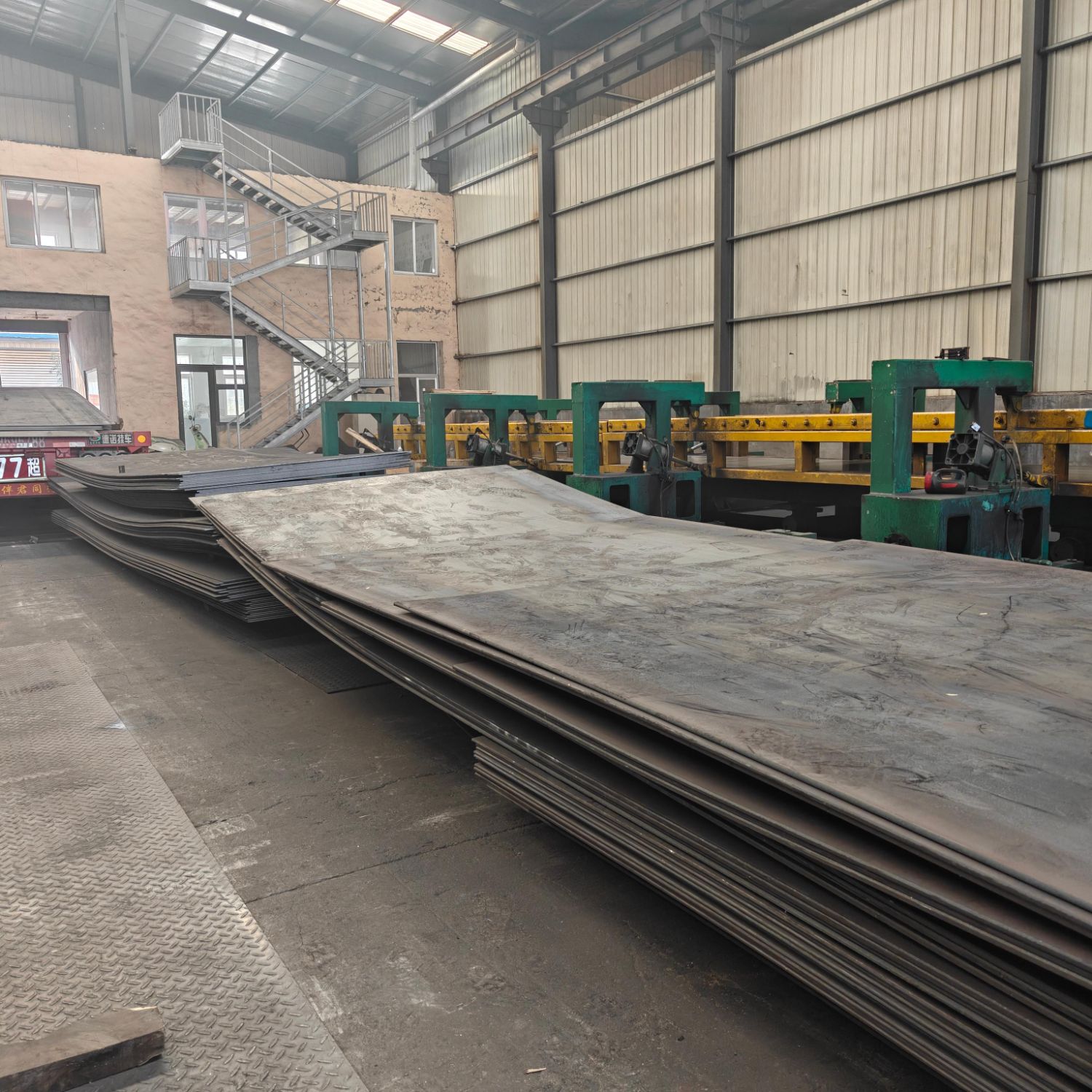
To outsiders, it seems absurd that shipyards would argue for weeks over a few percentage points of notch toughness in steel plate. But in shipbuilding, those points are not abstract. A change from AH36 to DH36, for example, shifts the Charpy test temperature from 0°C to -20°C, and the allowable impact energy can differ by only a handful of joules. Procurement teams know that a steel mill’s price per ton moves with those small adjustments. So the fight begins long before any steel is cut.
The reason is simple arithmetic. A large container vessel consumes forty thousand tons of plate or more. If a tougher grade adds fifteen dollars per ton—and it often does, once you account for controlled rolling, extra alloys, or additional testing—the total cost jumps by over half a million dollars. Shipbuilders therefore push back on any spec that demands more toughness than the classification society requires. Owners and designers, meanwhile, want an extra margin for safety. That tension turns every percentage point into a negotiation.
Yet the trade-off is not just financial. In service, ships encounter cold water, wave-induced fatigue, and stress concentrations at hatch corners or bilge keels. A few percentage points of toughness can mean the difference between a crack that stops and one that runs. Modern yards try to manage this with fracture mechanics assessments and better welding procedures, but the core tension remains: safety margins cost money, and nobody wants to pay for what they cannot see. The grade wars are really a struggle over where that invisible line gets drawn.
Inside the Heat Treatment Lines That Keep Hull Steel Ductile at -40°C
Walking through the heat treatment line at a modern shipyard, the first thing you notice is the deliberate pace. Hull plates don't sprint through the furnace—they move in carefully staged passes, each one nudging the steel's microstructure toward a state that resists brittle fracture when the thermometer plunges to minus forty. The line itself is a sequence of controlled heating, holding, and quenching stations, but the real work happens at the grain level. Operators monitor temperature curves more closely than a chef watches a soufflé, because a few degrees off during the normalizing cycle can leave the steel stubbornly stiff instead of supple in arctic waters.
At the core of these lines is a thermal treatment known as normalizing, often followed by tempering. The steel is heated to roughly 900°C, just above its critical transformation point, then air-cooled at a rate engineered to refine the grain structure. Fine, uniform grains are what allow the metal to absorb impact energy without cracking—think of it as giving the steel thousands of tiny shock absorbers. Some yards go further with quench-and-temper lines, where rapid water or polymer cooling locks in a tougher martensitic phase before a lower-temperature tempering step restores ductility. The result isn't just a checkbox on a spec sheet; it's the difference between a hull that bends and one that shatters when a wave slams into it during a polar storm.
Quality control inside these lines is unusually tactile. Workers periodically pull sample coupons from the line and send them to a drop-weight test, where a weighted hammer falls onto a chilled specimen to see if it deforms or breaks. At -40°C, a passing grade means the metal dimples before it fractures—a visible sign that the heat treatment did its job. The best lines also integrate automated pyrometers and laser-based flatness scanners, but veteran metallurgists still trust their eyes and ears: the ring of a properly treated plate when tapped tells you as much about its internal health as any digital readout. It's this blend of precision machinery and hands-on judgment that keeps hull steel ductile when the mercury disappears.
Why Geography Still Shapes the Shipbuilding Steel Supply Chain
The weight of steel plates and sections makes overland transport painfully expensive, so proximity to deep-water ports still dictates where shipbuilding steel gets made and moved. A steel mill that can load directly onto a vessel avoids multiple handling steps and cuts per-tonne logistics costs in ways that inland plants simply cannot match. This is why major shipbuilding steel producers cluster along coastlines or major river mouths, even when land and labour are cheaper elsewhere. Digital tools may optimise scheduling, but they do not shrink the physical distance between a blast furnace and a berth.
Shipyards face the same geographic pull from the demand side. They need to receive oversized steel blocks and curved plates that cannot easily travel by road or rail. A yard located far from a deep-water channel or a dedicated heavy-lift dock must either maintain costly buffer inventories or rely on smaller, more expensive shipments. The tightest shipbuilding supply chains, such as those in the Yangtze River Delta or along South Korea's southeastern coast, benefit from short hauls between mill and yard, which also allows just-in-time delivery without the risk of cargo damage.
Geography also interacts with trade policy and shipping routes in ways that quietly reshape supply. A new tariff or a blocked canal does not simply shift orders to the cheapest global supplier; it shifts them to suppliers that are reachable by sea with acceptable transit times and port capacity. Shipyards in regions with limited port infrastructure or shallow approach channels cannot easily switch to alternative steel sources, even if those sources offer lower base prices. The result is a supply chain that remains surprisingly local and port-bound, despite decades of globalisation.
How the Biggest Yards Pressure Mills for Faster Turnarounds
When a yard the size of a small city decides your schedule, you feel it in the phone calls that start before sunrise. The biggest buyers don't ask for shorter lead times—they simply assume them, baking aggressive dates into purchase orders without a word of negotiation. Mills learn quickly that a missed window means losing not one order but a quarterly allocation that keeps a production line breathing. So the pressure travels inward: shift supervisors stretch overtime, maintenance gets squeezed into gaps that barely exist, and the phrase “just this once” becomes a weekly mantra.
What separates the large yards from the merely loud ones is how they weaponize visibility. They share rolling forecasts that look like promises, then hold weekly calls where every late bundle gets a name and a story. A mill manager might sit through thirty minutes of silence while a spreadsheet updates on screen, knowing that a single red cell triggers a chain of emails up the corporate ladder. The pressure isn't crude—no one yells—but the quiet arithmetic of on-time percentages, penalty clauses, and “preferred supplier” status does the shouting. Over time, mills internalize the expectation: the fastest turnaround isn't a favor, it's the baseline for staying in the room.
Yet the smartest mills push back not by refusing speed but by redefining how it's delivered. They invest in buffer inventories of common grades, train operators to switch between specs without losing a heat, and redesign loading docks so trucks don't idle past the cutoff. The biggest yards, for all their leverage, still depend on a mill that can say yes to a short window without quietly sacrificing quality. That unspoken balance—fear of losing the account versus pride in making the impossible date—is what keeps turnarounds shrinking, one aggressive order at a time.
The Quiet Shift Toward Low-Carbon Ship Plate Without Sacrificing Strength
For decades, cutting carbon content in structural steel meant accepting a drop in yield strength and toughness. Ship plate was one of the last places where this trade-off seemed unavoidable. Recently, though, a growing number of mills have begun delivering plates with carbon equivalents well below earlier benchmarks, while still meeting the 355 MPa and 390 MPa strength grades demanded by large container ships and LNG carriers.
The change is less about a single breakthrough than a quiet accumulation of process refinements. Thermomechanical controlled processing now allows finer grain sizes without relying on high carbon or heavy alloying. Small additions of niobium, titanium, and vanadium pin grain boundaries during rolling, while accelerated cooling locks in a microstructure that retains toughness at low temperatures. These plates often show better weldability and lower preheat requirements, which reduces yard time and repair costs.
Classification societies have adjusted their rules only gradually, but the data from bending tests, Charpy impacts, and fatigue trials have been consistent. Some shipbuilders now specify low-carbon plate not for environmental marketing, but because it simplifies fabrication and lowers the risk of heat-affected zone cracking. The result is a shift that has happened largely out of public view, but it is already changing what yards expect from their steel suppliers.
FAQ
A handful of Asian mills lead the market. POSCO and Hyundai Steel in South Korea, along with Nippon Steel and JFE Steel in Japan, supply a large share of high-strength plate for major shipyards. Chinese producers such as Baosteel and Ansteel have also expanded rapidly and now serve both domestic builders and export projects.
Japanese mills have built a reputation for consistent quality in fatigue-resistant and high-toughness grades. Their controlled rolling and thermo-mechanical control processes help meet strict class society rules, which matters for large ore carriers and container ships that operate under heavy cyclic loads.
Chinese mills like Baosteel, Ansteel, and Shougang have added wide heavy-plate mills and improved purity and flatness. That has lowered costs for domestic yards while also making Chinese plate more competitive in Southeast Asia and Europe, although some high-end naval and cryogenic applications still favor Japanese or Korean supply.
Beyond price, yards typically check certification from classification societies such as LR, DNV, ABS, and NK, along with mill test certificates and consistent mechanical properties across batches. Reliable delivery schedules and the ability to produce plates up to 5 meters wide or with special Z-direction properties also matter for critical hull sections.
LNG carriers require plates that can withstand cryogenic conditions and high stress in membrane containment systems. POSCO and Hyundai Steel developed dedicated grades with low-temperature toughness and excellent weldability, and they work closely with Korean shipyards to adjust chemistry for faster welding and reduced distortion.
SSAB and ArcelorMittal supply niche high-strength and armor-grade plate for naval, ice-class, and Arctic vessels. Their products often emphasize toughness at very low temperatures and tight flatness tolerances, which are harder to source from general-purpose commodity mills.
Larger vessels, alternative fuels, and emission-reduction designs push demand for higher-strength grades that allow thinner plate and lower hull weight. Corrosion-resistant steels for fuel tanks and battery compartments are also becoming more common, and mills are investing in cleaner steelmaking to reduce inclusions that could initiate fatigue cracks.
Vietnam's Formosa Ha Tinh and India's SAIL and JSW have been increasing plate output, though their share in high-specification shipbuilding remains limited. Turkish mills also supply smaller shipyards around the Mediterranean, especially for coastal vessels and repairs, but they are not yet major players in large ocean-going newbuilds.
Conclusion
The yards that dominate newbuilding programmes keep a very short list of approved plate suppliers, and the reasons go well beyond mill capacity. What separates the most dependable names is how they hold mechanical properties within a narrow band, not just meet the minimum spec. A few percentage points of Charpy toughness at -40°C can decide whether a plate is accepted for an ice-class hull or rejected at the gate. That consistency comes from disciplined heat treatment, where controlled rolling and normalising lines preserve ductility without letting grain growth creep in. Geography still matters too: a mill near a major shipyard cluster or deepwater port cuts inland freight and shortens the time from slab to stockyard, which makes a supplier far easier to work with when a build schedule tightens.
At the same time, big shipbuilders have learned to push their approved mills harder, asking for shorter lead times on odd-size plates and more flexible rolling windows without losing traceability. This pressure has pushed the leading manufacturers to invest in faster cooling beds, automated marking and better scheduling rather than simply adding capacity. The quiet shift toward low-carbon plate is now part of the same conversation. Yards want a lower carbon footprint per tonne, but they will not accept a drop in fracture toughness or weldability. The manufacturers that manage to combine tighter delivery promises, stable low-temperature performance and credible emissions reductions are the ones holding the top positions in a market where a delayed plate can stop an entire block assembly.
Contact Us
Contact Person: Zoey
Email: [email protected]
Tel/WhatsApp: +86 15865577002
Website: https://www.sanhesteels.com