

Top 10 Sewer Pipe Cleaning Equipment Companies Dominating the Industry
2026-06-12
Clogged sewer lines can escalate from a minor inconvenience to a full-blown emergency in no time. The right cleaning equipment makes all the difference, but with countless options on the market, finding reliable machines isn't always straightforward. That’s why we’ve narrowed down the top 10 companies shaping the industry today—each standing out for their innovation, durability, and performance. Among these leaders, AMJET continues to set benchmarks with its high-pressure jetting systems engineered for maximum efficiency. Read on to discover the players driving the sewer pipe cleaning sector forward and what sets them apart.
The Heavy Hitters Redefining Sewer Pipe Cleaning
A handful of manufacturers have stepped up their game, ditching the old one-size-fits-all approach for systems that actually adapt to different pipe materials and diameters. These aren't just stronger versions of the cable machines plumbers have been dragging around for decades—they combine pressure, mechanical cutting, and real-time camera feedback into one seamless operation. The result is a cleaning process that strips away years of buildup without turning the pipe into a scratched-up mess that attracts clogs even faster next time.
Behind the scenes, material science is doing the heavy lifting. Blades and nozzles are now purpose-built from hardened alloys and carbide-tipped designs that can chew through congealed grease, mineral scale, and root intrusions without instantly dulling. More importantly, these tools are being paired with variable-speed drives and torque-limiting clutches that prevent the kind of over-enthusiastic spin that used to crack older clay or cast iron lines. It's a smarter balance between power and finesse—enough force to break through obstructions, yet gentle enough to preserve the host pipe.
What really sets the new heavy hitters apart is their shift toward data-driven maintenance. Instead of reactive emergency calls, their equipment logs pipe conditions and wear patterns over multiple runs. Municipalities and service contractors are starting to use that information to map which sections of their networks actually need attention, rather than sticking to a rigid calendar schedule. That kind of precision cleaning extends asset life, reduces unnecessary water use, and honestly, makes the whole concept of sewer pipe care feel less like a gamble and more like a predictable system.
Machines That Outperform When Blockages Get Stubborn
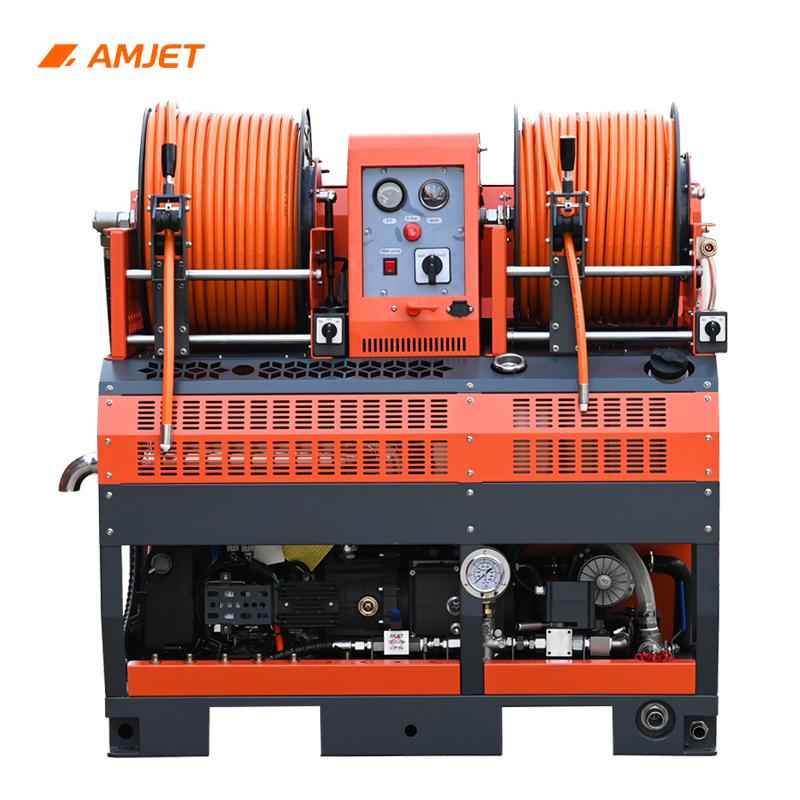
Clogs don’t play fair—they build up, harden, and settle in places no standard tool can reach. That’s where certain machines really shine, muscling through what others merely tickle. You see it in heavy-duty drain augers fitted with carbide-tipped claws that chew into decades of grease and root masses without bogging down. They don’t just spin—they apply staggering torque at slow, deliberate speeds, pulverizing obstructions into paste. Unlike the lightweight electric drain snakes that bind up and leave you swearing under the sink, these beasts hammer away with hydraulic force, keeping feed rates steady even when the clog fights back.
Then there’s the industrial shredding line that thrives on stubborn blockages in material flow. Picture a dual-shaft, low-speed shear shredder ripping through a knot of woven synthetic fibers that has locked up an entire sorting station. Where high-RPM machines would stall and overheat, these low-speed, high-torque monsters bite slowly, reversing automatically when loads spike, then pushing forward again—chewing the unchewable. The interlocking blades act like a pack of mechanical jaws, turning tangled masses into uniform chips without ever breaking a sweat. They’re the ones you call when blockages laugh at conveyor stops and manual picks.
Blockage-clearing performance isn’t just about raw power; it’s about adaptability. Take a high-pressure water jetting unit that can switch between focused cutting streams and wide-pattern flushing nozzles without shutting down. When a stubborn sludge column refuses to budge, the right setup alternates between blasting a pilot hole and scouring pipe walls until the whole mess slides free. The best rigs don’t rely on a single trick—they pulse, they change angle of attack, and they sense resistance to adjust flow right when the blockage thinks it’s won. That’s the kind of intelligent persistence you just don’t find in generic equipment.
Generations of Know-How Behind These Industry Leaders
Decades of hands-on experience don’t just accumulate—they crystallize into instincts that no manual can capture. Each generation of craftsmen, engineers, and problem-solvers refines the raw methods of the last, shedding what doesn’t work and quietly perfecting what does. This quiet evolution happens on factory floors, in design studios, and during long conversations over coffee, where a senior technician passes along a feel for material that a textbook never could. It’s this layered, lived expertise that separates enduring companies from the flash-in-the-pan disruptors.
What looks like intuition to an outsider is often the result of countless trials handed down like family recipes. A millisecond adjustment in a production line, a counterintuitive choice of alloy, a way of reading subtle vibrations in machinery—these aren’t documented in any public filing. They live in the muscle memory of the workforce and in the unspoken standards that junior hires absorb by osmosis. When a company has been at this for generations, the knowledge becomes ambient; it’s in the air of the workshop and the way problems are framed before they’re solved.
That depth of know-how creates a resilience that competitors find maddening. While others scramble to reverse-engineer a product, they miss the invisible lattice of judgment calls and shared memory that make consistent excellence possible. It’s not about being the first to market with a flashy idea, but about knowing which ideas are worth pursuing and which are dead ends—a sense developed only through time. In the end, the real advantage isn’t a secret formula locked in a safe; it’s a living tradition that grows sharper with every challenge.
Cities Count On These Companies for Crisis-Ready Equipment
When a hurricane barrels toward the coast or an earthquake rattles urban infrastructure, the difference between chaos and coordinated response often comes down to gear. A handful of specialized firms have become the backbone of municipal preparedness, supplying everything from mobile water purification units to rapidly deployable shelters. These aren't your average logistics providers—they engineer entire systems designed to function when local grids fail and roads wash out.
What sets the most relied-upon companies apart is their intimate understanding of city-scale emergencies. They work alongside emergency managers year-round to pre-position equipment, train municipal crews, and create contingency plans that anticipate the cascade of failures a real disaster brings. Their inventory includes items rarely thought about until needed: portable cell towers that reestablish communications, solar-powered cold chain containers for medicines, and armored excavators capable of clearing debris while protecting operators from unstable structures.
The relationship between a city and its equipment partners is built on trust earned over multiple crisis cycles. When a levee breaches or a wildfire shifts unexpectedly, the call goes to the same firms that proved themselves during the last disaster. In the frantic hours before a storm makes landfall, those companies have already activated staging areas outside the projected impact zone, ready to roll in right behind first responders. For many cities, these corporate partners don't simply deliver hardware—they provide the operational certainty that turns a desperate situation into a manageable one.
Pushing the Boundaries of What Pipe Cleaning Can Achieve
Modern pipe cleaning is no longer just about clearing clogs. It’s about reimagining infrastructure maintenance as a precision science. We’re integrating real-time sensor feedback, adaptive nozzle geometries, and biodegradable cleaning agents that dissolve deposits without corroding aging pipes. This leap forward means fewer disruptions, extended asset life, and a dramatically lower environmental footprint—all while tackling residues that were once deemed untouchable.
In industrial settings, the game has changed entirely. Think self-regulating high-pressure vortices that adjust their intensity based on pipe wall thickness, or cryogenic blasting techniques that embrittle stubborn scale until it fractures away. These aren't off-the-shelf solutions; they are custom-engineered for complex networks where traditional methods fail. The result? Cleaner pipes, faster turnaround, and the ability to restore flow capacity to near-original specifications without excavation.
Beyond cleaning, we’re pioneering predictive hygiene. By incorporating micro-swab sampling and onboard spectrometry, we can now map biofilm hotspots and corrosion threats before they escalate. This shifts the paradigm from reactive scrubbing to proactive stewardship—ensuring water quality and process integrity in industries ranging from pharmaceuticals to food production. The pipe is no longer just a conduit; it’s a managed asset with a digital health record.
The Room Where It Happens: Decision-Makers in Wastewater
Behind every flush and factory discharge, there's a quiet power struggle shaping the fate of our water. In municipal boardrooms and regulatory offices, a handful of individuals steer billion-dollar infrastructure projects, often without public scrutiny. These decision-makers—from utility directors to elected officials—balance aging systems, environmental pressures, and tight budgets, their choices echoing through rivers and taps for decades. Here, the real blueprint of wastewater management is drafted, not in pipes and pumps, but in policy memos and closed-door negotiations.
The cast is surprisingly small: a city engineer pushing for innovative green infrastructure, a county commissioner worried about rate hikes, a state regulator enforcing discharge limits, and sometimes a federal grant officer dangling crucial funding. Each brings a distinct agenda, and their debates are rarely technical alone. A plant upgrade might stall not for lack of engineering but because a mayor fears electoral backlash. A pollution violation might be quietly settled to avoid bad press. Understanding these human dynamics is key to unpacking why a community ends up with a state-of-the-art treatment facility or a crumbling lagoon.
What gets lost in most narratives is how these choices ripple outward. When a rural town's wastewater board decides against advanced nutrient removal, algal blooms downstream choke a lake used for recreation. When a regional authority prioritizes cost-cutting over odor control, nearby neighborhoods suffer for years. Yet, the decision-makers rarely face direct accountability—they operate in a realm of technical jargon and political insulation. Bringing transparency to this hidden arena isn't just about better governance; it's about connecting the dots between a committee vote and the water we all depend on.
FAQ
Several established names lead the field, including RIDGID, Spartan Tool, General Pipe Cleaners, and Electric Eel Manufacturing. Each has built a reputation through consistent product performance and innovation over decades.
The top brands stand out by offering durable, field-tested designs, responsive customer support, and a clear focus on ergonomics. They also invest in R&D to address real-world plumbing challenges rather than chasing short-term trends.
They rely on high-grade materials like reinforced steel cables, corrosion-resistant components, and sealed bearings. Rigorous in-house testing, often simulating years of heavy use, helps them identify weak points before a product ever reaches the market.
Drum-style augers, sectional cable machines, and high-pressure water jetters are consistently featured. These companies often offer multiple size classes, from handheld units for small drains to heavy-duty trailer-mounted systems capable of clearing main sewers.
Yes, several now incorporate features like variable-speed controls, digital torque monitoring, and onboard camera integration. Some have developed smart systems that automatically adjust cable feed and water pressure to prevent pipe damage.
General Pipe Cleaners is often cited for its wide selection, covering everything from small sink machines to large sectional cables and jetters. Their modular approach allows users to expand systems as needed, making them a go-to for many service providers.
Many provide extensive training programs, on-site demonstrations, and access to service centers with quick turnaround times. They also maintain technical hotlines staffed by experienced field personnel who understand the daily struggles of drain cleaning.
Conclusion
The sewer pipe cleaning sector is being reshaped by a cadre of heavy hitters whose relentless innovation and engineering muscle are rewriting the rules of the trade. These top-tier companies don’t just build machines—they forge solutions that outperform when blockages turn stubborn, combining brute force with precision to clear the most daunting clogs. Backed by generations of know-how, their teams blend time-tested techniques with cutting-edge materials and smart controls, ensuring their equipment tackles everything from root intrusions to hardened scale. When cities face crisis-ready situations—from flash floods to sewer collapses—municipalities lean on these trusted manufacturers to deliver reliable, high-performance tools that minimize downtime and protect public health.
Behind the scenes, decision-makers in wastewater management are aligning with companies that push the boundaries of what pipe cleaning can achieve, adopting hydro-jetting systems with extended reach, camera-guided robotics, and eco-friendly trenchless repair integrations. The conversation has moved from simple maintenance to proactive asset management, and the dominant players are those who listen to field crews and engineers, adapting designs for real-world abuse and tight budgets. Whether it’s a compact unit for a century-old urban network or a truck-mounted beast for industrial complexes, these industry leaders prove daily that dominance comes not just from horsepower, but from a quiet mastery of fluid dynamics, operator safety, and unwavering support when things go sideways underground.
Contact Us
Contact Person: Mike
Email: [email protected]
Tel/WhatsApp: +86 19545555505
Website: https://www.amjeting.com/