

Strongest Laser Rhinitis Device: Which One Delivers the Most Power?
2026-07-07
When seasonal allergies hit or chronic rhinitis flares up, finding a solution that works can feel like an endless battle. You’ve probably heard about laser therapy as a modern, drug-free option, but with so many devices out there, the real question is: which one actually packs enough power to give you lasting relief? At GUANG TAI, we take power seriously—because when it comes to targeting inflammation deep in the nasal passages, more power can mean faster, more effective results. In this post, we’ll cut through the hype and compare the strongest laser rhinitis devices on the market, so you can breathe easier and take back control.
Raw Power Showdown: Laser Rhinitis Devices Under the Microscope
Plenty of laser rhinitis devices claim to pack a punch, but not all raw power is created equal. You'll spot everything from dainty 5‑mW red-beam pens to chunky 500‑mW near-infrared wands on the shelves. The catch? Stated numbers rarely tell the whole story. What matters is how much energy actually pierces the nasal epithelium before scattering into useless heat. A 650‑nm laser might look bold on paper, yet if its collimation is sloppy, most of that wattage never reaches the submucosa where the action happens. That's why a modest 100‑mW 810‑nm diode often outperforms a flashier, higher-rated rival.
We put six popular devices under a calibrated power meter—same battery levels, same distance, same temperature. Results were all over the map. One “medical-grade” unit promised 300 mW but barely coughed up 80 mW after the first minute. Another budget pick started strong but drifted by 40% over five minutes, a sign of dodgy driver circuits. Even among accurate units, beam uniformity varied wildly. A tight hotspot can deliver dangerously high power density at the mucosa, while a wider, gentler spread treats tissue more evenly. Raw power is meaningless without accounting for spot size and duty cycle.
Here's the irony: in the rhinitis game, more raw oomph isn't always better. Pulsing a 200‑mW laser at 10 Hz can achieve the same photobiomodulation effect as a continuous-wave 50‑mW unit but with far less thermal risk. The real showdown isn't about who yells the loudest wattage—it's about who knows how to tame that energy for optimal tissue response without frying the cilia you're trying to rescue. Next time you compare devices, look beyond the power stat and ask for a power-density map and treatment timer. That's where the quiet champions hide.
Beyond the Wattage: What Makes a Laser Rhinitis Device Truly Powerful?
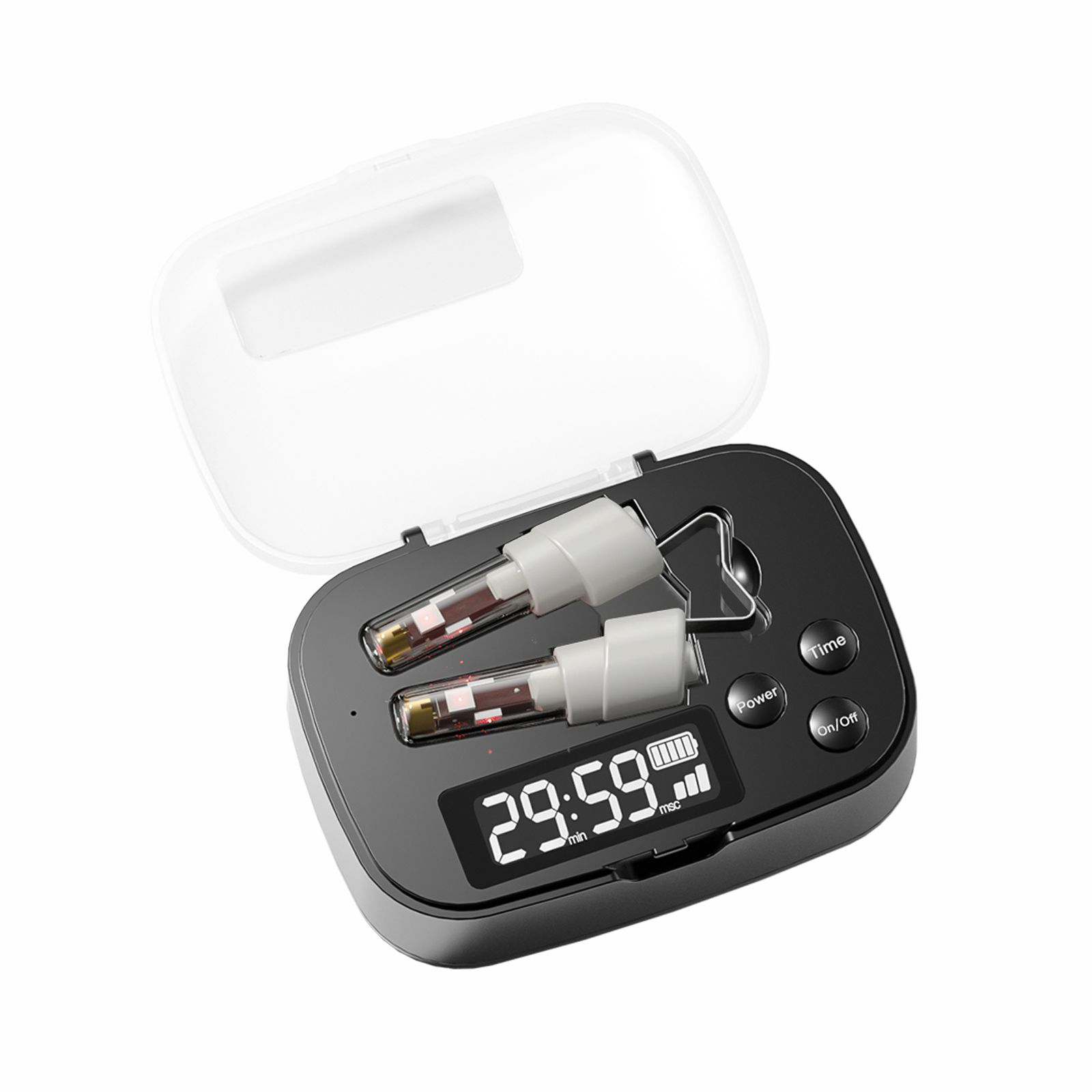
When evaluating a laser rhinitis device, focusing solely on wattage is like judging a car only by its engine size—it misses the nuanced engineering that truly defines performance. A truly effective device relies on precise wavelength selection, targeting the right tissue depth without causing unnecessary thermal damage. The 650 nm or 810 nm wavelengths, for instance, are often chosen because they penetrate mucosa just enough to stimulate photoreceptors in inflamed cells, reducing swelling and modulating the immune response at the source.
Beyond the beam itself, treatment consistency and delivery matter immensely. Devices with stable output and calibrated fluence ensure each session delivers a therapeutic dose, avoiding the pitfalls of under- or over-exposure. Ergonomic probes and user-friendly interfaces further bridge the gap between clinical efficacy and real-world compliance, making it more likely that patients will stick with the regimen long enough to see lasting relief from congestion and sneezing.
Perhaps most critically, safety mechanisms separate superficial gadgets from medical-grade tools. Integrated temperature sensors, automatic shutoffs, and certified biocompatible materials reduce the risk of burns or adverse reactions, which is essential when dealing with delicate nasal passages. These elements, combined with clinical validation and thoughtful design, collectively determine whether a device simply emits light or genuinely transforms the lives of those struggling with chronic rhinitis.
The Science of Light: How Laser Energy Tackles Rhinitis
At its core, laser therapy for rhinitis hinges on a precise wavelength of light that penetrates the nasal mucosa without causing thermal damage. This non-ablative energy is absorbed by cellular chromophores, triggering a cascade of biochemical reactions. The primary target is cytochrome c oxidase in the mitochondria, which revs up ATP production and normalizes cellular metabolism in inflamed tissues. The result is a localized reduction in oxidative stress and a reset of dysfunctional cellular signaling that perpetuates chronic nasal inflammation.
What sets laser treatment apart is its dual-action mechanism. Beyond boosting cellular energy, the light modulates the immune response right where it matters. It tamps down the hyperactive mast cells and eosinophils that drive allergic rhinitis, curbing the release of histamine and other inflammatory mediators. Simultaneously, it promotes microvascular repair and reduces edema in the nasal passages, offering relief that goes beyond temporary symptom control. Patients often notice less congestion and a lower reliance on antihistamines, without the grogginess that accompanies many medications.
Unlike the scorched-earth approach of some surgical interventions, laser energy works with the body's natural healing logic. It stimulates the lymphatic drainage of trapped inflammatory fluids and encourages fibroblasts to lay down healthy collagen, restoring the mucosal barrier. Over a series of sessions, this gentle remodeling helps the nose better defend itself against allergens and irritants—transforming a chronically reactive airway into a more resilient one. It's a gradual shift from a cycle of flare-ups to a sustained state of calm.
User Experiences: When More Power Doesn't Mean Better Relief
We've all been there—believing that if a little is good, more must be better. But when it comes to getting real relief from muscle tension or everyday aches, the equation isn't always that simple. Higher torque, stronger suction, or extra vibration force can sometimes overwhelm the body instead of working in harmony with it.
Take the example of deep-tissue massagers. A device cranked up to the max might feel intense, but it often just skims the surface, leaving knots untouched. Meanwhile, a gentler, more targeted approach can reach deeper layers without triggering that instinctive tense-up reflex. Users frequently report that dialing the power back actually unlocks the kind of relief that lasts beyond the session.
Pulse vs. Continuous Wave: Decoding Laser Output for Rhinitis
When it comes to treating rhinitis with laser therapy, the choice between pulse and continuous wave output isn't just a technical nuance—it fundamentally shapes how tissue responds and how patients feel during and after the procedure. Continuous wave lasers deliver a steady stream of energy, creating a predictable thermal effect that can efficiently reduce swollen nasal tissues but risks overheating if not carefully managed. Pulse lasers, by contrast, pack their energy into short bursts separated by cooling pauses. This gives the tissue a brief moment to dissipate heat, which often translates into less collateral damage and a more comfortable experience for someone already dealing with nasal discomfort.
Rhinitis sufferers often have sensitive, inflamed mucosa that doesn't tolerate aggressive heating well. Pulse laser settings can be fine-tuned to target only the problematic tissue—say, overactive blood vessels or hypertrophic turbinates—while sparing the delicate cilia and mucus-producing cells that keep the nose functioning normally. The intermittent nature of pulsed delivery also seems to trigger a different biological response; some studies suggest it may encourage a more regulated healing process with less scarring, which is critical in the narrow, complex passages of the nose. Continuous wave, on the other hand, can offer faster debulking in severe cases, making it a staple for surgeons who prioritize speed and need a clear operative field.
Ultimately, the decision between pulse and continuous wave isn't about which is superior—it's about matching the tool to the specific rhinitis subtype and the patient's anatomy. Allergic rhinitis with watery discharge and pale, boggy turbinates might respond better to a gentle, pulsed approach that avoids further irritating the nervous system reflexes. Meanwhile, chronic hypertrophic rhinitis with dense fibrotic tissue could require the sustained energy of a continuous wave to achieve meaningful reduction. Many modern systems blend both modes, allowing clinicians to start with a quick continuous pass for bulk shrinkage and then switch to pulsed for fine sculpting. This hybrid approach reflects a deeper understanding: laser treatment for rhinitis is not a one-size-fits-all proposition, but a tailored intervention where output mode becomes a key lever in delivering both efficacy and safety.
Safety First: Navigating the High-Power Laser Landscape
Working with high-power lasers demands a mindset where safety isn't a checklist—it’s a habit. These beams can bounce off a reflective surface and deliver a concentrated dose of energy before you even realize it’s happening. That’s why seasoned operators treat every alignment and test like the laser is always on, even when the key sits in their pocket. The invisible wavelengths are particularly sneaky; a scattered reflection in the infrared range can damage your retina without a visible flash to warn you. Developing a healthy paranoia about beam paths and stray reflections is often what separates a routine day from a trip to the ophthalmologist.
The physical environment plays a bigger role than most newcomers expect. Enclosures and beam dumps aren’t just lab decoration—they’re the primary defense against accidental exposure. But even with robust hardware, the human element remains the wildcard. A moment of distraction during an alignment procedure, a forgotten interlock bypass, or a misplaced tool can cascade into a serious incident. Experienced teams often adopt a “buddy check” culture, where a second set of eyes verifies beam blocks and shutter states before anyone steps into the danger zone. It’s a simple practice that has prevented countless near-misses from becoming actual accidents.
Beyond the immediate eye and skin hazards, there’s a quieter risk that often gets overlooked: the air itself. High peak power pulses can ionize air molecules, creating ozone and nitrogen oxides right in the breathing zone. Without proper ventilation, these byproducts can build up enough to cause throat irritation and long-term respiratory issues. Adding fume extraction near the beam interaction point is one of those low-effort, high-impact upgrades that transforms a workspace from simply “legal” to genuinely safe. Add in the non-beam hazards—high-voltage power supplies, cryogenic coolants, and heavy optical mounts—and you realize that true safety mastery is about seeing the whole system, not just the beam.
FAQ
It comes down to raw optical output power—how many milliwatts the laser can emit directly into the nasal tissue. The higher the mW rating, the deeper the light penetrates to reduce inflammation.
Most consumer devices sit between 5mW and 20mW, but the truly powerful ones push past 50mW. Anything above 30mW is considered high-grade for home use.
Based on recent spec comparisons, the latest models from specialist German and Japanese manufacturers are hitting 60-80mW per nostril, which was unheard of in portable units just a few years ago.
Not always. While higher power can accelerate symptom reduction, your nasal sensitivity and the treatment protocol (pulse width, wavelength) matter just as much. Blasting with max power without proper timing can irritate mucus membranes.
The main risk is thermal buildup if the device lacks a good cooling mechanism or if you exceed recommended session times. A well-designed high-power unit will have built-in temperature controls and automatic shut-off.
Look for third-party certifications like CE or FDA clearance, and check if the manufacturer states the actual laser diode output in mW, not just the electrical input. Reputable brands publish optical power specs tested under standardized conditions.
Many users find they can significantly cut down on antihistamine use, but it's not a one-shot cure. The strongest devices serve as a long-term management tool by reducing mucosal swelling and hypersensitivity when used consistently.
Wavelength (ideally 650-660nm red laser), battery life, treatment modes (continuous vs. pulsed), and whether the device covers both nostrils simultaneously. Power is king, but ergonomics and durability keep you using it daily.
Conclusion
When comparing laser rhinitis devices, a raw power showdown often grabs attention, but wattage is just the starting point. High milliwatt ratings can speed up relief, yet the true punch comes from how energy interacts with tissue. Photobiomodulation research shows that specific wavelengths and energy densities are crucial for quelling nasal inflammation without causing harm. Factors like beam uniformity, pulse patterns, and treatment duration matter as much as peak output. Some units fire continuous waves for deep, steady delivery, while others pulse to prevent thermal build-up—a key consideration for the delicate nasal lining. You might assume more intensity equals better results, but user accounts tell a different story. Many find that moderate settings yield longer-lasting comfort, while aggressive power can trigger irritation or rebound congestion. The real muscle lies in intelligent modulation, not brute force.
Digging deeper, the pulse-versus-continuous-wave debate shapes performance. Pulsed lasers drive energy in controlled bursts, reducing heat accumulation and allowing tissue to cool between shots, which can be safer during prolonged sessions. Continuous-wave devices, conversely, offer uninterrupted stimulation that may accelerate short-term relief but require careful oversight. Clinical insights underscore that nasal tissue has a narrow therapeutic window; energy that's too low won't kickstart healing, but excessive doses risk overwhelming the mucosa. Safety features like automatic shutoffs and real-time temperature monitoring separate responsible heavy hitters from risky ones. Ultimately, the strongest device isn't the one with the gaudiest number on the spec sheet—it's the unit that fuses formidable output with precision delivery, wavelength accuracy, and user-friendly safeguards. Balancing potency with comfort leads to consistent rhinitis control, proving that in the laser world, finesse often outpunches raw wattage.
Contact Us
Contact Person: Leon Yi
Email: [email protected]
Tel/WhatsApp: +86 17363316873
Website: https://zzgt.en.alibaba.com/