

Screw Air Compressor Manufacturer Insights for Efficient Industrial Solutions
2026-07-17
Behind every efficient production line is a compressed air system working in near silence. Yet, many operations unknowingly lose thousands to poor air quality and unnecessary energy drain. Screw air compressors are the heartbeat of modern industry—but only when engineered with precision. This is where Seize Air redefines expectations, blending decades of manufacturing insight with solutions that cut costs and boost reliability. In the following sections, we pull back the curtain on design choices, maintenance truths, and smart integration strategies that most manufacturers won't share up front. If you've ever questioned whether your air supply is truly optimized, the answers start here.
How Screw Compressors Cut Energy Costs in Continuous Operations
In environments where compressors run around the clock, even a minor efficiency gain translates into substantial savings over time. Screw compressors excel here thanks to their rotary design, which produces compressed air in a smooth, continuous flow rather than the pulsating bursts typical of piston units. This inherent steadiness reduces mechanical stress and heat buildup, allowing the system to operate closer to its optimal isothermal efficiency. Many modern oil-injected screw models also incorporate variable speed drives that finely tune motor output to real-time air demand, eliminating the wasteful on/off cycling and blowdown losses that plague fixed-speed machines.
Beyond the core mechanics, the internal compression ratio of a screw air end can be precisely matched to the required operating pressure, preventing the energy loss that comes from over-compressing air only to throttle it downstream. Combined with better cooling and lower internal leakage, these compressors maintain their rated efficiency across extended duty cycles. The cumulative effect is a 15 to 30 percent drop in specific power consumption compared to older reciprocating units in continuous-duty setups—a margin that directly shrinks electricity bills while keeping the air supply stable and maintenance intervals longer.
Matching Air Demand Without Oversizing: A Practical Guide
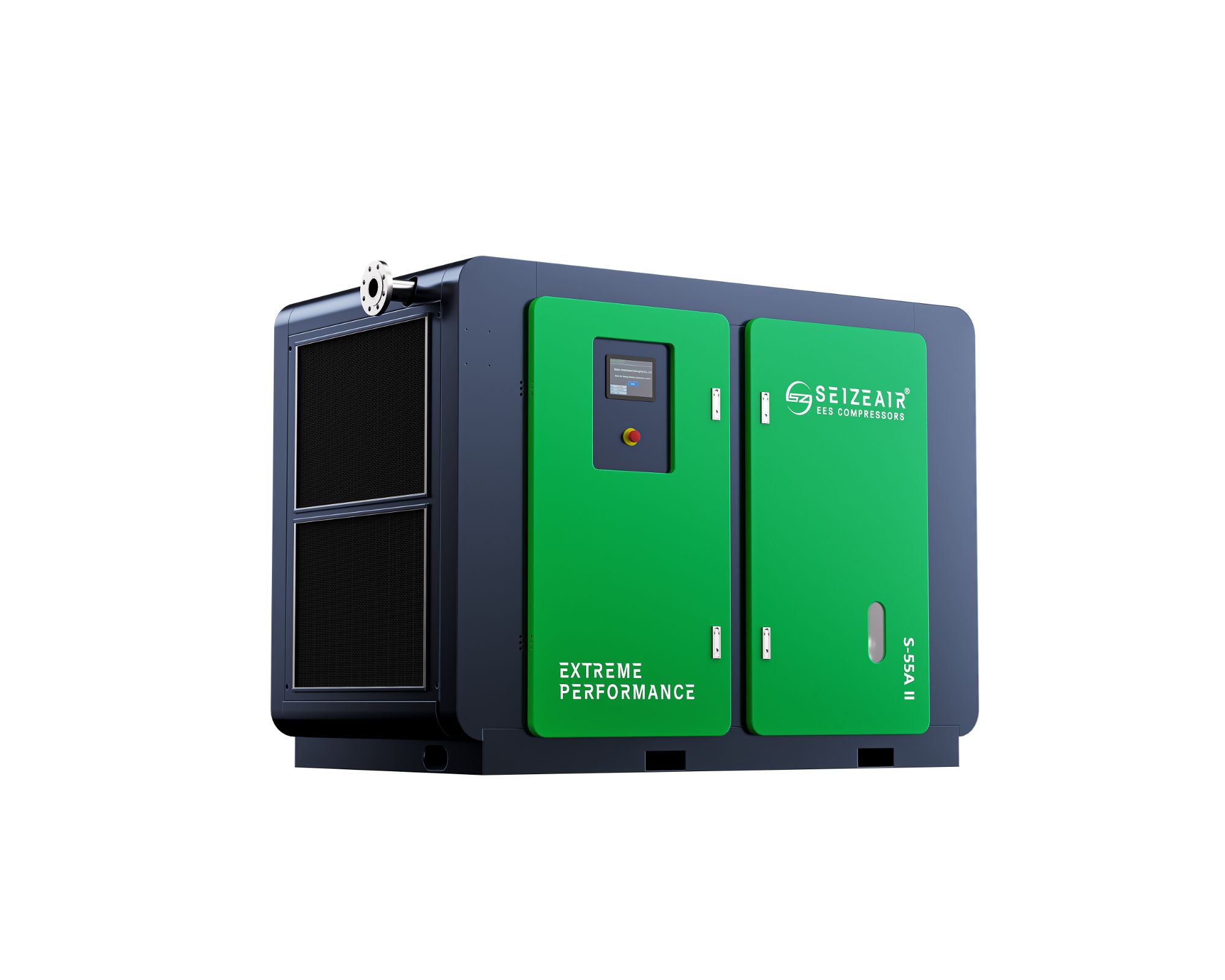
Getting the right amount of airflow into a space sounds simple enough, but it’s remarkably easy to fall into the trap of oversizing equipment. The urge to add a safety margin “just in case” often leads to systems that cycle on and off too frequently, struggle with humidity, and consume more energy than necessary. A practical starting point is to look beyond rule-of-thumb estimates and focus on the actual loads the space will experience. Detailed room-by-room calculations, factoring in insulation levels, window orientation, and even typical occupancy patterns, give a much clearer picture than any shortcut method ever could.
One overlooked aspect of matching demand is understanding part-load behavior. Most of the time, a system isn’t running at its peak design condition — it’s operating at 40% or 60% of that maximum. Selecting equipment that can modulate its output effectively across that range prevents the constant on-off cycling that kills comfort and efficiency. Variable-speed compressors, modulating burners, and fans that can ramp down gracefully are tools that let a system shrink its output to match the real-time need, rather than blasting full capacity and shutting off abruptly.
Commissioning and ongoing verification close the loop. Even a perfectly sized system can underperform if airflow setpoints aren’t dialed in or if sensors drift over time. Measuring actual airflow at the diffusers, verifying duct leakage, and comparing performance against the original design intent should be routine. Simple trending of runtime data can reveal patterns that no manual calculation would catch — like a zone constantly calling for more air because of an unplanned solar gain. Adjustments made from those observations keep the system on target without ever needing to upsize a single component.
Innovations in Oil-Free Technology for Sensitive Applications
The shift toward oil-free systems has become a quiet revolution in industries where contamination risks must stay at zero. From pharmaceutical manufacturing to semiconductor fabrication, even microscopic traces of oil can compromise product integrity or cause catastrophic equipment failure. Engineers have responded by rethinking core compressor and pump designs, moving beyond traditional lubrication methods to advanced dry-running mechanisms that deliver reliability without the mess.
Recent breakthroughs focus on material science and precision engineering. Ultra-durable coatings like diamond-like carbon and ceramic composites now allow moving parts to withstand extreme friction and temperatures without a drop of oil. Magnetic bearing technology has also matured, suspending rotors in a frictionless state that eliminates mechanical contact altogether. These systems are controlled by smart electronics that continuously adjust for thermal expansion and load changes, achieving efficiency levels once thought impossible in oil-free environments.
The real-world impact is most visible in sensitive processes such as vaccine production or optical lens coating, where air purity is non-negotiable. Oil-free compressors equipped with advanced filtration ensure that compressed air meeting ISO Class 0 standards becomes a reality, not just a specification. By removing the need for oil separation, filtration, and disposal, these innovations also simplify maintenance and lower long-term operational costs, making them an increasingly pragmatic choice beyond niche applications.
Maintenance Strategies That Extend Service Life by Decades
A stitch in time saves nine, but in heavy industries, a well-timed inspection can save an entire generation of machinery. Embedding routine thermal imaging, vibration analysis, and oil sampling into the heartbeat of operations catches failures before they cascade into catastrophic breakdowns. These condition-based interventions flip the script on reactive repairs, extending asset life well beyond original design expectations. Factories that adopted sensor-driven monitoring have seen pump and motor lifetimes stretch from a typical 15 years to over 30, simply by acting on early warning signs that conventional time-based schedules would miss.
Beyond technology, the human element remains the linchpin. When technicians are trained not just to replace parts, but to interpret wear patterns and operating environments, maintenance becomes a diagnostic art. Pairing this with rigorous documentation of every adjustment, no matter how minor, builds a historical narrative that reveals recurring stress points. Retrofitting older equipment with modern sealing and lubrication systems, rather than waiting for full replacement, also stretches capital budgets while adding decades of reliable service. The real secret is treating maintenance not as a cost center, but as a continuous engineering improvement loop.
Why Variable Speed Drives Are Reshaping Industrial Air Systems
For decades, industrial air systems operated on a simple on-or-off logic, with motors running at full speed regardless of actual demand. This brute-force approach not only consumed excessive energy but also subjected components to unnecessary stress. Variable speed drives upend that paradigm by continuously adjusting motor speed to match real-time airflow or pressure requirements, typically slashing energy consumption by 25 to 40 percent. The impact goes well beyond the electric bill: smoother starts and reduced mechanical strain translate directly into fewer breakdowns and extended equipment lifespans, making VSDs a cornerstone of modern plant efficiency.
Precision is another quiet revolution brought by these drives. Traditional fixed-speed systems often rely on mechanical throttling or bypass valves to approximate the required output, leading to pressure fluctuations that waste compressed air and strain downstream tools. By modulating motor frequency with fine granularity, VSDs maintain a stable pressure band without overshooting, which in turn curbs leaks—a pervasive and costly issue in many facilities. Operators gain the ability to dial in exact performance profiles for different shifts or production cycles, turning a once-clunky utility into a responsive asset that adapts to the rhythm of the factory floor.
Selecting the Right Control System for Smart Factory Integration
Gone are the days when a control system’s primary job was to keep the production line moving. In a smart factory, it becomes the nerve center that connects machines, data streams, and business decisions. The selection process demands a shift in mindset—instead of simply matching hardware specs, teams need to evaluate how well the system can handle real-time orchestration and adapt to changing workflows. This means looking beyond uptime statistics and focusing on data fidelity, latency, and the ability to process events at the edge.
Interoperability is where many integration efforts stumble. A control system that only speaks its own proprietary language might work fine on day one, but it will create bottlenecks when you want to plug in third-party sensors, robotics, or AI-driven quality inspection. Prioritize controllers and software that embrace open standards and robust APIs. Ask hard questions about OPC UA support, MQTT connectivity, and the ease of mapping data from PLCs to higher-level manufacturing execution systems. Vendor lock-in isn’t just a procurement concern—it’s a direct threat to scalability.
The physical placement of intelligence matters more than ever. Traditional architectures often leaned on a central server for all processing, but in a high-speed production environment, that round trip can cost milliseconds you can’t afford. Look for control systems that embed edge computing capabilities, enabling local decision-making while still feeding aggregated insights to the cloud. This distributed approach reduces network dependency, enhances resilience, and lets you deploy machine learning models directly on the plant floor without reengineering your entire network.
FAQ
Screw air compressors shine in continuous-duty cycles thanks to their rotary screw design, which delivers steady airflow with minimal pulsation. They run cooler and quieter than reciprocating models, making them a go-to for factories that demand 24/7 reliability without constant downtime for cooling or noise abatement.
Look beyond spec sheets—ask about their customization process. A manufacturer worth their salt will assess your facility's air demand profile, ambient conditions, and future expansion plans. They should offer modular designs and openly discuss trade-offs between initial cost and lifecycle efficiency, not just push a one-size-fits-all unit.
VSD lets the compressor match motor speed to real-time air demand instead of running flat-out and blowing off excess. In plants with fluctuating loads, this can slash energy bills by up to 35%. It’s not just about saving power—it also reduces mechanical stress and extends the airend’s service life.
Often the culprit isn't the compressor itself but undersized or poorly maintained dryers and filters. Ambient humidity, long piping runs, and forgotten drain traps introduce water and particulates. A holistic approach—integrating the right dryer type, point-of-use filtration, and regular condensate management—keeps air quality in spec.
Single-stage units fit nicely when your pressure requirements stay around 100–125 psi and you prioritize a smaller footprint and lower upfront cost. Two-stage shines in high-pressure applications above 175 psi or when operating in dusty, hot environments where intercooling between stages greatly boosts efficiency and reliability.
Real preventive care means trending data: monitor oil analysis for metal wear, log pressure drops across separators, and use vibration analysis on bearings. Instead of rigid time-based oil changes, condition-based monitoring often catches issues earlier. Also, don't ignore the simple stuff—clean coolers and proper belt tension can avert most emergency calls.
Modern rotors with ultra-tight clearances and advanced coatings boost volumetric efficiency while cutting internal leakage. Heat recovery systems now capture up to 90% of electrical input as usable heat for space or process heating. Combined with smart controllers that predict demand patterns, these machines are helping plants shrink their carbon footprint without sacrificing output.
A well-built screw compressor can run 40,000+ hours before major overhaul if three things align: clean inlet air, correct oil viscosity and cleanliness, and staying within rated pressures. Heavy-duty bearings and oversized coolers make a difference, but user discipline in monitoring and addressing small leaks or temperature creep early is what pushes lifespan past the average.
Conclusion
Screw air compressor manufacturers are redefining industrial efficiency by focusing on systems that deliver tangible energy savings without compromising performance. One of the most impactful advancements is the integration of variable speed drives, which allow compressors to precisely modulate output to match real-time air demand—eliminating the waste of fixed-speed units during partial loads. This is especially valuable in continuous operations, where even minor efficiency gains compound into significant cost reductions over time. Pairing this with a rigorous approach to sizing, experts caution against the common pitfall of oversizing, which leads to unnecessary energy consumption and wear. Instead, modern solutions emphasize tailored capacity that aligns seamlessly with actual usage patterns, often supported by advanced control systems that enable smart factory integration, facilitating predictive adjustments and remote monitoring.
Beyond energy dynamics, manufacturers are pushing the boundaries of reliability and application scope. Oil-free screw technology has matured to meet the strictest purity standards, making it indispensable for sensitive sectors like pharmaceuticals and food processing, where even trace contamination is unacceptable. Meanwhile, thoughtful maintenance strategies are instrumental in extending service life by decades—ranging from intelligent lubrication management to vibration analysis and scheduled overhauls that preempt failures. These insights collectively underscore a shift toward holistic solutions: compressors are no longer standalone hardware but components of a connected ecosystem designed for resilience, adaptability, and long-term value. The resulting industrial environments benefit from lower total cost of ownership and uninterrupted productivity, reflecting a deep understanding of operational realities.
Contact Us
Contact Person: Mia
Email: [email protected]
Tel/WhatsApp: +86 19821985894
Website: https://www.seize-air.com