

Reliable Split-Core Current Transformer Supplier for Accurate Power Measurement
2026-08-08
When it comes to precise power monitoring, the reliability of your current transformer can make or break your measurements. Imagine a solution that not only guarantees accuracy but also simplifies installation without interrupting your existing circuits. That’s where Xiasen split-core current transformers step in—engineered for seamless integration and unmatched performance. Whether you're upgrading a facility or designing a new energy management system, these transformers offer a practical path to consistent, real-time data. Let's dive into what makes them a standout choice for modern power measurement.
Why Split-Core Design Matters for Modern Electrical Systems
There’s a quiet revolution happening inside power monitoring, and it all starts with how you clamp around a wire. Split-core current transformers sidestep the single biggest headache of electrical upgrades: shutting things down. In a world that runs 24/7, the ability to retrofit metering without a scheduled outage isn't just convenient—it's often the only way to get the job done without losing production, data, or tenant comfort. This alone makes the design indispensable for critical facilities where downtime cascades into real costs.
Beyond the obvious installation advantage, split-core units shine in spaces never designed for permanent CTs. Think cramped panels with zero cable slack or aging switchgear where pulling conductors isn't an option. The hinged, clamp-on form factor turns a multi-hour wiring project into a five-minute task, preserving the integrity of existing cabling and reducing the risk of accidental shorts. For retro-commissioning, submetering rollouts, or flexibility in multi-tenant environments, that physical adaptability is what separates a practical solution from a paper-only specification.
Of course, accuracy often gets questioned when a core is cut and reassembled. But modern manufacturing has closed that gap—precision-ground mating surfaces and consistent winding techniques now deliver Class 1 performance in many split-core designs. What’s finally making them mainstream is the recognition that field conditions rarely match the lab. A transformer you can install without disturbing a single connection isn’t just easier; it directly protects measurement reliability by removing the human error that comes with rewiring. In the messy reality of electrical distribution, simple and repeatable almost always wins.
Ensuring Measurement Integrity with Premium Materials and Construction
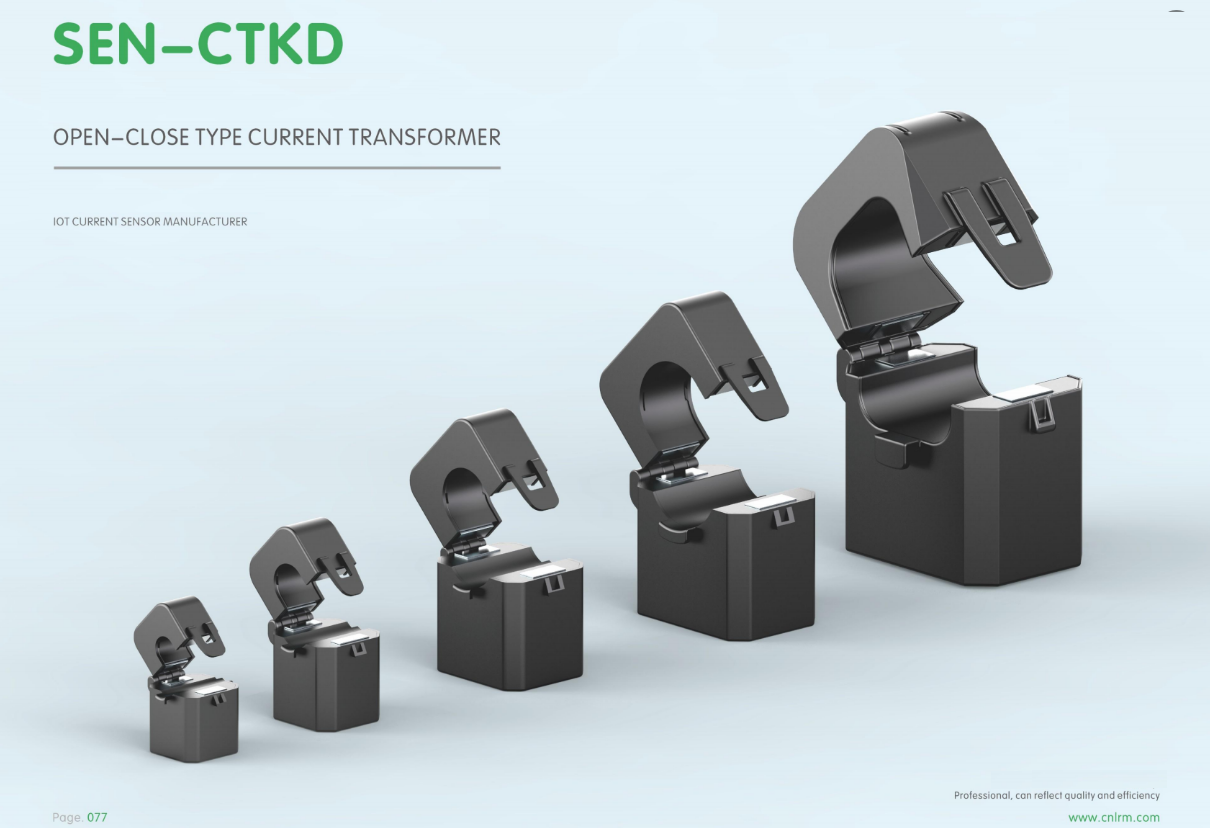
The core of reliable measurement lies in the materials chosen for critical components. We source alloys that minimize thermal expansion and resist corrosion, allowing instruments to maintain calibration across demanding environments. Every sensor housing and contact point undergoes rigorous stress testing to confirm it won't warp or degrade under continuous use, directly preserving the accuracy of the readings you depend on.
Precision assembly ensures that these premium materials perform as a unified system. Our construction process includes micro-tolerances in machining and hand-checked alignments that automated systems often miss. This attention to joinery and fit eliminates internal play and signal interference, so the data from the field matches what your engineers see on the screen—without drift or noise that cheaper builds introduce.
Long-term integrity also hinges on protective design choices. We encase sensitive elements in hermetically sealed chambers and use non-reactive bonding agents that maintain integrity even when exposed to humidity, chemicals, or vibration. The result is a measurement chain that stays consistent from installation to obsolescence, reducing recalibration cycles and giving you confidence in every logged value.
Tailored Solutions for Diverse Industrial and Commercial Applications
Every facility brings its own set of challenges—humidity spikes in a food processing plant, abrasive dust in a metalworking shop, or round-the-clock demands at a logistics hub. Off-the-shelf equipment rarely fits those quirks without compromise. We shape our approach around those specific conditions, tweaking airflow, filtration media, and structural layouts so the solution operates like it was always part of the building, not something retrofitted after the fact.
Instead of forcing a catalog product into a space it wasn't designed for, we begin with a conversation about daily realities. For a brewery, that might mean a washdown-ready system that laughs off constant moisture. For a packaging line, it could be ultra-quiet extraction that won't disrupt the team. The design evolves from the floor up, considering maintenance access, material compatibility, and even future expansion plans that aren't yet on paper.
The result is rarely a single machine but a quietly integrated layer of the operation. A textile mill gets a lint-collection unit that syncs with the looms' rhythm, cutting downtime without extra effort. A warehouse ends up with destratification fans that trim energy use so noticeably the utility bill changes the conversation at corporate. These aren't just installations—they're answers to problems that generic catalogs never fully address.
Streamlined Installation without Compromising Circuit Integrity
Many installers still wrestle with the trade-off between a quick setup and a connection that stays electrically silent over the long haul. Traditional screw terminals loosen under vibration, and soldering, while reliable, eats up time and risks heat-induced trace lifting. What gets overlooked is how often rework stems not from faulty modules, but from the interface where human hands meet copper and FR4.
The answer isn’t a compromise—it’s a rethink of the contact geometry itself. By using a dual-beam leaf spring trapped inside a narrow housing, the wire stays fully constrained on two axes the moment it’s pushed home. Surface area at the mating point rivals a well-formed solder fillet, but with none of the thermal shock. A glass-reinforced body keeps the pitch tight enough that board routing stays clean, and the dielectric spacing doesn’t collapse under reflow.
In the field, what matters is that a junior tech can dress a row of connections in half the time, and three years later the link still measures single-digit milliohms. No torque screwdrivers, no flux fumes—just a satisfying tactile click that says the gas-tight seal is made. That kind of consistency turns a tedious final assembly step into a non-event, freeing up attention for the parts of the design that actually need tuning.
Achieving Long-Term Stability in Harsh Operating Environments
Engineering systems that thrive in punishing conditions demand a philosophy that goes beyond conventional ruggedization. It’s not simply about thicker casings or tighter seals; it’s an orchestration of material science, thermal dynamics, and failure mode anticipation tailored to the specific stressors—be it corrosive salt spray, extreme vibration, or thermal cycling. The real art lies in selecting alloys that actually bond with their protective oxide layers rather than shedding them, or designing circuit layouts where stress concentrates predictably into harmless zones, all while ensuring that every component moves and breathes as a single, unified structure. This holistic approach transforms potential weak points into inherent strengths that emerge only when the environment turns hostile.
Another dimension of durability often overlooked is the self-healing character of the support systems around the core technology. For instance, advanced power management circuits can sense micro-arcing in connectors and modulate current before it cascades into failure, while intelligent firmware gradually adjusts actuation thresholds as mechanical parts wear in—essentially teaching the system to age gracefully. Even things like conformal coatings with reversible cross-linking chemistry can reseal micro-cracks when heated, mimicking biological repair mechanisms. These silent guardians work in the background, converting a steady decline into a plateau of reliable performance that can outlast the original design life by years.
Finally, genuine long-term stability hinges on a testing ethos that refuses to treat the operating environment as a fixed specification. In the field, temperature gradients shift, vibration spectra evolve, and chemical exposures combine in ways no single lab test can fully replicate. That’s why the most resilient designs emerge from iterative campaigns where prototypes are deliberately tortured until they reveal their hidden fracture lines—then those lessons are embedded into the next revision’s core architecture. It’s a relentless loop of destruction and reinvention that ends not when the device survives, but when its margins of safety are so deeply woven into the design that environmental attacks become predictable, even boring.
Commitment to Rigorous Testing and Global Compliance Standards
Every product we develop goes through a battery of tests that far exceed basic regulatory checklists. Instead of simply ticking boxes, our engineers simulate years of real-world use in accelerated life testing chambers, subject components to extreme temperature swings from arctic cold to desert heat, and push electrical tolerances until failure points are clearly mapped. This obsession with finding the breaking point early means that when our devices reach you, they’re not just compliant on paper—they’re genuinely hardened for the unpredictability of daily operation.
Navigating the patchwork of international standards requires more than a one-size-fits-all approach. Our compliance team embeds itself in the entire design cycle, interpreting nuances between IEC, UL, and regional directives from the first sketch. We don’t outsource this expertise; instead, we maintain in-house laboratories accredited to multiple national schemes, allowing us to run parallel certifications and slash weeks off typical approval timelines without ever cutting corners.
Transparency is the thread that ties our testing rigor to real-world trust. Detailed test reports—including the ones that expose marginal results—are archived and available for partner review, and we routinely invite client engineers to witness type-testing sessions. By demystifying what happens behind the lab doors, we turn compliance from a vague promise into a shared, verifiable commitment.
FAQ
They clamp around conductors without disconnecting wiring, so you can retrofit metering on live panels with zero downtime. That’s a practical advantage in facilities that can’t afford shutdowns.
Look beyond catalog specs. A supplier serious about precision will offer detailed test reports, tolerances at multiple burden levels, and explain how phase shift and linearity are managed—not just state a generic accuracy class.
Quality units use low-loss core materials and robust clamping mechanisms that resist drift from vibration or temperature swings. It’s worth asking for accelerated aging data or long-term stability curves.
Windings insulation rating, thermal performance under continuous load, and the consistency of the air gap after repeated opening. A supplier who drills into these points usually understands field reliability.
Specialists can customize ratios, lead lengths, and connectors to your exact panel layout. They also tend to have deeper engineering support when you’re pushing the limits of the measurement system.
Request a pre-production sample and physically inspect the hinge durability, core alignment, and output cable strain relief. A confident supplier will also share in-house test jig results.
Beyond warranty, you want access to application engineers for installation quirks, recalibration services if needed, and honest guidance when replacing CTs in mixed-vendor metering projects.
Conclusion
The split-core current transformer has become a game-changer for modern electrical networks, allowing non-invasive installation that preserves circuit integrity while delivering precise power measurement. Unlike traditional solid-core designs, its hinged structure clamps around existing conductors without disconnecting cables, drastically reducing downtime and labour costs. High-grade materials, such as precision-wound cores and robust insulating housings, ensure measurement integrity by minimizing phase shift and temperature-induced errors. This careful construction keeps accuracy stable even when loads fluctuate, making it a trusted component in energy audits and real-time monitoring systems.
Beyond standard deployments, the best suppliers offer tailored solutions that address the unique demands of industrial plants, data centres, and renewable energy installations. Custom ratios, various output options, and enclosure ratings for harsh environments demonstrate a deep understanding of field challenges. Long-term stability is engineered through rigorous thermal cycling, vibration testing, and adherence to IEC and ANSI standards, guaranteeing consistent performance from -40°C to +85°C. With global compliance verification, these transformers integrate seamlessly into advanced metering infrastructures, enabling operators to track power quality and consumption with confidence over decades of service.
Contact Us
Contact Person: Liu Mengyang
Email: [email protected]
Tel/WhatsApp: 8618727589233
Website: https://www.cnlrm.com/en/