

Reliable Semiconductor Air Compressor: Essential Guide to Optimal Performance
2026-08-06
In the high-stakes world of semiconductor manufacturing, even a whisper of contamination can derail an entire production line. Reliable compressed air is not just a utility—it’s the silent backbone of cleanroom precision. But not all air compressors are built to meet the relentless demands of chip fabrication. From oil-free purity to vibration-free stability, the right choice can mean the difference between flawless yields and costly downtime. This guide unpacks the essentials you need to know, spotlighting how Seize Air is engineering a new standard in dependable performance. Whether you’re upgrading legacy systems or designing a new fab, you’ll discover what truly separates an ordinary compressor from a semiconductor-grade solution.
How Semiconductor Air Compressors Drive Next-Level Reliability
Reliability in semiconductor manufacturing isn’t just a benchmark—it’s the very foundation of profitable operations. Air compressors play a behind-the-scenes yet mission-critical role, supplying contaminant-free, precisely pressurized air to lithography machines, wafer handling robots, and pneumatic controls. A single fluctuation in air quality or pressure can trigger cascading defects, scrapping entire batches of high-value wafers. Next-generation oil-free screw compressors and centrifugal designs tackle this by eliminating lubrication contaminants at the source, while integrated dew point monitoring continuously adjusts drying parameters to keep moisture levels below parts-per-billion thresholds.
What truly shifts the reliability curve is the integration of predictive maintenance algorithms within the compressor package. Instead of waiting for a bearing to degrade or a filter to clog, onboard sensors track vibration spectra, temperature gradients, and current draw in real time. This data feeds machine learning models that can forecast component wear weeks before a fault occurs, allowing maintenance teams to swap parts during planned downtimes rather than reacting to costly emergency stops. Some systems even compare performance against fleet-wide baselines stored in the cloud, automatically flagging subtle efficiency drifts that human operators would miss.
Beyond the hardware, reliability is reinforced through material science innovations that directly address the semiconductor environment. Elastomers and seals now employ perfluoroether and other ultra-pure materials that resist outgassing and chemical attack from process byproducts. Air-end coatings like PTFE or ceramic composites reduce friction without liquid lubricants, extending service intervals well past 40,000 hours. These breakthroughs, combined with modular hot-swappable desiccant dryers, mean that a modern semiconductor compressor can deliver uninterrupted, Class 0 quality air for years—turning what was once a periodic maintenance headache into a virtually transparent utility.
Mastering the Art of Flawless Air Compression
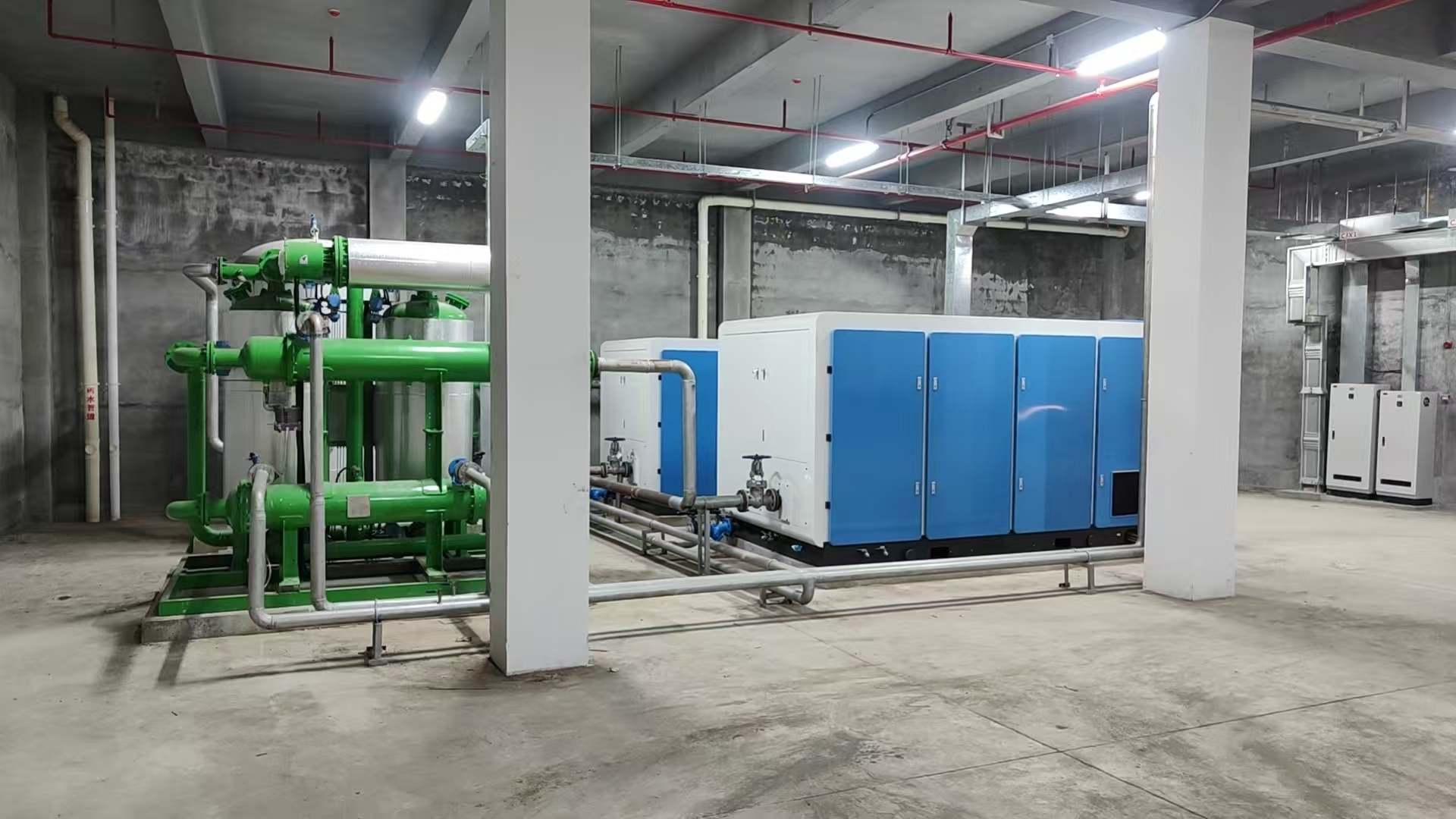
Achieving truly flawless air compression isn’t just about picking the right machine—it’s a delicate balance of pressure regulation, moisture control, and system integrity. Most setups fail quietly: a tiny leak here, a subtle pressure drop there, and suddenly your tools are starving for consistent power. The art lies in seeing the compressor not as a standalone box but as the heart of a living circuit, where every fitting and filter plays a role in the final output.
One often overlooked element is the thermal dance that happens inside the tank. As air compresses, it heats up, and as it cools, condensation forms—a silent enemy that breeds rust and contaminates downstream equipment. Mastering this means placing drains at the lowest points, sizing aftercoolers thoughtfully, and even considering the ambient humidity of your workspace. It’s these small attentions that separate a noisy, maintenance-heavy setup from one that hums along for years with barely a hiccup.
Finally, think beyond the gauge. A flawless system whispers its health through subtle cues: the rhythm of the motor, the absence of water spitting from the line, the way a spray gun lays down an even coat without pulsing. Tuning your ear to these signals and pairing them with a disciplined maintenance rhythm—checking seals, swapping filters before they choke, and never ignoring a slight change in sound—is what transforms a good compressor into an invisible, reliable force in your workflow.
Inside the Engineering Secrets of Peak Performance
Peak performance isn’t a stroke of luck—it’s the result of carefully engineered systems that most people never see. Behind every high achiever, from elite athletes to top-tier executives, lies a blueprint of deliberate practices, environmental controls, and habit loops that make excellence almost inevitable. These aren’t random hacks but methodical tweaks to the human operating system, fine-tuned through relentless iteration and measurement.
At the core, it’s about understanding the interplay between stress and recovery in ways that defy conventional wisdom. The engineering mindset treats the body and brain as a biological machine that needs calibrated inputs: precise doses of challenge, timed nutrition, micro-sleep strategies, and cognitive preloading. Instead of pushing harder, these performers design their days around strategic energy management, using data like heart rate variability and sleep architecture to guide adjustments that keep them in a state of optimized arousal—not too relaxed, not too anxious.
What truly sets them apart is how they routinize decisions to preserve mental bandwidth for critical moments. They engineer environments that eliminate choice fatigue, automate low-value actions, and embed triggers that summon peak states on command. By treating excellence as a design problem rather than a personality trait, they strip away the mystery and leave behind a replicable framework that anyone can adapt—if you’re willing to measure what matters and edit your reality without sentimentality.
Overcoming Common Pitfalls in Demanding Environments
Hard-won experience in unforgiving settings teaches a simple truth: most missteps stem not from a single catastrophic error but from a slow drift away from fundamentals. When pressure mounts, even seasoned teams may skip thorough briefings, ignore subtle warning signs, or defer maintenance on critical gear. The antidote is a disciplined habit of pausing to reassess, even when—especially when—the clock is screaming. A sixty-second huddle to realign on priorities can mean the difference between a minor hiccup and a cascading failure.
Another recurring pitfall is overconfidence in familiar terrain. Environments that punish complacency demand constant vigilance: yesterday’s safe route may be today’s hazard after a weather shift or equipment wear. Cultivating a mindset of “suspicious observation” helps teams spot anomalies early. This means actively questioning assumptions, cross-checking instrument readings against gut feel, and empowering every member to voice concerns without fear of slowing progress. In truly demanding arenas, the quiet observer who flags a subtle hydraulic leak is as valuable as the one who solves the emergency in the moment.
Finally, the human element often gets overshadowed by technical checklists. Fatigue, dehydration, and cumulative stress erode judgment long before physical collapse. The sharpest protocols crumble when a team is running on fumes. Counterintuitively, the best preparation might be a firmly enforced rest cycle or a mandatory meal break when tensions are highest. By weaving recovery into operations rather than treating it as an afterthought, teams maintain sharper decision-making and stand a far better chance of sidestepping the errors that high-stakes environments are all too ready to exploit.
Tailoring Your Setup for Unmatched Efficiency
Efficiency isn’t about doing more in less time—it’s about aligning your tools and habits with how you naturally work. The most effective setups are the ones that disappear into the background, letting you slip into a flow state without friction. Start by auditing what you actually use daily. Remove the apps, browser extensions, and even the physical clutter that create mental noise. Keep only what serves a clear purpose, and don’t be afraid to break conventions if a popular tool adds more complexity than clarity.
Consider how different types of work demand different environments. A single, static setup rarely excels across coding, writing, design, and deep thinking. Craft contextual workspaces: a minimal display for focused writing, a multi-monitor layout for data-heavy tasks, and perhaps a tablet-only mode for reviewing or sketching. The key is making transitions seamless—automate window arrangements, color-code environments, and use shortcuts that feel instinctive rather than forced. Over time, these tailored micro-environments become muscle memory, trimming the lag between idea and execution.
True efficiency also means designing for maintenance and adaptability. Document your optimizations in a simple, evolving playbook that you revisit whenever something breaks or a new tool emerges. But guard against the trap of constant tweaking—a setup is only efficient if you can stop adjusting it long enough to create meaningful output. The mark of a perfectly tailored system isn’t its complexity or novelty; it’s that you didn’t have to think about it at all while doing your best work.
Future-Proofing Your Operations with Smart Innovations
The pace of change isn't slowing down, and yesterday's strategies won't solve tomorrow's challenges. Smart innovations aren't just about adopting the latest gadgets; they're about weaving adaptive intelligence into the fabric of your operations. This means building systems that learn, anticipate bottlenecks, and pivot before a minor hiccup becomes a major disruption. It's less about a single overhaul and more about fostering a mindset where incremental, data-driven tweaks keep your workflows resilient in the face of shifting demand, supply chain volatility, and evolving market expectations.
Real future-proofing happens when you move beyond reactive fixes and start embedding flexibility into your core processes. Consider how modular automation can allow a production line to switch between product types within minutes instead of days, or how predictive analytics can flag equipment stress long before it fails. These aren't distant fantasies—they're practical, scalable tools that are already redefining what operational stability looks like. The key is to avoid shiny-object syndrome and focus on innovations that create genuine interoperability between your teams, tech, and timelines.
Ultimately, staying ahead isn't about predicting the future perfectly; it's about being ready for multiple versions of it. Smart innovations should act like a compass, not a rigid map. Encourage cross-functional experimentation, celebrate quick learning cycles, and let real-time insights steer resource allocation. When your operations are nimble enough to absorb shocks and seize unexpected opportunities, you're not just surviving change—you're using it as leverage. That kind of organic resilience can't be copied overnight by competitors, which is precisely what makes it a lasting advantage.
FAQ
Reliability often comes down to the quality of internal components and thermal management. Semiconductor compressors use solid-state cooling, which means no moving parts to wear out. Properly sealed units that resist moisture ingress and use high-grade thermoelectric modules tend to last years without a drop in efficiency.
Keep the heat sink fins clean and free from dust, as airflow is critical. Regularly check the power supply for stable voltage; fluctuations can stress the modules. Also, ensure the ambient temperature stays within the recommended range—excessive heat forces the compressor to work harder and reduces its lifespan.
Not really. Unlike piston-driven compressors, these units don’t have mating surfaces that need to wear in. Just power it on and let it stabilize for a few minutes. If it runs louder than expected initially, give it a day—sometimes thermal paste settles or fans smooth out after a short run.
Ambient temperature and humidity are the big ones. High heat reduces the temperature differential the thermoelectric module can maintain, while moisture can lead to condensation issues or corrosion over time. Good ventilation around the inlet and outlet is non-negotiable.
Yes, as long as the cooling system can keep up. These compressors are designed for steady-state operation, but the hot side must dissipate heat effectively. If you’re cycling it, avoid rapid on-off patterns—thermal shock from sudden temperature changes can degrade the modules prematurely.
Start by calculating the required air flow at your desired pressure, then factor in the duty cycle. Manufacturers usually provide performance curves; pick a model that sits comfortably within its efficient range, not at the limit. Oversizing slightly is better than undersizing, as running flat out all day invites early failure.
Subtle clues show up first: a gradual drop in outlet pressure, uneven cooling, or the unit cycling more often than it used to. Listen for fan noise changes—bearings wear. If you notice frost or excessive condensation where it shouldn’t be, a seal might have gone. Catching these early can save the compressor.
Thermoelectric modules are sensitive to voltage and ripple. A clean, steady DC supply ensures the module runs at its design efficiency. Spikes or voltage sag can cause hotspots or reduce pumping capacity. Using a quality power adapter with adequate current headroom prevents erratic behavior and premature module death.
Conclusion
A truly reliable semiconductor air compressor isn't just a piece of hardware—it's a carefully engineered system designed to uphold stringent purity and pressure standards. The journey to next-level reliability begins with mastering oil-free compression mechanisms that eliminate contamination risks, coupled with precision rotor dynamics and stable thermal management. Inside every high-performance unit, engineering secrets like advanced coating materials and adaptive sealing technologies work silently to prevent wear and maintain consistent output, even under fluctuating loads. These elements form the backbone of flawless air compression, where even minor deviations can disrupt sensitive semiconductor processes.
Yet peak performance isn't just about the machine alone; it's about tailoring the setup to meet specific facility conditions while sidestepping common pitfalls such as moisture ingress, pressure drops, or insufficient filtration in demanding environments. Thoughtful integration of variable-speed drives, optimal piping layouts, and real-time monitoring allows for unmatched efficiency without compromising reliability. Looking ahead, future-proofing operations means embracing smart innovations like IoT-enabled predictive maintenance and AI-driven optimizations that adapt to process changes automatically. By combining robust engineering with intelligent customization, facilities can ensure their air compression systems not only survive but thrive in an evolving industrial landscape.
Contact Us
Contact Person: Mia
Email: [email protected]
Tel/WhatsApp: +86 19821985894
Website: https://www.seize-air.com