

Professional Core Filling Snack Production Line: Key Features for Efficient Manufacturing
2026-08-27
Ask any plant manager about core-filled snacks and you'll hear the same pain: keeping the filling centered while pushing output higher. MINGDE takes a different approach. Here's a look at the key features that make their professional core filling snack production line a genuine efficiency driver.
Fill Weight Precision Without Constant Recalibration
Weighing cells in modern filling lines often drift with temperature swings or vibration, but that doesn’t mean operators should be chasing zero points every shift. A well-designed system learns the drift signature of each load cell and compensates in real time, holding tare stability across long production runs. Instead of stopping the line to recalibrate, the control logic compares live weight readings against a moving reference and corrects for slow offset shifts automatically.
The real difference shows up when you switch between containers or product densities. Many machines now store fill profiles tied to container geometry and flow characteristics, so the target weight adjusts without re-zeroing the scale. If a batch runs slightly heavy for ten containers in a row, the algorithm pulls the next fills a fraction lighter, not by changing the calibration but by nudging the cutoff timing. That closed-loop correction keeps every dose inside tolerance while the baseline calibration stays untouched for weeks.
What operators notice is less downtime and fewer rejected units. Because the system watches its own repeatability, it can flag a load cell that’s starting to drift beyond a safe band before the error reaches the fill weight. That early warning, paired with automatic zero-tracking, means you’re not constantly stopping for manual checks. Precision comes from the control strategy, not from frequent recalibration.
Tool-Free Changeovers for Seasonal Flavors
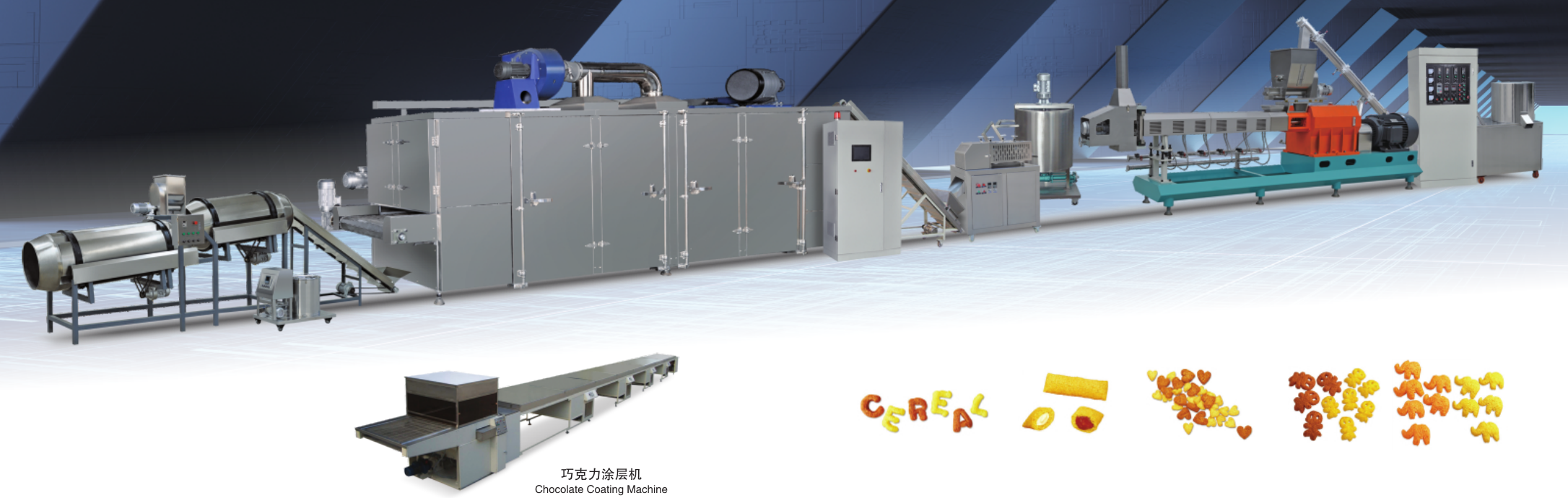
Switching a production line to a new flavor used to eat up hours, but our quick-change tooling now gets it done in minutes. Operators just release a few clamps, slide out the old formats, and lock in the new ones—no wrenches, no recalibration, no guesswork. Because the changeover is so light on labor, we slip seasonal runs into the schedule without shutting down longer than a lunch break.
That flexibility lets us play with limited batches like pumpkin spice or summer peach without carrying the usual cost penalty. Rather than stockpiling a single flavor to justify setup time, we can rotate through small quantities and keep the lineup fresh. The machines don’t care if the recipe changes every few days; the tooling is designed to be swapped by feel, with alignment pins and preset stops doing the hard work.
The real payoff shows up in the warehouse. Instead of guessing how much peppermint to make in October, we wait until demand firms up and then run exactly what’s needed. Leftover seasonal inventory shrinks, write-offs drop, and shelf space goes to flavors people are actually buying this week. It’s a quieter kind of advantage—not flashy, just fewer pallets gathering dust and more room to follow the weather.
Washdown-Ready Zones That Speed Up Sanitation
In high-volume food and beverage plants, the difference between a five-minute rinse-down and a forty-minute scrub often comes down to how the zone around each machine is shaped. Floors with a steady quarter-inch fall per foot toward a centrally placed trench drain let water and solids move out under their own weight. No berms, no hidden corners, and no equipment feet bolted into stagnant puddles. When the spray wand can reach every surface from a standing position, crews stop wasting time dragging hoses or shifting heavy mixers just to hit the back side.
The real speed gains show up in the details that are easy to copy but rarely specified. Cove bases at the wall-floor junction eliminate the crevice where a deck brush always snags. Stainless legs with open tops and no threaded feet keep the area underneath accessible to a high-flow nozzle. Quick-connect drops placed every twelve to fifteen feet mean one person can swap from a low-pressure rinse to a foaming agent without walking back to the supply line. These choices cut sanitation time not by asking workers to move faster, but by removing the physical obstacles that slow them down.
A well-marked washdown corridor also creates a repeatable path that becomes second nature between shifts. Drain covers, hose stations, and chemical pickups share the same color coding as the production schedule. That visual consistency lets a new sanitation tech follow the flow without a clipboard. Over a week of daily cleanings, the minutes saved compound into extra production hours, and the zone itself stays cleaner because water never lingers long enough to grow biofilm.
Sensor-Guided Flow to Prevent Air Pockets
In precision dispensing, air pockets rarely announce themselves until a downstream nozzle sputters or a metered volume falls short. Sensor-guided flow changes that by placing miniature pressure and capacitive sensors directly in the fluid path, usually within the manifold or just before the dispense valve. These sensors catch the brief pressure dip and dielectric shift that occur when a gas slug passes through. The controller responds within milliseconds—not by stopping the line, but by trimming the pump speed or cracking a bypass valve so the bubble is diverted into a vent chamber instead of the workpiece.
Fixed thresholds quickly lose usefulness when viscosity changes from one batch to the next. A more robust approach learns the baseline signal pattern during clean flow and watches for short-lived distortions or phase shifts that indicate a bubble front. Once detected, the system can command a short reverse stroke from a peristaltic or diaphragm pump, pushing the trapped air back toward the reservoir headspace. This gentle reversal helps avoid the cavitation and foaming that often accompany aggressive purging, which is especially important with shear-sensitive fluids like cell-laden hydrogels or high-solids coatings.
Placement is often the deciding factor in how well the loop works. Putting the sensor too close to the nozzle gives the actuator almost no time to react, while placing it too far upstream lets bubbles coalesce into larger voids. In multi-channel rigs, each line must be calibrated separately because differences in tubing length and inner diameter change how quickly a bubble travels. Some production systems add a simple optical sensor at the nozzle exit to confirm droplet continuity; when that signal becomes intermittent, the controller escalates to a stronger bubble-venting routine. That layered, sensor-fused strategy does a better job of keeping air out of the final product than relying on flow meters alone.
Low-Energy Motors That Keep Production Costs Down
Cutting electricity bills starts at the motor shaft. Low-energy motors use optimized windings and thinner laminations to slash heat loss, so every kilowatt that goes in comes out as useful torque instead of wasted warmth. Factories running multiple lines often see a double-digit drop in power draw within the first month, without any change to production speed.
The real savings show up in the long run. Because these motors run cooler, bearings and insulation last longer, meaning fewer unplanned stops and less money spent on replacements. And since most industrial power tariffs penalize peak demand and poor power factor, a switch to low-energy designs can lower both the hourly rate and the hidden surcharges that quietly inflate operational budgets.
Adopting this technology doesn’t require a full factory overhaul either. Many low-energy motors are built to drop into existing mounts and control setups, letting maintenance teams swap out old units during routine downtime. The payback period often lands under two years — shorter when local utilities offer rebates for high-efficiency equipment.
Remote Diagnostics That Minimize Unplanned Stops
Equipment failures rarely announce themselves with a warning light and a polite countdown. More often, a minor drift in vibration, temperature, or pressure goes unnoticed until it becomes an expensive halt on the production floor. Remote diagnostics change that pattern by keeping a continuous eye on machine health from a distance, flagging the subtle shifts that usually precede a breakdown. Instead of reacting to a stoppage, maintenance teams get a head start, ordering a replacement part while the line is still running and scheduling a fix during planned downtime. The result is fewer surprise stops and a schedule that actually holds.
What makes remote diagnostics effective is not just the sensors but the context around them. A temperature spike alone might be normal on a hot day, but paired with an unusual current draw and a slight increase in bearing noise, it tells a different story. Technicians see the full picture on a dashboard — historical trends, error codes, and even live waveforms from the field — without walking the floor. That means a specialist in another time zone can assess a pump in real time, often before the local operator notices anything wrong. The diagnosis becomes proactive rather than retrospective, shifting the conversation from "what broke?" to "what is about to break?"
Beyond the obvious savings in lost production, remote diagnostics also reduce the wear and tear of emergency repairs. When a machine stops without warning, the fix is often hurried, partial, and done under pressure — which invites repeat failures. With remote monitoring, the first intervention is usually smaller and better planned: a calibration, a filter swap, a firmware update. Over time, this builds a maintenance history that reveals patterns no single inspection would catch, helping factories replace components on their own terms. Unplanned stops shrink not because machines never fail, but because the failures are caught early enough to be scheduled, contained, and often prevented altogether.
FAQ
Typically, you're looking at a dough preparation system, a precision depositor for the filling, a forming or extrusion unit, a baking or frying section depending on the snack, and a cooling and packaging conveyor. The heart is the co-extrusion head that keeps the filling perfectly centered.
It comes down to servo-driven positive displacement pumps and in-line weight correction. Many systems use a feedback loop from a checkweigher that automatically trims the pump stroke, so you don't get under-filled or over-filled pieces even at hundreds per minute.
Quick-release sanitary fittings, sloped surfaces, and CIP (clean-in-place) manifolds are standard now. The filling nozzles are often tool-less removable, so you can swap them in under a minute and run a rinse cycle without dismantling the entire line.
Yes, if you spec modular cooking sections. You'd have interchangeable conveyor belts and different temperature zones. The filling system doesn't change, but the baking tunnel or fryer unit can be wheeled in or out. Some plants run both by changing only the heat transfer module.
PLCs with recipe management are key. Once a product spec is loaded—viscosity, filling ratio, belt speed, oven profile—the line self-adjusts. Operators mostly monitor alarms and replenish ingredients, which cuts startup scrap and ensures batch-to-batch repeatability.
Heated jacketed hoppers and progressive cavity pumps are common. The fill pipes are also jacketed and may have low-shear agitators. Temperature is controlled within ±1°C, so the filling stays flowable but never separates or burns at the nozzle.
Preventive maintenance focuses on wear parts: pump rotors, cutting wires, and belt scrapers. Many lines include IoT sensors that track bearing vibration and motor current, flagging issues before failure. A typical shift does a 20-minute clean and inspection, with full CIP on weekends.
Conclusion
A modern core filling snack line earns its keep by removing the small inefficiencies that eat into daily output. Instead of stopping to verify fill weights, operators rely on load-cell feedback paired with automatic density compensation—so a shift from nougat to caramel doesn't require manual recalibration. When seasonal flavors roll through, tool-free changeovers matter just as much: clamps, guide rails, and nozzle plates release by hand, letting a two-person team switch formats in the time it takes to stage the next batch. Washdown-ready zones then cut sanitation from a full-shift ordeal to a focused rinse. Sloped frames, sealed bearings, and quick-release guards eliminate trapped product, while sensor-guided flow watches for pressure dips that signal air pockets in the filling. The auger or piston adjusts on the fly, keeping every snack core dense and uniform.
Efficiency also shows up in the utility bill and the maintenance log. Low-energy motors meet IE4 standards and run cooler, which extends drive life and reduces plant cooling load. Remote diagnostics take that further by streaming torque, vibration, and temperature signatures to a dashboard; the system flags a worn seal or a drifting belt tension early enough to schedule service during a planned lull. The result is fewer unplanned stops and less product waste. For high-mix snack producers, these features work together to keep fill weights tight, flavor changeovers quick, sanitation thorough, and downtime rare—without adding headcount or complexity.
Contact Us
Contact Person: LILY SUN
Email: [email protected]
Tel/WhatsApp: 0086-13969103791
Website: https://www.snackfoodmachinery.com/