

OEM Vibration Motors: A Guide to Custom Haptic Feedback Solutions
2026-11-02
Haptic feedback isn't just about making a device shake—it's about crafting a silent language your users can feel. With OEM vibration motors, you can move beyond off-the-shelf buzzes and design tactile responses that match your product's personality. In this guide, we'll show you how Guangling turns custom vibration needs into precise, user-ready solutions.
Nailing the Tactile Goal Before You Spec a Motor
Too often, the tactile signature of a product gets treated as an afterthought. The motor gets picked for size and cost, then someone tries to tune the feel in code. That's backwards. The sensory goal should be stated before any datasheet gets compared—not as "good haptics" but as a specific, testable description: a 15 ms tap that feels like a ballpoint click, or a 200 Hz buzz that mimics a phone on a wooden table. Until that is pinned down, every motor choice is a guess.
Once the tactile target is concrete, the actuator selection becomes a filtering exercise. Linear resonant actuators excel at narrow-band vibrations but lack bandwidth for sharp transients. Eccentric rotating masses are cheap and robust but smear the onset. Voice coils and piezo elements offer speed and control at higher cost and drive complexity. The spec sheet then serves the sensation, not the reverse. Teams that skip this step end up with a motor that fits the board but misses the hand.
Where Generic Vibration Motors Let Products Down
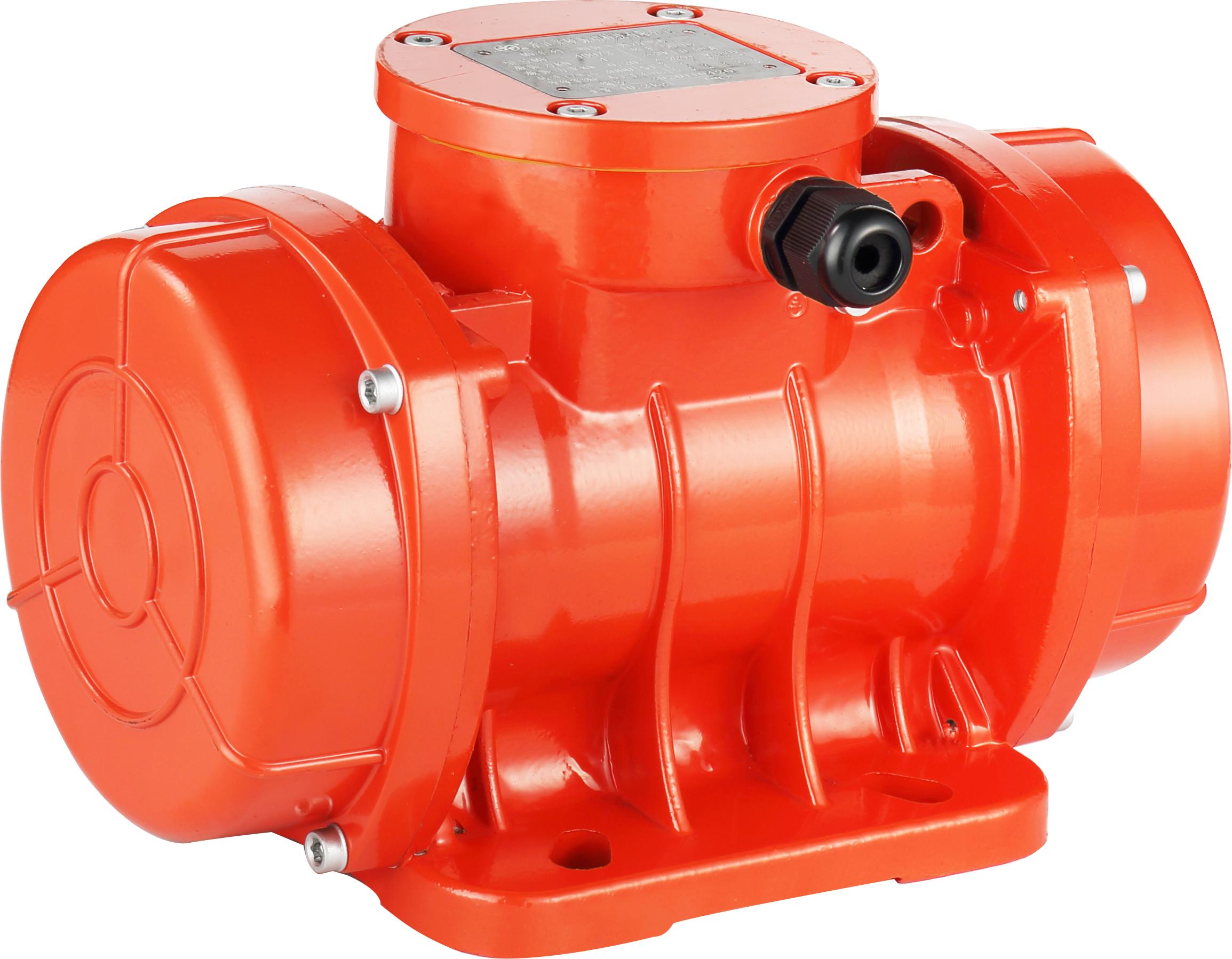
Most product teams don’t think twice about the tiny vibration motor until field returns start climbing. Generic units often ship with loose tolerances on eccentric mass weight and rotation speed, which means two identical devices can feel completely different in the user’s hand. One unit buzzes sharply, another barely registers. For haptics-heavy wearables and handheld controllers, that inconsistency breaks the core experience users expect every single time.
Reliability also suffers in ways that don’t show up on a spec sheet. Off-the-shelf motors frequently use thinner windings, weaker adhesives, and no real protection against dust or moisture. After a few months of daily use, they can develop an audible rattle, lose amplitude, or fail entirely. In medical pumps, payment terminals, and industrial scanners, that kind of field degradation isn’t just annoying—it can trigger warranty claims or safety flags.
Then there’s the noise problem. Generic vibration motors tend to produce a high-frequency whine alongside the intended buzz. In quiet environments like a consultation room or a library kiosk, that extra noise can make a premium product feel cheap. Custom motors with tighter balance and better bearings reduce this, but they’re rarely what you get from a stock catalog.
The Numbers Behind the Feel: Interpreting Motor Specs Like a Human
A spec sheet can feel like a wall of cold numbers—volts, amps, kilowatts, newton-meters—until you realize every one of them is just a translator for a sensation. Torque, for instance, isn't just a peak figure to brag about. It's the shove you get when the traffic light changes and your coffee hasn't spilled. The shape of the torque curve matters more than the headline number: a motor that holds strong pull from 0 to 6,000 rpm feels vastly different from one that spikes early and dies off, even if both claim the same max torque.
Power and torque often get tangled up, but the easiest way to separate them is to think about what you feel at different speeds. Torque is the initial gut punch—the reason an electric car can dart away from a stop without a gearbox. Power is what keeps that push alive as speed climbs. A motor rated at 150 kW might sound modest, but if it delivers that power across a wide rpm band, you'll feel a relentless surge rather than a short-lived burst. The real test isn't the number on paper; it's whether the acceleration makes you grin before you even look at the speedometer.
Then there are the hidden specs that never make the brochure headline: motor efficiency, heat soak, and voltage sag under load. These are the killjoys that decide whether the tenth hard launch feels like the first or like a tired sigh. A well-cooled motor with a flat efficiency map will keep its character lap after lap, while one that overheats quickly turns a promising test drive into a one-trick pony. Reading specs like a human means asking not just "how much?" but "for how long, and at what cost to the smile?"
Customization Options That Go Beyond Voltage and Size
Voltage and dimensions are just the starting point. The real difference shows up in details like connector types, wire gauge, and the orientation of the discharge leads. You might need a JST-XH balance tap on the left side, a Deans plug on the right, or a completely sealed enclosure with a gasket that can handle washdowns. Those choices affect how easily the pack drops into an existing product.
Battery management can also be tuned beyond standard cutoffs. Maybe the application demands a wider temperature window for charging, or a specific communication protocol so the pack talks to the host device. Some builds use custom fuel gauging with a learned discharge curve. Others need a rigid PCB stack instead of loose wiring, or a potting compound that damps vibration without trapping heat.
Even the outer label and casing can be adapted. Matte finishes, embossed logos, pre-applied adhesive strips, or snap-fit mounting ears are common requests. Rather than forcing a design around an off-the-shelf cell, these small custom touches let the power source conform to the device, not the other way around.
Prototyping Haptics Without Delaying Your Launch
Early haptic exploration often gets pushed aside because teams assume it requires custom actuators, complex firmware, or weeks of tuning. But you can start with off-the-shelf vibration motors and a simple microcontroller, mapping basic patterns like taps, pulses, or textures through a serial command interface. This lets designers feel the difference between a soft tick and a sharp buzz during the first week of development, without waiting for electrical engineering to spin a dedicated board.
The key is to treat haptics as a layer you iterate on in parallel, not a milestone that gates the rest of the product. Use placeholder waveforms — short bursts, ramped intensities, or multi-motor sequences — triggered by your existing UI events. Even if the final hardware will use linear resonant actuators or piezoelectric elements, the timing and semantic feedback you define now will transfer directly. Capture user reactions early, because a haptic that feels obvious to an engineer may be confusing or annoying to a first-time tester.
One practical trick is to keep a small haptic test rig on every designer's desk: a battery-powered driver board with a rotary encoder to scrub through patterns and a button to fire the selected effect. No laptop, no firmware uploads, just immediate physical feedback. This low-friction setup encourages daily experimentation, which is far more valuable than a single polished haptic demo delivered right before launch.
The Difference Between a Buzz and a Branded Haptic Signature
A generic buzz is the digital equivalent of a tap on the shoulder from a stranger—it grabs your attention, but it doesn't tell you who's there. Most devices ship with the same set of vibration patterns, so a buzz from one app feels identical to a buzz from another. The only information it conveys is "something happened," which forces you to look at the screen to figure out what.
A branded haptic signature, by contrast, is a designed piece of tactile feedback that acts like a sonic logo for your sense of touch. It's a distinct rhythm, intensity, and duration that users come to associate exclusively with your brand or product. Think of it as a fingerprint: no two should feel alike, and after a few exposures, people can identify it without looking.
The real difference comes down to intentionality. A buzz is a default, a placeholder that does the bare minimum. A haptic signature is a crafted experience that reinforces brand identity and creates a subtle but powerful layer of recognition. It turns a utilitarian alert into a moment of connection.
FAQ
Size and weight tend to dominate early decisions, but you also need to think about the vibration amplitude and frequency range your feedback patterns require. Coin motors work well for compact alerts, while linear resonant actuators give sharper, more precise haptic effects if you can afford a bit more space and drive complexity.
Off-the-shelf motors lock you into fixed performance curves and mounting geometries. A custom OEM approach lets you tune eccentric mass, coil impedance, spring stiffness, and even the housing shape to match the exact feel you want, whether that's a soft tick or a strong buzz, and it can be designed around your product's internal layout.
You can control strength and pattern through the drive signal to a large extent. Changing the voltage, using PWM duty cycles, or sending specific waveform sequences alters perceived intensity and rhythm. But the motor's physical resonance and mass determine the achievable range, so major changes in feel may require a different motor design.
Mounting is often overlooked but can make or break the effect. A rigid connection transfers vibration efficiently, while foam or silicone isolation can dampen sharpness. The placement on the device chassis also matters—putting the motor near the edges or in a resonant cavity can amplify the sensation without increasing power draw.
Lifespan depends heavily on drive conditions and the type of motor. Brushed coin motors might start showing wear after a few hundred hours at rated voltage, while brushless linear actuators can run for thousands of hours if kept within temperature limits. For most consumer devices, the limiting factor is usually mechanical fatigue in springs or contacts rather than coil burnout.
Yes, most OEM motor suppliers offer sample builds with modified eccentric masses or windings for evaluation. You can test different vibration strengths, frequencies, and mounting brackets in your actual device housing. That iterative process helps narrow down the exact specifications before tooling for production.
One frequent mistake is underestimating the clearance needed for the eccentric rotating mass or the linear actuator's moving part. Another is ignoring the resonant frequency of the housing, which can cause rattling or unwanted noise. Also, using a drive circuit without proper back-EMF protection can shorten motor life or create inconsistent haptic output.
Start by defining the minimum acceptable haptic effect for your use case. Coin motors are cheaper but less precise; linear resonant actuators cost more but deliver crisper feedback with lower power. You can also reduce costs by standardizing the motor housing while customizing only the rotating mass or spring, which avoids full custom tooling.
Conclusion
Before you even look at a motor datasheet, decide what the vibration should communicate: a sharp confirmation, a soft nudge, or a layered alert. Most teams skip this and end up with generic haptics that feel either mushy or harsh, because off-the-shelf motors are rarely tuned for the actual mass, mounting stiffness, and enclosure acoustics of the final product. Reading specs like rated voltage and size only gets you so far; what matters more is how the actuator behaves under load—its rise time, resonant frequency drift, and amplitude consistency across battery voltage swings. Customization is not just picking a different can diameter. You can adjust the eccentric mass geometry, shaft tolerances, coil winding, lead length, and even the drive waveform to match the mechanical impedance of your device.
That kind of tuning does not have to stall your launch. Prototype with a bench-top haptic driver that lets you sweep frequency, amplitude, and duration on a real enclosure, so you can feel the difference before committing to tooling. The payoff shows up in the final user experience: a generic buzz feels like a phone from ten years ago, while a branded haptic signature—say, a quick double-tap with a sharp attack and a smooth decay—becomes part of your product's identity. That distinction is not about spending more on a motor; it is about aligning mechanical design, drive electronics, and tactile intent from day one.
Contact Us
Contact Person: ZHUO
Email: [email protected]
Tel/WhatsApp: 86-576-86320988
Website: https://www.cnguangling.com