OEM Steel Pipe Tower Supplier Delivering Precision-Engineered Support Structures
2026-11-02
Most steel pipe towers look fine on paper, but real-world loads, tight schedules, and site-specific specs quickly separate generic fabricators from true OEM partners. Anbang focuses on the second category—delivering precision-engineered support structures that match your exact design, material, and quality requirements without slowing down the project. In this post, we look at what actually matters when choosing an OEM steel pipe tower supplier, from weld consistency to delivery reliability.
Where Tight Tolerances Meet Real-World Conditions
A tolerance stack-up looks flawless on the CAD screen, with every dimension locked to a micron. Then the part leaves the climate-controlled lab and meets a summer afternoon in a factory with no air conditioning. Thermal expansion quietly adds a few microns here, vibration loosens a seating surface there, and the clean geometry starts to behave more like a suggestion than a specification.
Real-world conditions rarely read the drawing. A bearing fit that was perfect at 20°C can bind at 50°C or rattle at -10°C. Humidity swells composite housings, dust works into clearance gaps, and operators torque bolts with a wrench that hasn't been calibrated in months. Tight tolerances aren't wrong—they're just incomplete until you account for the messy, shifting environment the part actually lives in.
Smart engineers stop pretending the world will behave. Instead, they design in forgiveness: a slightly wider clearance paired with a compliant seal, a material choice that tracks thermal expansion with its mating part, or a surface finish that tolerates minor debris. The goal isn't to loosen the tolerance; it's to make the tolerance survive contact with reality.
Your Drawings, Our Steel: OEM Tower Fabrication
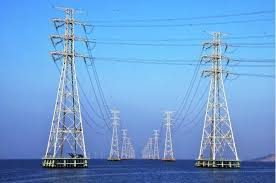
Every tower starts as a set of marks on paper or a CAD file sent at 4 p.m. on a Friday. We take those drawings and turn them into steel that fits the first time—no field reaming, no torch work on site. Our shop handles the odd stuff: monopoles with off-center flanges, lattice sections with bolt circles that change halfway up, base plates that have to match existing anchor bolts poured twenty years ago.
Material matters more than most specs admit. We cut from ASTM A572-50 and A588 weathering steel as standard, but we keep A36, A992, and even A709 on the floor for jobs that call for it. Welding is done under WPS and qualified welders, and every tower gets a trial fit of the first article before the rest of the run is cut. That catches the difference between a drawing that works in the office and one that works in the air.
After blast and coating—usually zinc-rich primer plus a polyurethane topcoat, but we match your spec if it calls for hot-dip galvanizing—we bundle the parts in erection sequence. No random pallets. Your crew opens crate one and starts at the bottom, not hunting through a pile. That's the point of OEM work: the tower leaves our yard ready to go up, not ready to be fixed.
Welding Standards That Survive Wind, Ice, and Time
Real-world welds in wind turbine towers, Arctic pipelines, and coastal structures face a slow grind of cyclic loading, brittle fracture at subzero temperatures, and corrosion that nibbles away at joint integrity. A standard that only looks good on paper won't hold up. The ones that last tend to specify notch toughness requirements, preheat and interpass controls that keep hydrogen out, and inspection methods matched to the failure modes you actually see in the field. It's less about chasing a higher tensile number and more about managing what happens when the temperature drops and the metal contracts.
Time is the other variable. A weld that passes visual inspection today may still crack after a decade of thermal swings and salt spray. Standards worth following account for fatigue life, require qualified procedures for repair welding, and demand documentation that lets a third party trace the filler metal and heat input long after the crew has gone home. In practice, that often means blending shop-level practicality with code minimums—knowing when an extra pass buys you real toughness, or when a simpler joint design reduces residual stress more than an exotic filler ever could.
Order Volumes From Prototype to Production Runs
Prototype orders rarely exceed a handful of units. They exist to test fit, function, and material choices before any serious money moves. You order five, maybe ten pieces, and each one gets inspected like a lab sample. The factory treats these as one-off jobs, often running them on slower lines or even by hand, which keeps the per-unit cost high but the risk low.
As the design locks down, order volumes step up in deliberate increments. Pilot runs might sit between 100 and 500 units, giving you enough data to spot assembly bottlenecks or finishing inconsistencies without committing to a full production schedule. Only after those results look clean do you shift into true production runs, where quantities climb into the thousands or tens of thousands and the entire cost structure changes. At that point the factory starts reserving dedicated lines, material pricing drops sharply, and your real negotiation leverage finally appears.
Inline Inspection Without Bottlenecks
Inline inspection used to mean slowing the line or pulling samples aside. That trade-off no longer holds. Modern systems run at full production speed, capturing every unit without interrupting flow. High-resolution cameras, laser profilers, and spectral sensors work in sync with conveyors and robots, flagging deviations as they happen rather than after the fact.
The key is distributing the computational load. Edge devices handle image preprocessing right at the station, so only relevant anomalies trigger a deeper analysis upstream. This keeps cycle times tight. Instead of pausing for a full scan, the line keeps moving while the software compares each frame against a learned baseline, looking for scratches, dimensional drift, or material inconsistencies that would escape a spot check.
What often gets overlooked is how much this shifts maintenance and changeover routines. Because inspection data is continuous, teams can adjust tooling or parameters before a defect becomes a batch problem. Retrofits on older lines also work when the inspection modules are designed to slot between existing machines rather than replace them. The result is fewer unscheduled stops and a quality record for every single part, not just a statistical sample.
Field Support When Your Crew Needs Answers
Unexpected issues pop up all the time in the field—odd readings on a pump, a drawing that doesn't match the actual pipe run, or a material spec that leaves room for doubt. Waiting for an office reply can burn hours, and every minute of downtime costs money. Our field support line exists to cut through that delay. You get straight through to senior engineers who know the equipment and the workflow, not a phone tree.
Support isn't limited to voice calls. Send us a photo or a short video from the site, and an engineer will mark up the problem area and walk you through a step-by-step fix. If the situation is complex, we can start a remote video session so multiple specialists can view the scene in real time, almost like standing next to you. Recently a pipe welding crew ran into a preheat temperature question on a dissimilar metal joint. From sending the first message to getting a revised welding procedure, it took less than twenty minutes.
This isn't a one-and-done service. After each request is closed, we turn the solution into a short field memo that goes to your phone or tablet, so other crew members can reference it later. A lot of customers build these memos into their own internal knowledge base, and new team members get up to speed noticeably faster because of it.
FAQ
They handle a wide range including transmission poles, telecom monopoles, substation frameworks, and custom support structures built to client drawings.
By using CNC cutting, laser alignment jigs, and post-weld dimensional checks, each section is verified against tolerances before galvanizing.
They primarily operate as an OEM partner, so they fabricate directly from customer specifications, drawings, and load calculations rather than pushing standard models.
Hot-dip galvanizing to ASTM A123 or ISO 1461 is standard, with optional powder coating or duplex systems for coastal or industrial environments.
Power transmission, telecommunications, railways, solar farms, and street lighting are common, along with industrial monitoring and wind measurement projects.
They pre-assemble sections in the shop for fit verification, then break them down and pack in open-top containers or flat racks, with export documentation managed in-house.
It depends on the tower type and tooling required, but many projects start with a pilot batch to validate fit and finish before full production runs.
Look for ISO 9001 for quality management, ISO 3834 for welding, and material traceability reports for every steel heat used in the tower.
Conclusion
Precision in steel pipe tower fabrication means more than matching dimensions on a drawing—it means delivering support structures that hold up under wind, ice, and years of thermal cycling. Our OEM workflow starts with your drawings and translates them into production-ready steel, keeping tight tolerances intact from the first prototype through full-scale runs. Small-batch prototypes get the same engineering attention as high-volume orders, so the shift from one to the next never forces a compromise on fit, finish, or weld quality. We do not treat every order as an identical batch, and that allows us to tune each run to the actual site conditions and loading requirements.
Welding is where long-term survival is decided. Our procedures are built around joint designs and filler materials that resist fatigue in harsh environments, and every weld passes inline inspection without creating a bottleneck—no waiting for a final audit to catch what should have been caught earlier. When the tower leaves our facility, support does not stop. Field crews can reach us directly with questions about assembly, bolt torque, or repair procedures, and they get answers from people who know the drawings and the steel, not a call script. That combination of shop-floor precision and responsive field support is what keeps a steel pipe tower standing long after the paperwork is filed.
Contact Us
Contact Person: antor khan
Email: [email protected]
Tel/WhatsApp: 8613863903569
Website: https://www.qdabtower.com/