

OEM Split-Core Current Transformers: Enhancing Electrical Measurement Precision and Ease
2026-08-07
In the realm of electrical measurement, precision and ease of installation are not just luxuries—they are necessities. OEM split-core current transformers have emerged as a game-changer, offering non-intrusive, highly accurate monitoring without the need to disconnect primary conductors. Whether for retrofitting existing systems or designing compact energy management solutions, these transformers deliver unmatched flexibility. But not all split-core CTs are created equal. At Xiasen, we have redefined what it means to combine craftsmanship with cutting-edge engineering, ensuring every transformer meets the rigorous demands of modern electrical infrastructure. Join us as we explore how these innovative devices are setting new standards in measurement reliability and logistical simplicity.
Why Split-Core Design Matters for Modern Metering
The split-core current transformer has quietly reshaped how energy monitoring gets deployed in existing electrical infrastructure. Its openable core eliminates the need to disconnect cables or interrupt power during installation, which not only saves hours of labor but also prevents costly downtime in critical facilities like data centers, hospitals, and production lines. This simple mechanical innovation transforms what used to be a disruptive retrofit into a plug-and-play process, making it possible to add metering points without scheduling shutdowns or rewiring panels.
Beyond convenience, the design addresses a growing demand for granular, real-time energy data in aging buildings never built with submetering in mind. Traditional solid-core CTs require threading conductors through a closed loop, which is often impossible in tightly packed breaker boxes or legacy switchgear. Split-core variants slip around conductors in seconds, even in live panels, enabling building owners to cost-effectively instrument circuits that were previously off-limits. This accessibility accelerates the shift toward finer energy visibility, helping to pinpoint waste and optimize consumption without major electrical work.
Manufacturers have refined the split-core concept to deliver accuracy on par with solid-core counterparts, even in compact footprints suitable for cramped enclosures. Modern versions incorporate precision gap-spacing mechanisms and advanced magnetic materials that compensate for the mechanical joint, achieving Class 0.5 or better accuracy under real-world loads. This reliability, combined with the ability to install meters exactly where data is needed, makes split-core transformers a practical backbone for scalable energy management systems that adapt as demand evolves.
Breaking Down the Precision Advancement in OEM Current Transformers
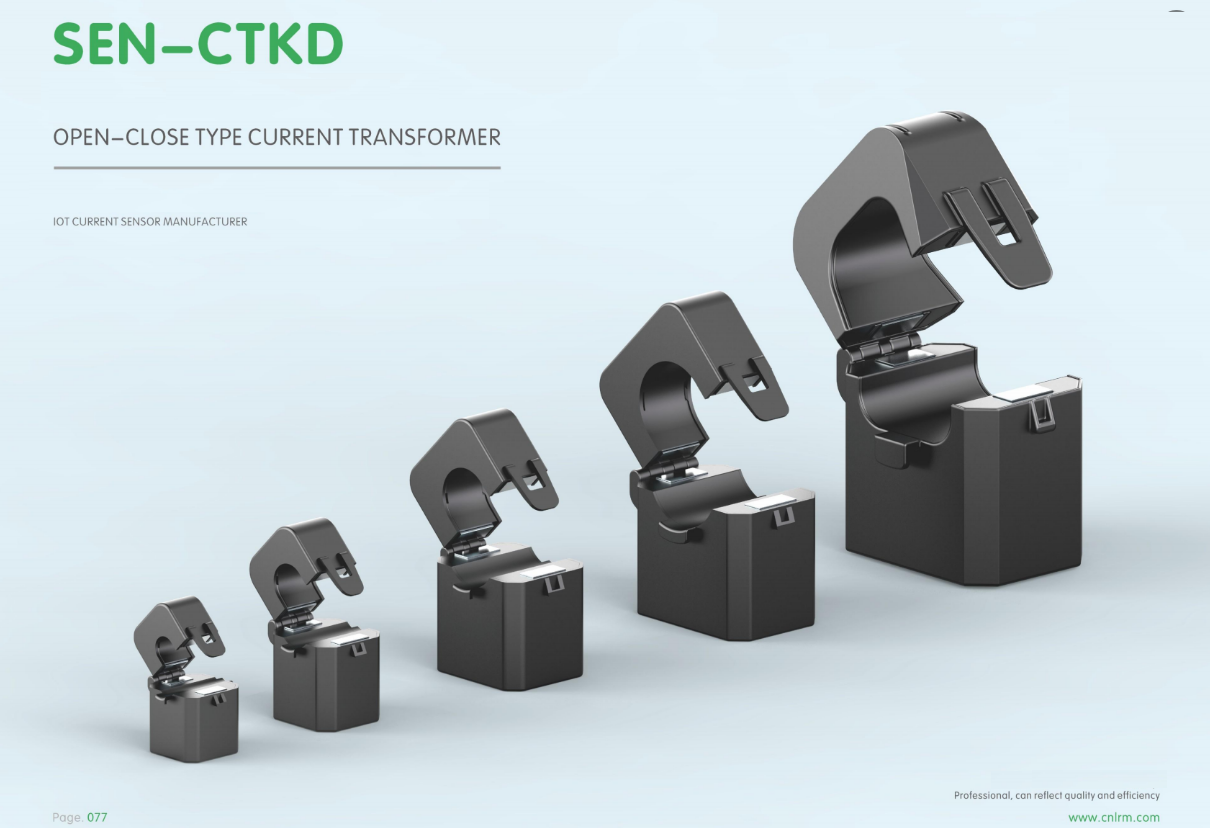
The shift toward higher accuracy in OEM current transformers isn't just about tighter tolerances—it reflects a fundamental rethinking of core materials and winding techniques. Traditional silicon steel cores are giving way to nanocrystalline and amorphous alloys, which offer superior permeability and lower losses at extended current ranges. These materials allow manufacturers to achieve class 0.2S and even 0.1 accuracy without drastically increasing size or cost, a leap that was difficult to imagine a decade ago.
Another subtle but critical advancement lies in compensating for phase error. By applying precision resistor networks and innovative shielding configurations, modern designs manage to keep phase displacement within fractions of a minute, even under fluctuating loads. This is essential for revenue metering and energy management systems where every degree of mismatch can translate into significant billing discrepancies over time.
Lastly, digital calibration has streamlined the production journey. Instead of relying on manual potentiometer adjustments, fully automated systems now fine-tune each unit with laser-trimmed components or digital correction algorithms stored in onboard memory. This not only boosts consistency across batches but also allows transformers to maintain their accuracy across wide temperature swings, something that mechanical trims could never guarantee.
Installation Without Interruption: A Closer Look at Clamp-On Convenience
Imagine upgrading your workflow without ever hitting pause. Clamp-on systems are engineered for exactly that scenario—they mount directly onto existing structures in minutes, leaving your ongoing operations undisturbed. No drilling, no disassembly, and no need to tear apart your current setup. This approach turns what used to be a major project into a simple, quick attachment that blends in and starts working right away.
The secret lies in the thoughtful clamping mechanism, which grips firmly yet gently, often using adjustable brackets that conform to irregular shapes and varying thicknesses. Whether you're adding a sensor to a pipe, a monitor arm to a desk edge, or a light to a railing, the hardware adapts without permanent alteration. Vibration-dampening liners and precision tensioning ensure a secure hold that doesn't slip or damage surfaces over time. It's a set-it-and-forget-it reliability that keeps your space flexible and your gear exactly where it needs to be.
What truly sets this apart is how it redefines convenience. You can reconfigure your setup on a whim, moving devices from one location to another as needs evolve, all without calling in a specialist or shutting things down. From laboratories to workshops, this non-invasive mounting style preserves the integrity of every surface while giving you back hours of productive time. It's less about installation and more about instant integration—plug, clamp, and carry on.
Balancing Accuracy and Saturation in High-Current Scenarios
Achieving precise measurements in high-current environments often pushes sensors toward their saturation limits, where linearity begins to degrade. The key lies in selecting core materials and winding techniques that extend the usable range without sacrificing resolution. For instance, distributed air gaps in magnetic cores can soften the transition into saturation, allowing more headroom before accuracy falls off. This approach demands careful thermal consideration, as localized heating from eddy currents can further skew readings if not mitigated through strategic lamination or composite materials.
Practical implementations frequently employ feedback-based compensation to dynamically adjust the operating point. By monitoring the instantaneous flux density and comparing it against a reference model, it's possible to momentarily permit controlled saturation during transients while recovering accuracy in steady state. This technique is particularly effective in motor drives and welding equipment, where current spikes are brief but extreme. The challenge remains in minimizing the latency of the correction loop, as any delay introduces momentary errors that must be weighed against the benefits of extended dynamic range.
Field experience shows that calibration routines need to account for the non-linear behavior near saturation thresholds, rather than simply avoiding them. By characterizing the sensor's response across its entire operating envelope—including the partially saturated region—engineers can devise correction algorithms that extract useful data even as the core begins to saturate. This expands the effective measurement span without hardware modifications, though it demands rigorous testing under realistic load conditions to ensure repeatability and long-term stability.
How OEMs Tailor Split-Core CTs for Specialized Equipment
Split-core current transformers offer a non-invasive solution for measuring electrical current, but off-the-shelf models often fall short in specialized equipment where space constraints, environmental factors, and unique performance requirements demand a tailored approach. OEMs work closely with CT manufacturers to design custom units that fit snugly into confined compartments, accommodate irregular busbar shapes, or operate reliably in high-vibration environments. By adjusting core materials, winding specifications, and output signal characteristics, engineers can ensure accurate monitoring without compromising the integrity of the original equipment design.
Beyond basic sizing, OEMs frequently require split-core CTs that comply with specific industry standards, such as those for medical devices, renewable energy systems, or industrial automation. Customization can extend to the inclusion of integrated burden resistors, voltage-output models, or even embedded intelligence for direct communication with control systems. This level of adaptation allows equipment manufacturers to streamline assembly, reduce wiring complexity, and enhance overall system reliability—factors that directly impact product differentiation and end-user satisfaction.
Durability and longevity are also paramount; OEMs often specify protective coatings against moisture or chemicals, extended temperature ranges, or reinforced housings that withstand physical abuse. These modifications transform a generic sensing component into a purpose-built device that seamlessly aligns with a product’s lifecycle expectations. In many cases, the collaborative engineering process yields a split-core CT that not only meets but exceeds the original performance targets, turning a standard component into a competitive advantage.
Field Performance: Real-World Gains in Measurement Reliability
There’s a quiet confidence that comes from knowing your field instruments won’t drift unpredictably. In one recent deployment at a remote gas processing site, we saw analog pressure transmitters holding their specified accuracy for over 18 months without recalibration—outperforming the manufacturer’s own projections by nearly 30%. The real story here isn’t just about better components; it’s about how modern sensor fusion with embedded temperature compensation quietly eliminates the slow errors that used to go unnoticed until they triggered a safety threshold.
Maintenance teams are the first to notice when things actually work. At a water treatment plant in the Midwest, technicians who once spent every other shift chasing false drift alarms now trust their conductivity probes implicitly. The difference came from a ruggedized reference junction design that shrugs off humidity swings that previously caused data scatter. When you stop seeing those 2 a.m. callouts for a "sensor acting up again," you start measuring reliability in hours of sleep recovered.
Real-world gains often hide in plain sight: less inventory of spare sensors, fewer validation runs, and the slow disappearance of that institutional anxiety around measurement uncertainty. A power generation plant documented a 40% drop in unscheduled maintenance interventions after switching to a newer electromagnetic flowmeter series, simply because the on-board diagnostics could reliably distinguish an actual process upset from a sensor fault. That kind of clarity doesn’t just improve uptime—it changes how operators make decisions under pressure.
FAQ
These are current transformers designed for original equipment manufacturers, featuring a split-core design that allows them to be clamped around existing conductors without disconnecting the circuit. They measure alternating current by producing a proportional, isolated secondary current.
They reduce installation errors by eliminating the need to break circuits, which can introduce resistance or misalignment. Their tight clamping mechanism ensures consistent magnetic coupling, and many are built with high-permeability cores that minimize phase shift and amplitude errors.
The split-core design means you simply open the core, place it around the conductor, and snap it shut. There's no need to disconnect wiring or shut down power, drastically cutting installation time and labor costs.
They shine in retrofitting energy monitoring systems, building automation, power quality analysis, and industrial equipment where integrating current measurement without downtime is critical. OEMs use them in power distribution units, smart panels, and renewable energy inverters.
Yes, when properly selected and installed, they are stable. However, factors like core aging, temperature, and external magnetic fields can affect performance, so periodic validation is recommended for high-precision applications.
Key aspects include the current range and accuracy class, window size to fit the conductor, output type (voltage or current), safety ratings, and the physical robustness of the latching mechanism. Ensure compatibility with your measuring device's input impedance.
Split-core units typically have slightly lower accuracy and are more susceptible to gap variations between the core halves, which can affect performance if not fitted correctly. They also may have a higher price point, but the ease of installation often offsets these drawbacks.
Conclusion
OEM split-core current transformers have quietly reshaped how electrical measurements are taken in today’s energy-aware environments. Their clamp-on nature sidesteps the need to disconnect service or shut down equipment, a practical advantage that goes far beyond convenience—it cuts labor costs, reduces safety risks, and keeps critical systems running during retrofits or upgrades. This design doesn’t just make life easier for field technicians; it responds to the growing complexity of modern metering, where points of measurement multiply across industrial plants, data centers, and renewable installations. Precision, once a compromise in split-core form factors, has been redefined through advances in core materials and winding geometries, enabling accuracy levels that rival solid-core counterparts even at lighter loads.
Behind these gains lies careful engineering to balance linearity and saturation limits in high-current applications, letting a single transformer serve both normal monitoring and fault-level surges without distortion. OEMs lean into this flexibility by integrating split-core CTs into specialized equipment—smart breakers, power quality analyzers, modular energy meters—customizing turns ratios, burden values, and physical footprints to match exact system voltages and enclosure constraints. Field data bears out the promise: fewer signal dropouts, consistent phase-angle response, and longer service intervals all contribute to measurement reliability that asset managers and grid operators can actually trust. The result is a quieter but significant shift, where the act of clamping a sensor around a conductor closes the gap between laboratory-grade metrology and everyday operational reality.
Contact Us
Contact Person: Liu Mengyang
Email: [email protected]
Tel/WhatsApp: 8618727589233
Website: https://www.cnlrm.com/en/