

OEM Socks Factory Secrets: Crafting Custom Socks That Sell
2026-06-23
Ever wondered what separates a forgettable pair of socks from a best-selling custom design? At KINDWAY, the journey from yarn to market-ready product is where the real magic—and profit—lies. This isn't just about stitching logos onto cotton; it's about unlocking factory secrets that turn ordinary OEM socks into must-have items. From premium materials to precision manufacturing, we're pulling back the curtain on what truly drives sales, so you can skip the trial and error and go straight to success.
From Sketch to Sock: Inside the OEM Journey
It starts with a whisper of an idea—maybe a scribble on a napkin or a digital doodle sent across time zones. That rough sketch, with its wobbly lines and hopeful notes, lands in the hands of a factory team that’s seen it all: the brilliant, the bizarre, the borderline impossible. They don’t just see a sock; they see potential. They trace the contours, decode the annotations, and translate a vision into a language of yarn counts, needle gauges, and stitch tensions. This is where the magic begins, long before the first thread is ever spun.
Then comes the quiet artistry of sampling—a delicate back-and-forth that can stretch for weeks. The first prototype arrives, often a little off: the heel’s too shallow, the stripe misaligned by a hair. Feedback loops tighten. The factory tweaks the knitting program, swaps a cotton blend for something softer, adjusts the cuff elastic by a millimeter. Each revision brings the sock closer to the original dream, yet it’s shaped by hands the designer may never meet. Here, intuition meets precision, and the unspoken goal is not just replication, but elevation—turning a good idea into something wearable, washable, and unexpectedly wonderful.
Finally, the production line hums to life. But it’s never a straight shot from raw materials to packaged pairs. Dye lots vary, machines throw tantrums, and a stray fiber can send a whole batch into the reject pile. The best OEM partners are the ones who treat these hiccups not as failures, but as part of the rhythm. They’ll pull a dozen socks off the line just to check seam flatness under a magnifying glass, or run an extra wash test to see if that marled effect holds up. By the time those socks are boxed and bound for faraway shelves, they’ve absorbed countless tiny decisions—proof that the journey from sketch to sock is rarely loud, but always steeped in craft.
Fiber Science: Little-Known Facts About Sock Comfort
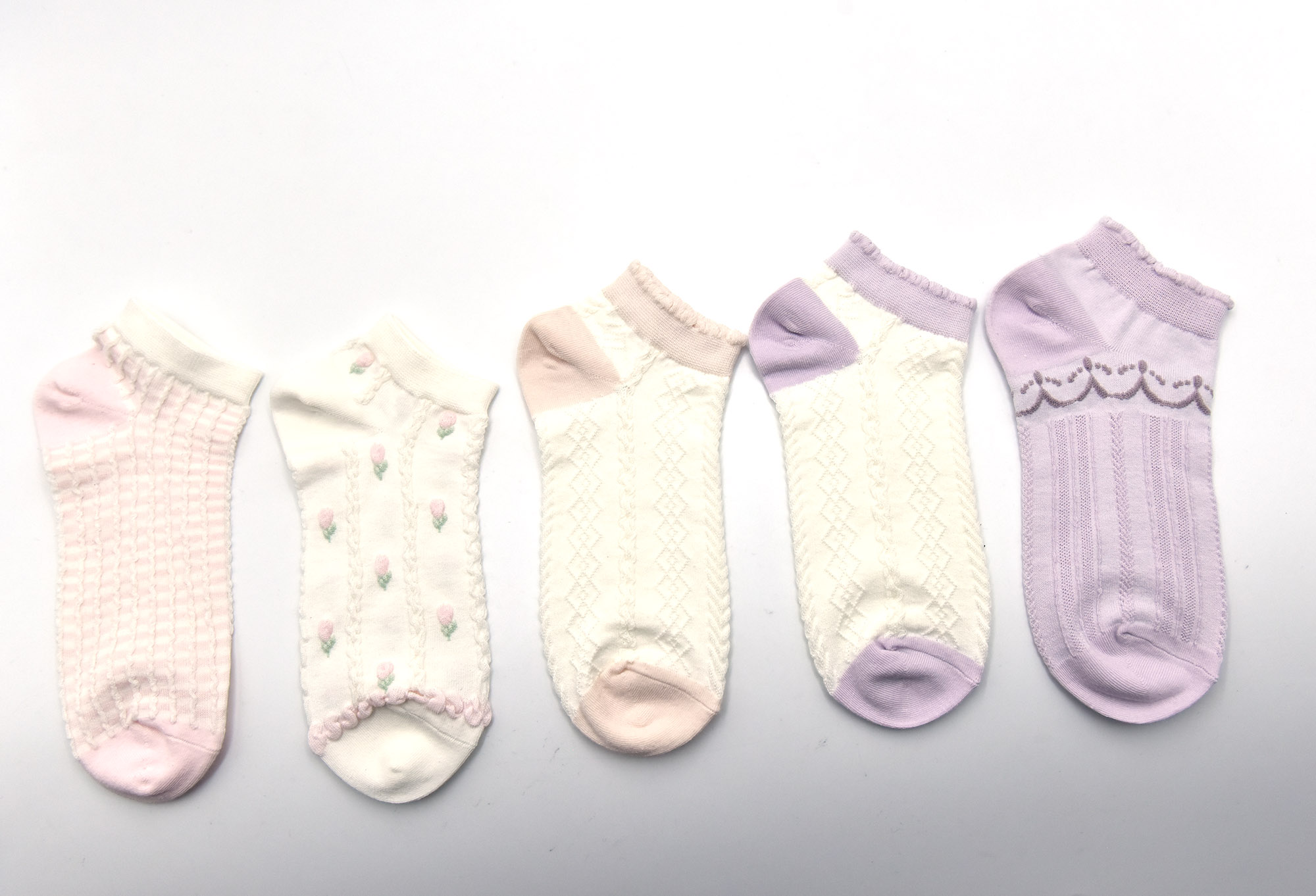
Most people never think about the physics happening inside their shoes, but the yarn structure of a sock can make or break your day. Take twist level, for instance: a high-twist cotton yarn feels denser and cooler against the skin because it doesn't trap as much insulating air, while a low-twist yarn gives that fluffy, cushy sensation but can mat down after a few washes. Then there's fiber migration during spinning – when shorter fibers get pushed to the surface, they create a microscopic fuzz that wicks sweat away faster than smooth filaments. That's why a cheap cotton sock feels clammy while a well-engineered blend keeps your feet dry even during a long commute.
The real magic happens at the fiber cross-section level, which is something brands rarely discuss. Natural fibers like wool have a scaly surface that creates tiny air pockets, but it's the irregular, kidney-bean shape of cotton fibers that gives them their famously soft hand feel. Synthetics, on the other hand, can be extruded with channels – think Coolmax – that actively pull moisture along the length of the fiber before it even has a chance to soak in. What's less known is that mixing a small percentage of a profiled synthetic with natural fibers can dramatically shift the comfort zone of a sock, reducing that sticky sensation without making the fabric feel plasticky.
And let's talk about friction, because that's where skin meets fiber science in a very personal way. The coefficient of friction of a sock's inner surface determines whether you get blisters or bliss. Merino wool, with its fine diameter scales, actually has a lower friction against damp skin than many smooth synthetics, which is counterintuitive. Plus, the way fibers are arranged in the toe seam – plain weave versus a hand-linked flat seam – can distribute pressure unevenly. A single prominent thread can act like a tiny saw after 10,000 steps, which is why some socks feel fine in the morning but lead to hot spots by afternoon. It's all about how the fiber responds to repeated shear forces.
Custom Socks as Brand Ambassadors: A Hidden Marketing Goldmine
Think about the last time a pair of socks caught your eye. Maybe they had a quirky pattern or a logo that sparked a conversation. Custom socks turn everyday moments into subtle branding opportunities. When your team, customers, or community wear your designed socks, they become walking billboards—except these billboards have personality. They show up in coffee shops, airports, and gyms, sparking organic curiosity and word-of-mouth that no paid ad can genuinely replicate.
The hidden gold lies in how these tiny canvases build authentic connections. Unlike traditional swag that ends up forgotten in a drawer, well-designed socks carry an element of delight and surprise. People love sharing photos of fun footwear on social media, often tagging the brand without being asked. This passive, user-generated endorsement creates a ripple effect that feels less like advertising and more like a shared inside joke among your audience. In a world cluttered with generic promotion, custom socks offer a low-cost, high-memorability way to turn everyday supporters into loyal, walking ambassadors.
Flawless Pairs: The Rigorous Testing You Never See
Behind the curtain of every polished product lies a relentless battery of tests that most users will never witness. Before a single unit ships, prototypes endure chambers that replicate years of wear in mere days—buttons pressed thousands of times, screens tapped by robotic fingers until they'd beg for mercy, and drop tests onto unforgiving concrete from every conceivable angle. It's a quiet war against failure, waged so the device in your hand feels reassuringly inevitable.
What's staggering is the sheer scope of the invisible abuse. Engineers simulate coffee spills in dusty keyboards, twist cables at extreme angles for weeks on end, and freeze phones to subzero temperatures only to blast them with tropical humidity moments later. One test might involve a vibrating table that mimics a decade of driving over potholes, just to make sure a solder joint won't crack. Another could submerge electronics in salt-heavy mist, accelerating corrosion that would take coastal dwellers years to encounter.
Even after the machines have had their way, human touch is never far. Teams manually flex, scratch, and fumble devices in ways no algorithm can predict—jamming them into overstuffed pockets, yanking cords at odd angles, or tossing them onto hard surfaces with casual disregard. If a flaw emerges, it's hunted back to its source and eliminated. The result isn't just a product that works; it's something that endures the chaotic, beautiful clumsiness of real life without ever revealing the scars of its own creation.
Profit Margins in Every Stitch: Cost-Saving Secrets
Cutting costs doesn't mean cutting corners—it's about smart choices that don't compromise quality. One of the quickest wins is rethinking how you source materials. Instead of sticking with the same supplier out of habit, explore alternative vendors who offer the same quality at a lower price. Many small workshops find that buying deadstock fabrics or slightly imperfect lots can dramatically reduce material costs without affecting the final piece. It's not about using cheaper materials; it's about finding hidden gems that others overlook.
Another overlooked trick is pattern efficiency. Small adjustments to how you place patterns on the fabric can reduce waste by 5% or more. Over hundreds of garments, that adds up fast. Combine that with training sewers to use every inch wisely, and you're essentially turning scraps into profit. Even the way you cut—using sharper blades or optimizing the cut order—shaves off seconds per piece, which translates into lower labor costs over time.
Then there's the hidden cost of time. Streamlining the sewing process itself—like grouping similar tasks, reducing machine changeovers, or simply organizing the workspace better—can boost output without adding staff. Sometimes, just rearranging the flow of work cuts production time by 15%, directly improving your margin on every stitch. These tweaks aren't glamorous, but they're the difference between just breaking even and actually making money.
What’s Hot: Using Data to Predict Sock Trends
Sock trends are no longer a guessing game. By sifting through online shopping patterns and social media chatter, analysts now spot which styles are gaining traction before they hit the mainstream. From argyle revivals to eco-friendly bamboo blends, the numbers reveal a shift toward bold self-expression and sustainability.
Search queries offer a real-time pulse on consumer curiosity. When queries for “sheer socks with loafers” spike in early spring, retailers stock up accordingly. Color trends follow a similar path—data shows dusty pastels fading as vibrant neons climb, reflecting a broader mood for optimism in fashion cycles.
Behind the scenes, machine learning models chew through millions of data points to forecast what will sell and what will stall. This data-driven approach reduces overproduction and helps brands stay nimble, turning the humble sock into a surprisingly accurate mirror of cultural shifts.
FAQ
An OEM sock factory is a manufacturer that produces socks based on your specific designs, materials, and branding requirements, rather than selling their own branded products. You provide the specs—like style, colors, patterns, and logo placement—and they handle the entire production process, from knitting and dyeing to finishing and packaging. It’s a partnership where you get to create your own line without owning any machinery.
Custom socks let you control every detail, from the yarn blend to the packaging, which helps build a unique brand identity. They also allow you to target specific niches, offer better margins, and avoid competing directly with generic products. When done right, they become a memorable touchpoint that strengthens customer loyalty.
Many people overlook the importance of sock sizing and stretch, leading to poor fit. Others choose complex designs that don’t translate well to knitted fabric, resulting in blurry or distorted patterns. Ignoring material breathability and durability is another common error—socks that look great but wear out quickly or feel uncomfortable won’t get repeat sales.
Always request pre-production samples to check the feel, fit, and print accuracy. Ask the factory about their quality control steps, like stitch density tests and colorfastness checks. It’s also wise to start with a smaller pilot run to gauge customer feedback before committing to bulk production.
You can go beyond basic prints by adding textured knits, jacquard patterns, or even functional features like grip soles for yoga socks. Unique packaging—like reusable boxes or compostable wraps—can also set you apart. Collaborating with artists for limited-edition designs or embedding a subtle, feel-good message inside the cuff are details that customers love and talk about.
Not necessarily—many factories now offer lower minimum order quantities, especially for basic styles with minimal customizations. You might pay a bit more per pair, but it allows you to test the market without a huge upfront investment. Be upfront about your volume needs, and some will even help you scale gradually.
Look for transparent communication, quick sample turnaround, and a solid track record with other brands. A good partner will offer material guidance, share production limitations honestly, and provide clear timelines. Visiting the factory or asking for video tours can also give you peace of mind about their working conditions and machine quality.
Conclusion
Transforming a rough idea into a pair of socks that fly off the shelves involves far more than just knitting yarn. It starts deep inside the OEM factory, where designers translate rough sketches into technical blueprints that account for every stitch and seam. The real magic, though, lies in fiber selection—blending materials like long-staple cotton with a touch of elastane can make the difference between a sock that bunches up by noon and one that keeps its shape all day. Factories that master this blend often keep their exact ratios under wraps, because even a 2% shift can change how a sock breathes, cushions, and resists pilling. That kind of detail turns a basic necessity into something people actively seek out.
Beyond comfort, these socks double as silent brand messengers. A well-placed logo or a signature color stripe woven into a custom design turns everyday wear into a walking billboard—one that doesn’t feel like an ad. Companies willing to invest in premium customization often discover that recipients keep and actually use the socks, generating impressions long after a typical giveaway would be forgotten. Of course, consistency doesn’t happen by chance. Behind the scenes, every batch undergoes pull-strength tests, wash simulations, and colorfastness checks that weed out flaws before they reach a customer. Smart brands also lean on factory data to spot emerging patterns—think recycled fibers gaining traction or retro ribbing making a comeback—and pivot their designs months ahead of demand. Tying it all together, factories with vertical setups can trim waste and cut middlemen, keeping margins healthy without sacrificing quality. The result is a product that feels personal, performs reliably, and quietly builds loyalty with every wear.
Contact Us
Contact Person: Alfred Lee
Email: [email protected]
Tel/WhatsApp: +86 13806701496
Website: https://www.hainingsocks.com/