

OEM Heavy-Duty Conventional Lathe Factory Procurement Guide
2026-09-13
Buying a heavy-duty conventional lathe from an OEM factory usually means trusting a spec sheet until it’s too late. The real differences show up in the bed casting, headstock alignment, and after-sales honesty. Here’s what to check before you commit — and how WINNRUI CNC approaches the details most buyers miss.
What Separates a Reliable Heavy-Duty Lathe Builder From the Rest
A dependable heavy-duty lathe builder earns its reputation through obsession over the unglamorous details: cast-iron formulations aged to relieve internal stress, hand-scraped ways aligned to within microns, and gearboxes tested under load far beyond brochure ratings. These shops don't chase flashy specs; they chase repeatability over decades of hard use.
Look beyond the polished showroom floor and ask about their heat-treatment protocols, the tolerance they guarantee after five years of intermittent cutting, and how they handle spindle bearing replacement in the field. A trustworthy builder will walk you through their failure logs and design revisions, not just hand you a spec sheet.
The real difference shows up when a lathe from such a builder is still holding tenths after twenty years, while a bargain machine has long since been relegated to roughing work. Reliability is designed into the machine's bones, not bolted on with cheap servos or marketing claims.
Reading Between the Lines of Factory Certifications and Test Reports
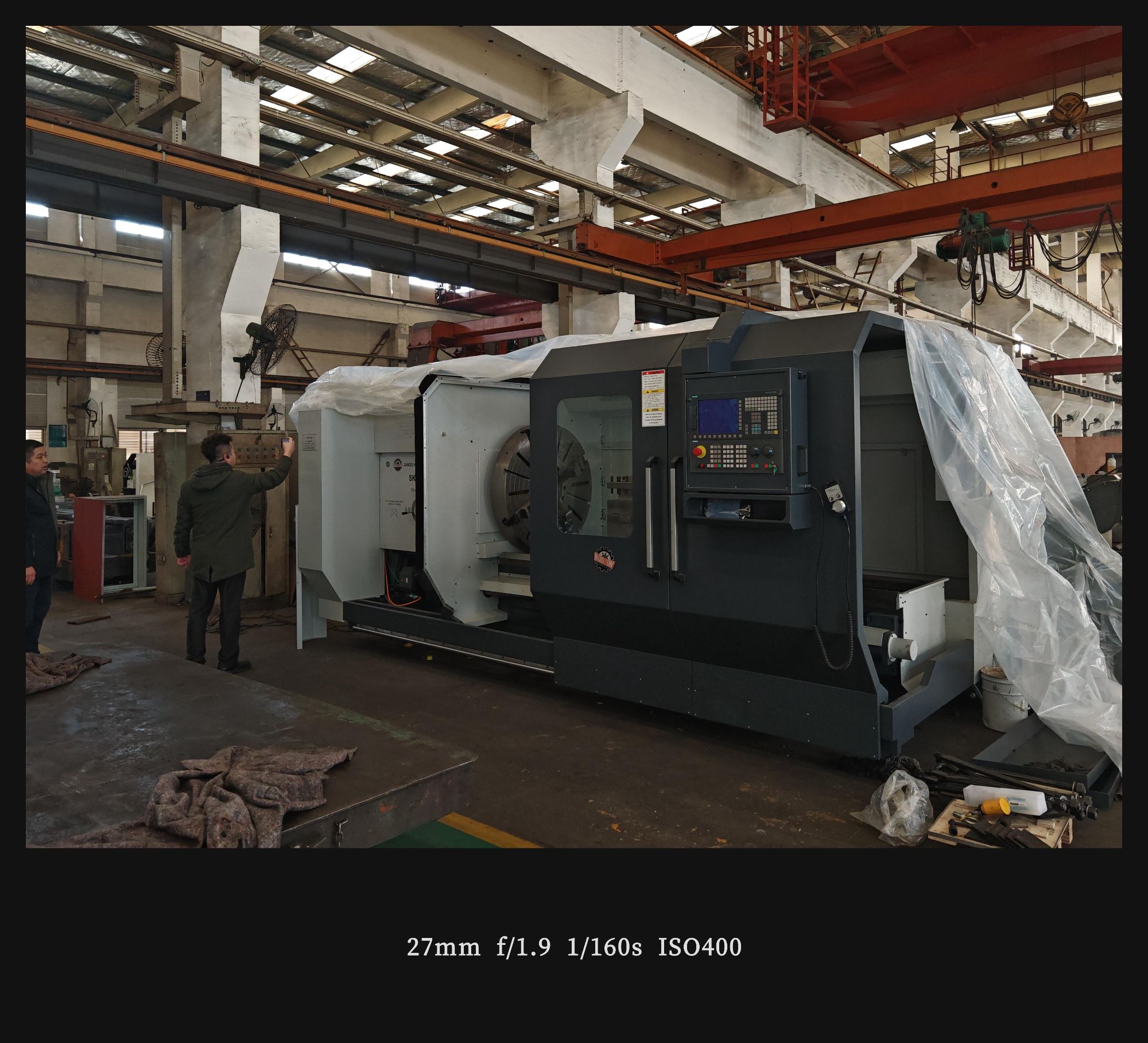
Many buyers treat a factory certificate as a binary signal—either the supplier has it or they don't. That mindset misses what actually matters. Start by checking the scope of the certification: an ISO 9001 certificate might only cover the assembly line, not the plating or welding shops where defects often originate. Look at the issuing body too. Accreditation from an unrecognized or loosely supervised registrar can make the certificate nearly worthless. Then compare the address on the certificate with the actual production site. A mismatch, or a certificate that lists only a sales office, is a red flag that the audit never touched the real factory floor.
Test reports deserve the same skeptical reading. A passing result is only as meaningful as the sample that was tested. If the report says the sample was supplied by the manufacturer, assume it was hand-picked. Check the test standard version—an outdated version might omit newer, stricter limits. Look for annexes or footnotes that exclude certain materials, colors, or components. For example, a textile report might show excellent colorfastness but quietly skip tests for formaldehyde or restricted azo dyes. If the product description in the report doesn't match the exact SKU or material composition you're ordering, the certificate of compliance is essentially for a different product.
The most revealing details are often the ones nobody reads: surveillance audit dates, the list of exclusions, and the laboratory's accreditation scope. A factory might have passed an initial audit three years ago but failed to schedule the required follow-up. Or the test lab might be accredited for electrical safety but not for chemical analysis, yet the report covers both. Cross-check the certificate number with the registrar's online database—many fakes fall apart at this step. When you request a report, ask for the raw data, not just the summary page. If the factory hesitates or sends only the cover letter, treat that as a signal louder than any stamp or logo.
Custom OEM Configurations That Actually Match Your Machining Floor
Most off-the-shelf OEM configurations we see force shops to adapt their processes around a machine that was designed for someone else's floor. That never made sense to us. Instead, we start by looking at how your team actually moves material, what tooling gets used daily, and where the bottlenecks tend to pile up. From there, we rework the base layout, control placement, coolant routing, and even the guarding so the machine feels less like a standard catalog pick and more like a natural extension of your existing workflow.
The result is a configuration that respects the realities of your shop, whether that means tighter chip management for high-volume aluminum, a different spindle nose for long-reach work, or a shifted operator station that keeps the load-unload path clear for two people. We don't ask you to change how you run parts. We change the machine around how you already run them.
The Real Cost Drivers Behind Heavy-Duty Conventional Lathes
When buyers first look at a heavy-duty conventional lathe, they tend to focus on the sticker price. But anyone who has operated these machines for more than a few months knows that the purchase amount is only a fraction of the true financial burden. The real cost drivers hide in places that rarely show up on a quote: foundation preparation, rigging, and the sheer amount of floor space a machine with a 20-foot bed demands. These aren't optional extras; they are non-negotiable expenses that hit the budget before the first chip ever falls.
Maintenance and wear parts form another silent but relentless drain on operating costs. Heavy-duty lathes run large spindle bearings, multiple gear trains, and massive ways that need constant lubrication and periodic scraping. A single replacement bearing set can cost more than a used compact car, and if the ways develop uneven wear, the only real fix is a teardown that halts production for weeks. Power consumption also climbs sharply with machine size—not just from the spindle motor, but from hydraulic pumps, coolant systems, and the auxiliary equipment that keeps a 10-ton machine stable under heavy cuts.
Labor efficiency often gets overlooked in cost calculations. A conventional lathe requires a skilled operator who can read blueprints, set up jobs, and adjust feeds and speeds manually. With fewer machinists entering the trade, companies pay premium wages or spend heavily on training. Downtime for tool changes, manual measurement, and rework due to human error all add up. When you compare these hidden operational costs against the modest price difference between a light-duty and a heavy-duty conventional lathe, the true economics become clear: the machine is cheap, but running it correctly is anything but.
Delivery Timelines and What Can Go Wrong Before the Crate Arrives
When you place an order for a custom crate, the quoted delivery timeline often feels like a promise set in stone. Yet the journey from workshop to your doorstep is rarely a straight line. A standard build might take two to three weeks, but that estimate assumes every link in the chain holds steady: lumber arrives on schedule, hardware isn't backordered, and the builder's queue doesn't jam up with rush jobs. In reality, any one of those assumptions can snap without warning, turning a comfortable wait into a nail-biter.
Weather is one of the sneakiest culprits. A humid spell can warp freshly cut boards before they ever see a saw blade, forcing a rebuild or extra drying time that no one planned for. Shipping carriers add their own layer of unpredictability—a crate marked for expedited delivery might sit in a regional hub for days because of a mis-scan or a trailer shortage. And then there's the customs snag if your crate crosses a border: a missing commercial invoice or a random inspection can add a week or more, with no easy way to track where the package actually is.
What can go wrong before the crate arrives? Plenty, and most of it happens out of your sight. A supplier might deliver the wrong gauge of steel corner brackets, forcing a last-minute reorder. The builder could discover a hairline crack in a main panel and have to start that piece over. Even the final mile can betray you—a local delivery crew might misread the address or refuse to navigate a narrow driveway, leaving your crate stranded on a truck overnight. Knowing these failure points doesn't eliminate the wait, but it does help set realistic expectations and keep panic at bay when the schedule slips.
After-Sales Support That Keeps a Conventional Lathe Running for Decades
When a conventional lathe was built thirty or forty years ago, its longevity has less to do with the original castings and more to do with who answers the phone when a bearing starts to whine. A support team that keeps manuals, cross-reference charts, and even hand-drawn setup notes on file can tell you within minutes whether that odd harmonic is a worn half-nut or just a misadjusted gib. And if the part is no longer on the shelf, someone who knows the machine family can often suggest a retrofit or a shop-made replacement that fits without compromising the original geometry.
The real difference shows up in small, unglamorous services: re-scraping way surfaces, re-bushing the tailstock quill, or recalibrating the threading dial after years of hard use. A support line staffed by former machinists won't just ship you a generic kit; they'll walk you through the setup over a video call, ask about the sound of the feed rod, and mention that the locknut on a 1978 model tends to back off if the apron is overloaded. Those details keep a lathe turning accurately long after its original warranty has become a framed document.
Availability of off-the-shelf wear parts matters, but so does honesty about what can be saved and what should be replaced. A good after-sales network keeps a modest stock of half-nuts, cross-slide screws, and oil felts, but it also publishes torque values, lubrication intervals, and torque-limiting instructions that prevent the next breakdown. Over decades, this turns a machine purchase into a working partnership, where the lathe outlasts several shop relocations and a couple of ownership changes.
FAQ
Ask to see the casting source and aging treatment records. A real heavy-duty shop will have photos or logs of natural stress relief or vibration aging for their beds. On the factory floor, watch how they grind the guideways and fit the gearbox. Check the wall thickness of the bed and the rib design near the headstock. If the factory avoids showing you the raw castings or the aging yard, treat the 'heavy-duty' label with suspicion.
Look beyond maximum swing and distance between centers. Pay attention to spindle bore size, tailstock quill diameter, gear material and heat treatment, guideway width, and quench depth on the ways. A real heavy-duty machine will have a wide, deeply hardened bed, a quill that doesn't flex under load, and gears made from alloy steel, not just case-hardened mild steel.
Ask about the travel of their large boring mills and guideway grinders, not just the number of machines. Find out whether they perform natural aging, vibration stress relief, or thermal stress relief on castings, and request actual inspection records for machined surfaces. If they cannot show you how they machine the bed in one setup, they probably lack the capacity for true heavy-duty accuracy.
Foundation work can be a surprise if the factory assumes an existing floor is stiff enough. Rigging, unloading, and installation often cost more than expected on a 10-ton machine. Also watch for non-standard voltage or frequency, missing steady rests or faceplates, limited tool posts, and extra charges for on-site training or a factory acceptance test.
Request material certificates for the bed, headstock gears, and spindle. Compare the brand and accuracy class of the spindle bearings, not just the listed runout. Ask for the Rockwell hardness and depth of the hardened guideways. If possible, visit an existing user of each factory and watch the machine cut under real load for an hour. Data sheets rarely tell you how the carriage behaves after three years.
A common structure is 30% deposit, 40% after pre-shipment inspection, 20% after installation and final acceptance, and 10% retained for 12 months as a performance guarantee. Insist that the warranty covers spindle bearings, gearbox internals, and bed accuracy for at least one year, but be clear in writing about wear parts like belts, wipers, and light bulbs.
Most early failures come from an insufficient foundation or improper leveling, not from bad manufacturing. The bed can twist if it is not set on a rigid, isolated pad. Hydraulic or lubrication systems fail from contaminated oil or low-quality filters. Electrical boards trip due to voltage spikes or wrong phase rotation. Before blaming the factory, check the installation manual and have a mechanical engineer verify the level within 0.02 mm per meter.
Usually the savings come from lower-grade cast iron with less aging time, plain bearings instead of precision spindle bearings, smaller electric motors, thinner hardened layers on the ways, or simpler control wiring. The datasheet may still say 'heavy-duty' because the swing and center distance match. You find the difference when the bed starts to move after the first winter, or the spindle temperature climbs after four hours at full load.
Conclusion
Sourcing a heavy-duty conventional lathe from an OEM factory is less about glossy brochures and more about evidence you can verify before signing. A dependable builder distinguishes itself through consistent casting quality, seasoned assembly teams, and an insistence on showing you their actual tolerance sheets, not just a wall of certificates. When reading factory certifications and test reports, look for specifics like spindle runout measured under load, bedway hardness after stress relief, and documented geometry checks on the finished machine—not a generic ISO badge. Custom OEM configurations only make sense when the builder asks about your longest workpiece, your typical chuck loads, and your floor's overhead crane capacity. If they accept your specs without challenging them, that's a warning sign. The right configuration will feel slightly overbuilt for your current jobs, which is exactly what keeps a conventional lathe useful when production demands shift.
Cost drivers often hide in places you cannot see at a demo: the grade of cast iron, the number of ribs in the bed, the brand and size of spindle bearings, and whether the gear train is hardened and ground or merely cut. A cheap quote usually means corners in these areas, and you will pay for them through chatter, early bearing failure, or constant adjustment. Delivery timelines are another place where honesty matters. A factory that promises a 60-day delivery on a custom heavy lathe is either lying or holding half-built machines in stock, which raises questions about aging castings. Realistic schedules account for casting seasoning, machining, assembly, and final alignment. After-sales support should be assessed by asking for a list of spare parts stocked locally and the average response time for a technician—not by counting the years of warranty. The best OEMs treat a lathe sale as the start of a thirty-year relationship, not a one-time transaction.
Contact Us
Contact Person: Tim
Email: [email protected]
Tel/WhatsApp: +86 15522553731
Website: https://www.winnrui-cnc.com/