

ODM Specialty Fasteners: A Complete Guide to Their Benefits and Applications
2026-11-02
Most fastener catalogs show you what’s available. Few show you what’s possible when a supplier actually designs around your assembly. That’s the gap ODM specialty fasteners fill—and this complete guide breaks down why that matters. You’ll see the benefits that go beyond strength and the applications where standard parts fall short. If you’ve ever been stuck with a 'close enough' fastener, the next few sections will change how you spec. And when you’re ready to work with a partner who treats fasteners as engineering decisions, Peak Fasten is here to help.
Not Your Average Bolt: What Sets ODM Specialty Fasteners Apart
Most fastener catalogs start and end with diameter, thread pitch, and tensile strength. ODM goes further by treating each order as a small engineering project. A bolt destined for a saltwater pump gets a different under-head radius than one used in a cleanroom actuator. We adjust root profiles, shank-to-thread transitions, and even the angle of the thread flank to match how the joint actually fails. That kind of tailoring rarely shows up on a datasheet, but it shows up in service life.
Then there's the material side. Instead of stocking only off-the-shelf 304 or 316 stainless, we blend custom alloys and pair them with coatings that can handle fretting, hydrogen embrittlement, or thermal cycling. The real differentiator is traceability: every batch carries full heat-lot and dimensional data, so if a single fastener ever underperforms, you can trace it back to the exact coil of wire it came from. Most suppliers sell standard parts. ODM builds fasteners around the failure modes you can't afford to discover twice.
The Payoff of Going Custom: Benefits Beyond Basic Fastening
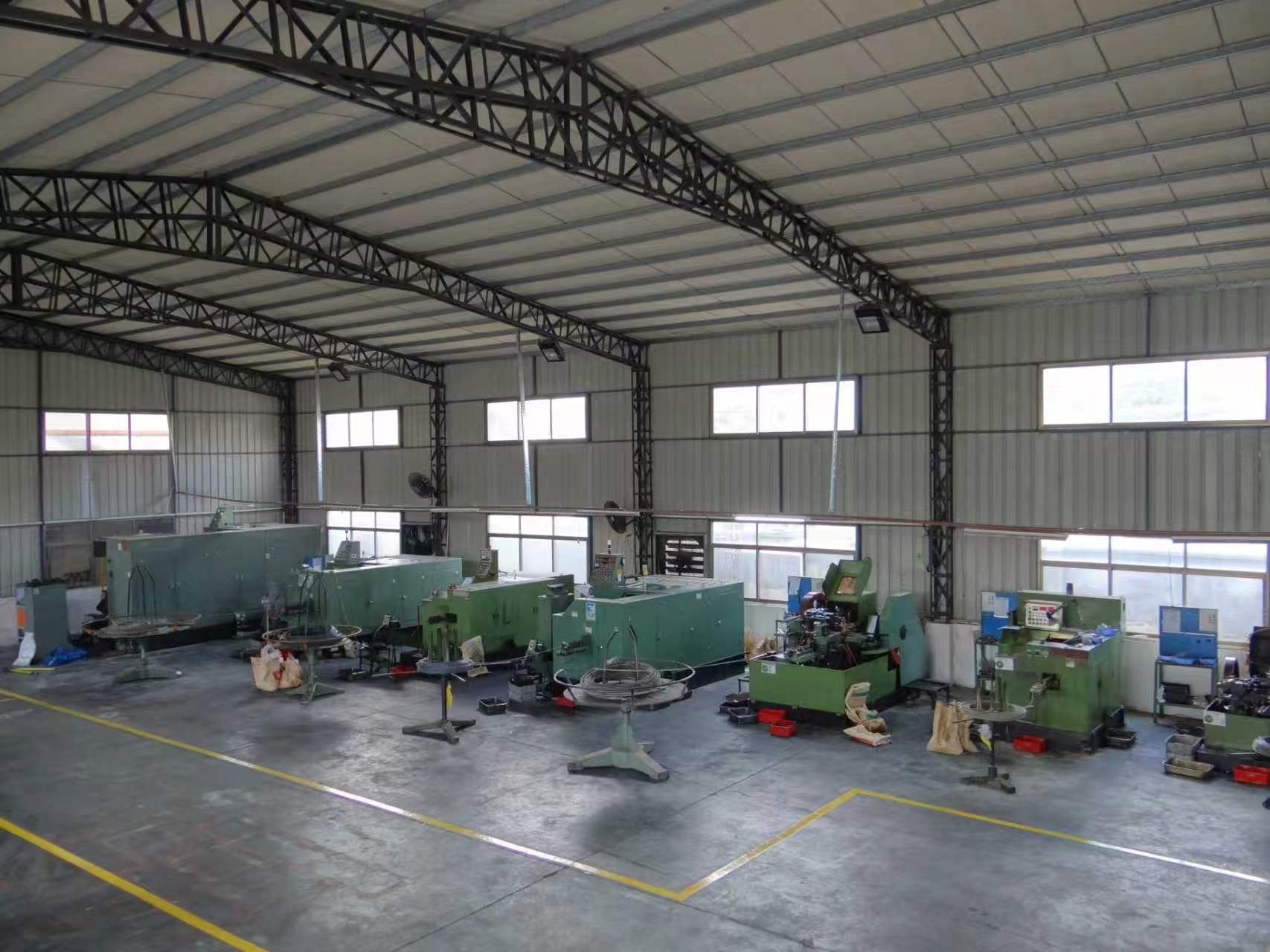
When standard bolts and screws stop being adequate, custom fasteners start earning their keep. It's rarely about reinventing the wheel—more like fine-tuning thread geometry, head profile, or material grade so a joint holds exactly as intended. That kind of precision shows up in fewer field failures, less rework, and a cleaner assembly line.
There's also a quieter advantage: inventory simplicity. A single purpose-built fastener can replace a stack of washers, spacers, and adapters that were only there to compensate for off-the-shelf mismatch. Over time, that consolidation trims procurement overhead and reduces the chance someone grabs the wrong part. The real payoff isn't just a better fit—it's having one less variable to manage.
Real-World Demands: How Specialty Fasteners Perform in Critical Applications
Specialty fasteners earn their keep the moment standard hardware walks away from a job. On a drilling platform in the North Sea, a single alloy-steel bolt holds a blowout preventer stack together. Salt spray, subzero winds, and constant vibration attack the threads. A generic fastener would gall, crack, or loosen within months. The specialty version uses controlled thread geometry, a dry-film lubricant, and a material like Inconel 718 to stay seated. That is not over-engineering; it is the only way the equipment survives between scheduled shutdowns.
High-cycle fatigue is where many fasteners fail quietly. In a turbine engine, bolts near the combustion section see temperatures above 600°C and thousands of load reversals per flight hour. A specialty fastener made from A286 or Waspaloy is not chosen for its tensile strength alone. Manufacturers specify cold-rolled threads, radiused root profiles, and precise preload tolerances to stop crack initiation. One loose rivet in a nacelle hinge can cascade into vibration across the wing. Maintenance crews rely on the fastener’s design history as much as its material certificate.
The difference shows up in failure analysis. When a standard grade 8 bolt snaps inside a mining dragline, the fracture surface often tells a boring story: hydrogen embrittlement from a rushed plating process. Specialty fasteners used in the same application go through vacuum heat treatment, passivation, and lot-by-lot testing for hardness and stress rupture. They cost more up front, but the real expense is the downtime when a $2 bolt fails and stops a $20,000-per-hour operation. That is why critical applications write their own procurement rules.
Choosing the Right Materials and Finishes for Tough Environments
Salt spray, fine dust, acid fumes, or constant wetting—each one attacks surfaces differently, and a single heavy-duty coating rarely covers them all. In a wastewater plant, a two-part epoxy on carbon steel can fail within a year if surface prep skips abrasive blasting to a near-white finish. The same coating over properly prepared hot-dip galvanized steel often holds for a decade.
Where impact and abrasion dominate, hardness alone can be misleading. A 500 HB wear plate may crack under repeated shock loads, while a slightly softer AR400 with a tough backing absorbs the same energy without spalling. For chemical exposure, lining selection matters as much as the base metal—PTFE sheets handle aggressive acids but creep under high bolt loads, so spring washers and controlled torque become part of the material decision.
Before finalizing a spec, check what has actually survived on site. Ten-year-old stainless handrails next to pitted carbon steel ladders tell you more than any lab test. Match the finish to the dominant failure mode, and remember that edge retention, UV stability, and thermal expansion often decide whether a coating lasts or peels off in sheets.
From Drawing Board to Assembly Line: The Custom Fastener Journey
Every custom fastener starts as a rough concept—often a sketch on a whiteboard or a marked-up CAD file. At this stage, the focus is on resolving the mismatch between off-the-shelf hardware and the product's actual demands. Thread pitch, head geometry, under-head radius, and material grade get pinned down long before tooling begins. It's less about reinventing the bolt and more about eliminating every small compromise that a standard part would force.
Once the drawing settles, prototyping moves quickly. Short-run CNC turning or cold heading produces a handful of samples that are measured against the original tolerances, then torqued, cycled, and sectioned to spot stress risers. Adjustments here are often tiny—a 0.05 mm shift in bearing face, a slightly wider drive recess—but they decide whether the fastener survives on the assembly line without slowing operators or failing in the field.
The final step is translating that verified prototype into repeatable production. Tooling gets hardened, plating choices are locked, and process controls are set so the 100,000th piece matches the first. By the time the custom fastener reaches the assembly line, it no longer feels custom—it simply fits, drives, and holds exactly as intended.
Tomorrow's Fasteners: Trends and Innovations to Watch
The fastener industry is quietly undergoing a transformation, driven by demands for lighter assemblies, smarter connections, and materials that can survive environments once considered impossible. Aerospace and automotive engineers are pushing beyond traditional steel and aluminum toward titanium alloys, high-performance polymers, and even ceramic composites. These choices aren't just about weight reduction—they're about managing thermal expansion, resisting galvanic corrosion, and extending service life in ways that standard bolts and screws never could.
Beyond materials, the physical design of fasteners is becoming more specialized. Thread geometries are being optimized for vibration resistance in electric vehicle powertrains, while self-clinching and flow-drill styles reduce the need for secondary operations. Coatings have evolved from simple zinc plating to multi-layer systems that provide both lubricity and long-term corrosion protection. Some manufacturers are embedding micro-encapsulated adhesives or lubricants directly into the thread surface, so the fastener activates its own locking or anti-seize function during installation.
The most disruptive trend may be the integration of sensing capabilities. Fasteners with embedded strain gauges or piezoelectric elements can report real-time clamp load, detecting loosening before it becomes a failure. This shifts maintenance from scheduled intervals to condition-based monitoring, particularly valuable in wind turbines, rail infrastructure, and offshore platforms where access is costly. As wireless connectivity becomes cheaper and more energy-efficient, expect to see smart fasteners move from prototype trials into mainstream structural applications within the next few years.
FAQ
ODM refers to Original Design Manufacturer. In this context, it means a supplier that designs and produces specialty fasteners based on their own specifications or in close collaboration with a client, rather than simply making parts from a customer's existing blueprint.
Standard fasteners are mass-produced to generic sizes and materials, so they often require compromise. ODM specialty fasteners are engineered around a specific application's load, environment, and assembly constraints. This allows for non-standard thread forms, custom head geometries, unusual material grades, or integrated features like sealing washers or drive systems that simply don't exist off the shelf.
The biggest payoffs are usually reduced assembly complexity, better long-term reliability, and lower total cost of ownership. By designing a fastener to fit the exact joint, you can eliminate secondary operations like adding separate washers or applying threadlocker. Custom materials and coatings also extend service life in harsh conditions, which cuts down on field failures and warranty claims.
Industries with high performance demands or strict regulatory requirements tend to benefit most. Automotive and aerospace rely on precision fasteners for safety-critical joints. Medical device manufacturers need biocompatible materials and miniature geometries. Electronics often require conductive or non-magnetic fasteners. Heavy machinery, marine, and renewable energy projects also use them to survive extreme vibration, corrosion, or thermal cycling.
It helps to arrive with a clear picture of the joint's functional requirements: load magnitude and direction, operating temperature range, exposure to chemicals or moisture, desired assembly torque, and whether the fastener will be removed for maintenance. A simple sketch or CAD model of the mating parts also speeds up the initial consultation. Most ODM suppliers will then propose material, heat treatment, coating, and geometry options based on those constraints.
Often yes, when you look at the full assembly process. A custom fastener might cost more per piece, but it can replace multiple components, reduce labor time, prevent cross-threading or over-tightening damage, and lower the risk of field recalls. In high-volume production, those savings frequently outweigh the higher unit price. The key is to evaluate total cost rather than just the purchase price of the fastener.
Common examples include tamper-resistant security screws with proprietary drive recesses, self-clinching studs for thin sheet metal, weld nuts with built-in alignment features, captive screws that remain attached to a panel, and fasteners with integrated sealing elements for fluid-tight joints. Some ODM projects also involve entirely new locking mechanisms that resist vibration without relying on traditional split washers or adhesives.
It depends heavily on complexity and material availability. For a relatively straightforward modification, such as an existing screw with a custom thread length or a different coating, prototypes might be ready in a few weeks. For a fully novel fastener requiring new tooling, multiple design iterations, and qualification testing, the timeline can stretch from two to six months. Early involvement with the supplier and clear communication about tolerances and testing standards helps keep that window as short as possible.
Conclusion
Specialty fasteners from ODM rarely resemble the mass-produced bolts found in hardware bins. They earn their place in demanding assemblies through exact geometry, load-specific threading, and tolerance control that off-the-shelf parts simply cannot match. The real advantage shows up when a joint has to survive vibration, thermal cycling, or corrosive exposure without loosening or failing. Custom design means a fastener can be tailored to the surrounding materials, installation access, and required clamp load, which reduces the need for extra washers, adhesives, or rework that quietly inflate production costs.
In critical applications such as aerospace, medical devices, and heavy equipment, performance is non-negotiable. ODM specialty fasteners are often specified because they handle shock, repeated loading, and harsh environments more predictably. Material choice and surface finish become part of the design, not an afterthought: stainless alloys, high-strength steels, and coatings are matched to temperature range, galvanic compatibility, and service life. The path from drawing board to assembly line typically includes prototyping, testing, and tight process control, so the final part arrives ready for high-volume use. Looking ahead, additive manufacturing, smart coatings, and lighter high-strength materials are shaping the next generation of specialty fasteners, shifting them from simple components to engineered elements of the product.
Contact Us
Contact Person: Mason Lv
Email: [email protected]
Tel/WhatsApp: +86 13027998452
Website: https://www.peakfastentech.com