

ODM Louver Damper Valve Solutions for Precision Airflow Management
2026-07-13
Precision airflow management is the invisible backbone of countless industrial processes, yet it’s often overlooked until a system underperforms. For engineers and facility managers, the difference between smooth operation and costly downtime frequently comes down to one critical component: the louver damper valve. But not all valves are created equal—when standard solutions fall short, custom-engineered designs become essential. This is where THT steps in, offering ODM louver damper valve solutions that combine deep application expertise with manufacturing agility. In this post, we’ll explore what sets truly effective airflow control apart and how partnering with the right ODM provider can elevate your project from functional to exceptional.
Bespoke Louver Damper Designs for Critical Airflow Tasks
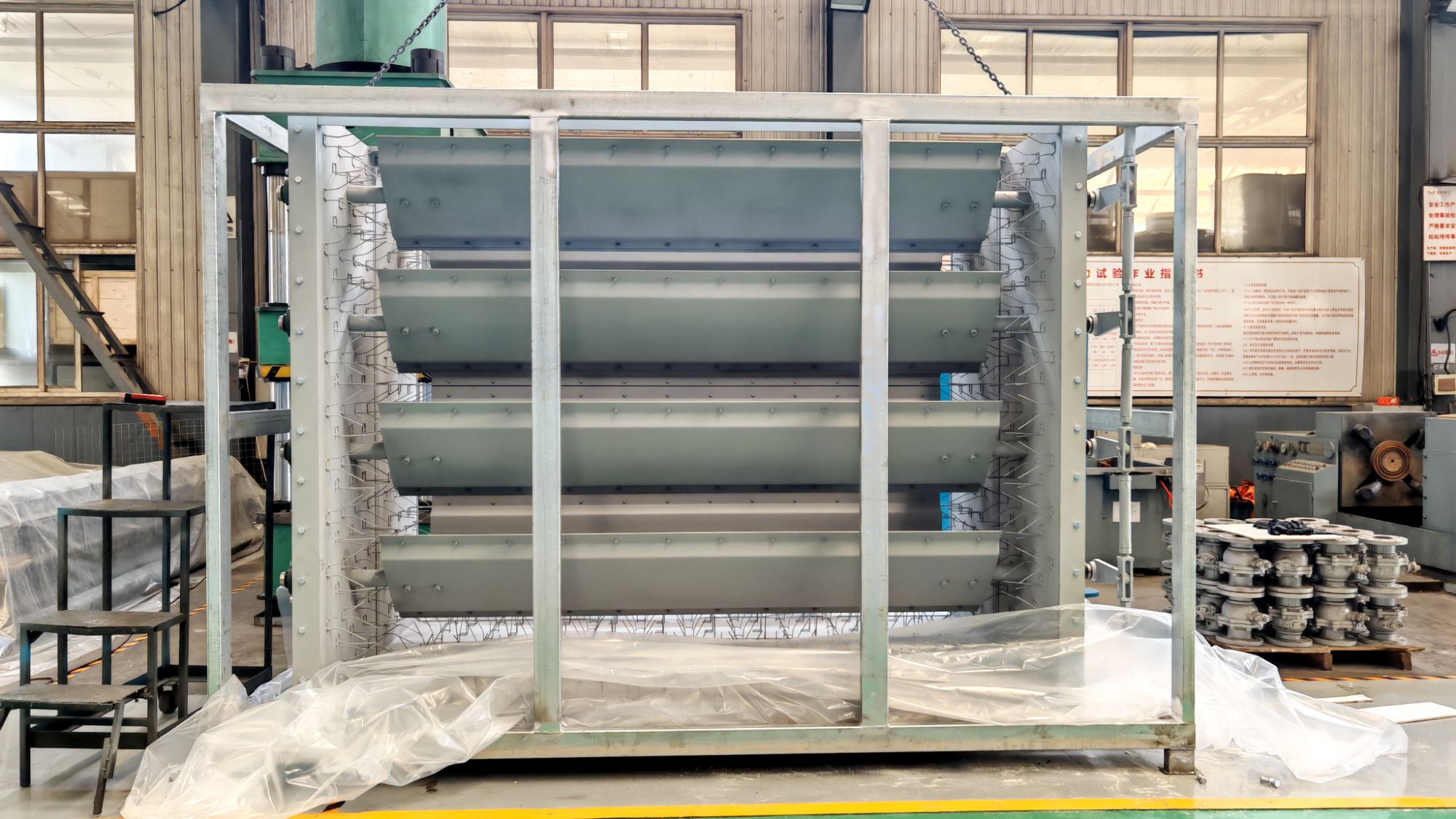
When standard dampers fall short, bespoke louver damper designs step in to handle the most demanding airflow control scenarios. These customized solutions are engineered from the ground up to meet precise performance criteria—whether managing extreme temperatures, aggressive corrosive environments, or exceptionally tight leakage requirements. Instead of forcing a one-size-fits-all product into a critical process, bespoke dampers are shaped around the specific geometry, pressure differentials, and operational cycles of the system they serve, ensuring seamless integration and long-term reliability.
Material selection and construction techniques play a pivotal role in these tailor-made assemblies. Depending on the application, designers may opt for high-grade stainless steels, specialized alloys, or even engineered composites, coupled with advanced sealing systems that maintain integrity under fluctuating thermal and mechanical loads. Blade profiles, linkage arrangements, and actuation methods are all fine-tuned—sometimes incorporating multi-stage or modulating control—so that the damper responds with the exact speed and precision required. This level of customization eliminates compromises often seen with off-the-shelf units, particularly in nuclear facilities, pharmaceutical cleanrooms, or high-stakes test cells where airflow variances cannot be tolerated.
Beyond pure performance, bespoke louver dampers also address unique installation challenges that standard products cannot accommodate. In retrofit situations or space-constrained settings, housings can be contoured, split, or reinforced to fit without disrupting surrounding infrastructure. Accessories such as custom flanges, mounting brackets, and insulation packages are integrated directly into the design, streamlining on-site assembly and minimizing installation risks. The result is a purpose-built airflow control device that not only performs flawlessly under critical conditions but also aligns perfectly with the project’s spatial and operational constraints, delivering a level of confidence that generic solutions simply cannot provide.
Precision Calibration That Eliminates Operational Drift
Accuracy drifts silently, often going unnoticed until output quality suffers. We take a different path by embedding real-time reference checks directly into the measurement cycle, so each reading is continuously validated against known standards. This isn't a periodic adjustment but an ongoing correction loop that compensates for environmental shifts, component aging, and load variations as they happen.
What sets the approach apart is how seamlessly it locks onto a stable baseline without interrupting the workflow. Subtle sensor deviations are caught and neutralized before they can accumulate into meaningful errors. The result is a system that maintains its precision from the first sample to the last, even under fluctuating temperatures or extended run times. You can trust the data because the calibration lives with the measurement, not in a separate maintenance schedule.
By weaving calibration into the fabric of every cycle, we remove the guesswork and manual intervention that traditionally introduce drift. It’s a self-correcting design that learns and adapts, ensuring that what you measure today will align with what you measured yesterday and what you’ll measure tomorrow. That kind of consistency transforms quality control from a reactive chore into an engine of confidence.
Material Science Advances Enhancing Damper Durability
Modern damping systems are reaping the benefits of breakthroughs in material science, where novel alloys and composites are pushing lifespan boundaries. Engineers are now turning to high-entropy alloys that resist wear and corrosion far better than conventional steels, even under cyclic loading. These metallic blends, often combining five or more principal elements, form stable microstructures that inhibit crack propagation—a common failure mode in dampers subjected to years of vibration.
Equally transformative is the integration of smart polymers and elastomeric compounds that self-heal micro-tears during operation. By embedding microcapsules of healing agents or utilizing reversible covalent bonds, these materials can recover a significant portion of their original damping capacity after damage. This not only extends service intervals but also reduces the risk of catastrophic failure in critical infrastructure, from suspension bridges to high-rise sway control systems.
On the coating front, nano-engineered surfaces are reducing friction and protecting internal components from environmental degradation. Diamond-like carbon coatings, for instance, provide a hard, low-friction barrier that minimizes abrasion in piston rods and seals. Meanwhile, oxide dispersion-strengthened layers improve thermal stability, allowing dampers to maintain consistent performance in extreme temperatures—be it the freezing cold of an offshore wind turbine or the scorching heat of an industrial plant.
Modular Configurations for Seamless System Retrofits
When updating legacy infrastructure, the real challenge isn't just swapping out old hardware—it's keeping everything running while you do it. That's where modular design comes into its own. Instead of tearing down entire systems, you can mix and match pre-engineered units that slot into existing frameworks. Think of it like upgrading a kitchen without losing the ability to cook dinner: each new module arrives ready to connect, with interfaces that speak the language of both old and new components. This approach turns what could be weeks of downtime into a series of brief, controlled transitions.
What often gets overlooked is the planning that goes into these modules before they ever see a production floor. True modularity isn't just about physical fit—it's about anticipating how future upgrades will interact with what's already there. A well-designed module doesn't demand that you rip out perfectly functional adjacent systems; it slides right in, adapts signal protocols on the fly, and even shares diagnostic data with legacy monitoring tools. This kind of foresight means retrofits become less of a disruptive event and more of a routine refresh, where the system gradually evolves rather than being replaced in one risky leap.
The real payoff comes when you consider long-term agility. With a modular base, adding new functionality later isn't a ground-up rebuild—it's a deliberate, additive process. Teams can test individual upgrades in isolation, confident that the surrounding system won't revolt. And when something does need tweaking, you're only touching a fraction of the whole, not weeks of interdependent rework. That's the quiet power of modular retrofits: they don't just fix today's problems; they make the system eager for tomorrow's improvements.
Dynamic Pressure Balancing Without Mechanical Lag
In fluid systems where rapid pressure fluctuations occur, traditional mechanical regulators often struggle to respond instantly due to inertia and friction within moving parts. This inherent delay, known as mechanical lag, can lead to pressure overshoots, instability, and even component fatigue. Dynamic pressure balancing without mechanical lag addresses this by employing a fully fluidic or electronically controlled system that reacts to pressure changes in real time, without relying on slow-moving diaphragms or springs. The core principle involves sensing the pressure differential and immediately adjusting flow or volume using high-speed valves or variable-speed pumps. By eliminating the mechanical intermediary, the response time is reduced to milliseconds, ensuring that pressure remains stable even under sudden load changes. This approach is particularly valuable in precision manufacturing, medical devices, and aerospace applications, where even minor pressure deviations can compromise quality or safety.
One innovative method achieves this through a closed-loop electronic feedback system that constantly monitors system pressure via sensors and adjusts actuator commands at a frequency far beyond the capability of mechanical counterparts. For instance, a piezoelectric valve can modulate flow thousands of times per second, maintaining a set pressure without the hysteretic effects common in spring-loaded regulators. Another technique uses a hydraulic or pneumatic capacitance chamber that absorbs surges by altering its effective volume through a fast-acting piston controlled by an electro-hydraulic servo. In both cases, the absence of mechanical lag means the system can preemptively counteract pressure changes before they propagate, resulting in a flat pressure profile. These solutions not only enhance accuracy but also reduce maintenance, as there are fewer wear-prone mechanical components.
Designing such systems requires careful integration of electronics, fluid dynamics, and control theory. Advanced algorithms, like feedforward control with adaptive filtering, can predict demand cycles and compensate for non-linearities in the fluid network. This predictive capability further diminishes any residual delay that might arise from signal processing. Ultimately, dynamic pressure balancing without mechanical lag enables a new class of high-performance fluid systems that operate with the precision of solid-state electronics, transforming industries that depend on ultra-stable pressures.
End-to-End Customization Beyond Standard Valve Catalogs
Engineering teams often find themselves constrained by the rigid specifications of off-the-shelf valve catalogs, where standard options fail to align with unique operational demands. The move toward end-to-end customization breaks these boundaries, allowing every component—from material selection and seat design to actuation interfaces—to be tailored precisely to the application. This approach transforms valves from generic commodities into purpose-built solutions that enhance system reliability and performance.
What truly sets apart a bespoke valve solution is the collaborative process that starts with field data and ends with a validated product. Engineers work directly with manufacturers to map out pressure drops, flow characteristics, and maintenance cycles, ensuring the final design isn’t just a modified standard part but a thoughtfully engineered assembly. Prototyping and rigorous testing under real-world conditions further refine the design, eliminating compromises that would otherwise surface in critical operations.
The long-term gains of stepping outside standard catalogs go beyond immediate fit. Customized valves reduce the need for adapters, minimize leak paths, and often integrate advanced monitoring features that vanilla products lack. For industries dealing with extreme temperatures, corrosive media, or high-cycle fatigue, this level of tailored engineering isn’t a luxury—it’s a strategic advantage that directly impacts uptime and total cost of ownership.
FAQ
They are engineered to provide precise control and regulation of airflow in various industrial and commercial systems, ensuring optimal performance and energy efficiency.
Through aerodynamic blade profiles and tight sealing mechanisms that minimize leakage, combined with highly responsive actuators that accurately adjust blade angles based on real-time demand.
They are widely used in HVAC systems for commercial buildings, cleanrooms, data centers, power generation plants, and pharmaceutical manufacturing facilities, wherever strict airflow control is critical.
Absolutely, we offer fully tailored designs including material selection like stainless steel or aluminum, specific blade shapes, dimensions, and actuator types to match exact pressure, temperature, and flow specifications.
Regular inspection of blade alignment and seal integrity, cleaning of debris, and lubrication of moving parts are advised, along with periodic testing of actuator responsiveness to maintain peak operation.
Because they deliver superior build quality, longer service life, and exceptional precision that generic products often lack, reducing energy waste and improving system stability in demanding environments.
Conclusion
In the precise world of airflow management, where even minor deviations can compromise system performance, ODM's louver damper valve solutions are engineered to deliver unmatched control. The starting point is a deeply collaborative design process, producing bespoke damper configurations that address the most critical airflow tasks—whether it's isolating fume hood exhausts in laboratories or modulating combustion air in industrial furnaces. Unlike off-the-shelf components that force compromises, each ODM damper is built around the specific pressure drops, flow profiles, and spatial constraints of the installation. This tailored approach is fortified by precision calibration routines that eliminate the operational drift so common in conventional dampers. By rigorously testing and certifying the actuation response under load, ODM ensures that the blade positioning remains stable over years of cycling, preserving the duct system's intended balance without recalibration.
Behind this reliability lies a combination of advanced material science and modular engineering. ODM leverages high-performance alloys, composite blade coatings, and self-lubricating bearings to enhance durability in corrosive, high-temperature, or particulate-laden airstreams—greatly extending service intervals and reducing lifecycle costs. The damper assemblies are also conceived as modular building blocks, enabling seamless retrofits into existing ductwork with minimal downtime. During operation, dynamic pressure balancing features counteract sudden changes in system static pressure without detectable mechanical lag; integrated sensors and fast-acting actuators adjust the blade angle in real time, maintaining steady flow rates even when upstream conditions fluctuate. Finally, ODM's end-to-end customization goes far beyond standard valve catalogs—encompassing everything from actuator integration and control protocol selection to factory acceptance testing that mirrors field conditions. The result is a truly application-specific solution that transforms airflow control from a maintenance liability into a competitive advantage.
Contact Us
Contact Person: Su Zhang
Email: [email protected]
Tel/WhatsApp: +86-25219206
Website: https://www.tht-valve.com/