

N52 Magnet Wholesale Sourcing Tips for Premium Neodymium Magnets
2026-08-24
Sourcing N52 magnets at wholesale prices is trickier than most buyers expect—grade inflation, inconsistent coatings, and hidden tolerances can quietly eat into your margins. That’s why DAWA put together these practical tips for securing premium neodymium magnets without the usual guesswork.
Why N52 Grade Remains the Benchmark for Serious Buyers
N52 isn't just a number on a spec sheet—it's the ceiling for commercially available neodymium magnets. Buyers who need maximum pull force in a constrained space keep coming back to this grade because nothing else matches its energy density. A 10 mm cube of N52 delivers roughly 40% more holding power than the same size in N35, and that gap becomes decisive in compact actuators, sensor housings, and high-end audio drivers.
The real reason serious procurement teams standardize on N52 is consistency under thermal and mechanical stress. While cheaper grades degrade noticeably after repeated temperature cycles, properly coated N52 maintains its flux density within a tight tolerance band. This predictability lets engineers design closer to the performance limit without overbuilding—a critical advantage when every gram and millimeter counts.
Finally, N52 filters out casual suppliers. Producing this grade reliably requires precise control of alloy composition and sintering conditions, which separates established manufacturers from backyard workshops. For buyers who cannot afford batch-to-batch variability, the N52 designation acts as a practical quality gate: if a vendor can consistently deliver true N52 with verified BHmax values above 50 MGOe, they've already proven their process control. That's why it remains the default choice for safety-critical and performance-driven applications.
What Most First-Time Importers Overlook Before Committing to Bulk Orders
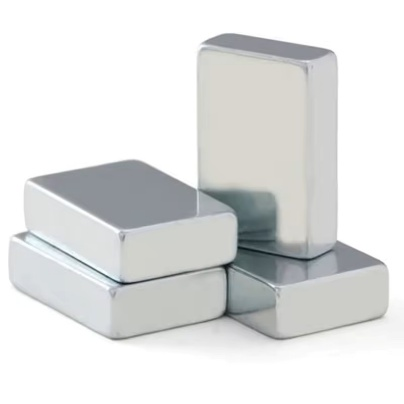
Many first-time importers fixate on the per-unit price and forget that the quoted figure rarely reflects the true landed cost. Port congestion fees, inland trucking, customs brokerage, and even the cost of palletizing goods can quietly add 15–25% to the invoice. Worse, if the HS code is misclassified to save a few dollars upfront, customs can hold the shipment for weeks and issue retroactive duty demands. Ask your supplier to break down the full cost chain before you commit—not just the FOB price.
Another blind spot is assuming the pre-production sample equals what arrives in the container. Factories often hand-pick samples or use senior workers for the first small batch, then shift to rushed production lines once volume increases. Without a written quality standard—like an AQL level for defects or a tolerance sheet for critical dimensions—you have no leverage when a third of the cartons arrive with scratches or misaligned prints. A third-party inspection that checks random cartons, not just the top layer, is worth every dollar.
Payment terms and liability clauses also get glossed over in the excitement of a good price. Many first-timers wire 30% upfront and 70% against a scan of the bill of lading, only to discover the goods are damaged or missing items with zero recourse. Negotiate a portion of the balance to be released after your own inspection or a third-party report, and clarify who pays for return shipping or replacement parts. Also check whether the supplier actually owns the molds and designs—plenty of importers learn too late that their "exclusive" product is being sold to competitors on the next production run.
Reading Between the Lines of Supplier Test Reports
Supplier test reports often arrive with bold checkmarks and neat tables, but the real story lives in the test conditions, equipment tolerances, and sampling methods that rarely get top billing. A "pass" can mean nothing if the sample was handpicked or the environmental parameters were softer than your application requires.
Look for what isn't stated. Missing data on batch variation, absent uncertainty ranges, or vague references to "internal standards" without the actual numeric limits are red flags. Comparing reports from different suppliers becomes unreliable when their test setups don't align—voltage levels, ambient temperature, or aging time can shift results dramatically.
Ask for raw data rather than sanitized summaries. A distribution curve, a list of outliers, or a note on failed first attempts reveals more about process control than a clean certificate. The ultimate goal is not to confirm the report says "compliant," but to understand where the margins sit and whether your own use case will push the component into territory the supplier never tested.
Custom Coatings That Actually Survive Harsh Environments
Plenty of coatings look flawless on a spec sheet yet start blistering within months once they meet salt spray, chemical splash, or relentless UV. The gap between lab results and field performance usually comes down to testing under a single, mild condition rather than the overlapping stresses real environments throw at a surface.
A custom formulation starts with the exact exposure profile. We map temperature swings, chemical concentrations, abrasion sources, and moisture cycles before choosing the resin backbone and crosslink density. That means a coating for a wastewater clarifier gets built differently from one for a mining conveyor or an offshore wind turbine flange, even if both call for "chemical resistance."
Validation happens through accelerated cycling, not just static immersion. Samples rotate through UV/condensation, salt fog, thermal shock, and slurry abrasion until they show visible breakdown. Only the systems that hold up through those combined cycles make it into production, because a coating that survives one harsh condition but fails in combination isn't surviving at all.
Negotiating Minimums Without Sacrificing Magnetic Performance
Often, suppliers quote high minimum order quantities to cover setup costs or material waste, but that doesn't mean your hands are tied. Start by asking what drives the minimum—whether it's a custom alloy, a specific coating, or a particular magnet shape. Once you understand the cost drivers, you can propose adjustments that lower the threshold without touching the magnetic output. For instance, opting for a standard grade instead of a custom blend, or accepting a slightly longer lead time, can reduce the supplier's risk and make them more flexible on quantity.
Another approach is to consolidate your needs across multiple projects or SKUs. If you need small volumes of several different magnet sizes, ask whether the supplier can treat them as a single production run. This lets you hit a collective volume that satisfies their setup economics while keeping each individual item at a lower quantity. You can also explore shared tooling—using the same fixture for slightly different dimensions—which slashes the minimum without altering magnetic performance.
Finally, don't accept that lower minimums automatically mean weaker magnets. Material grade, coating integrity, and magnetization process are independent of batch size. A reputable supplier can produce ten magnets with the same pull force as ten thousand, provided the raw material and process controls are in place. So push back on any claim that you must sacrifice performance for a smaller order, and ask for batch-level test data to prove it.
Spotting Inconsistencies in Plating and Dimensional Tolerance Before They Cost You
Plating thickness can drift across a single batch without anyone noticing until assembly jams or a connector refuses to seat. A quick check with a micrometer at three points on the same part often reveals more than a full inspection report from a vendor. If the numbers don't match the print, stop the line before the parts reach the next station.
Dimensional tolerance problems rarely announce themselves. They hide in fillets, hole positions, and flatness callouts that get measured only when something fails. Build a habit of comparing first-article measurements against the actual mating part, not just the drawing. A pin that passes its own tolerance can still lock up when paired with a bushing at the opposite limit.
When plating and machining both sit close to their limits, small shifts in bath chemistry or tool wear push parts out of spec. Pulling five random pieces from each incoming lot and plotting the range takes less time than a single line shutdown. Catching the inconsistency early keeps rejects off the floor and stops a minor variance from becoming a return.
FAQ
Ask for the full magnetic property table, not just the grade. Verify the remanence (Br) is at least 14.2 kG and coercivity (Hcj) meets your thermal requirements. Also check the maximum operating temperature for the specific coating, because plating can fail before the magnet loses strength.
Request a batch-specific BH curve test report from an independent lab. A reliable factory will not hesitate to provide this. If they only offer a generic certificate or claim 'equivalent to N52,' treat it as a red flag and test samples yourself with a gauss meter and pull-force rig.
Not necessarily. N52 has the highest remanence but often lower intrinsic coercivity than grades like N48SH or N42SH. If your assembly runs above 80°C, a lower grade with high-temperature stability can outperform N52. Start with your worst-case operating temperature, then pick the highest grade that survives it.
Nickel-copper-nickel is the default and works for most indoor uses. For outdoor or marine exposure, epoxy or PTFE coatings provide better corrosion resistance, but they add thickness and slightly reduce effective magnetic output. Avoid zinc for premium N52 parts because it rubs off easily and offers limited protection.
Legitimate price differences come from coating quality, dimensional tolerances, and whether the material is truly N52 or a lower grade sold with an inflated label. Some low-cost suppliers use recycled neodymium with impurities, which weakens the magnet. Always compare samples for surface finish, edge chipping, and actual pull force before letting price decide.
Standard shapes often have MOQs of 1,000 to 5,000 pieces, but custom sizes or special coatings can push that to 10,000 or more. You can negotiate lower first-run quantities by paying a setup fee or accepting slightly longer lead times. Many factories will also hold stock for repeat orders once the tooling is made.
Write a clear quality clause in the purchase order: specify dimensional tolerances, coating thickness, maximum chipping allowance, and the acceptable pull-force range. Then arrange a third-party pre-shipment inspection. This costs a few hundred dollars but catches most problems before the goods leave the factory.
A proper supplier will provide a material datasheet with the full demagnetization curve, a RoHS/REACH compliance statement, and a coating adhesion test report. If you need magnets for medical or automotive use, ask for PPAP or material traceability documents. Missing paperwork often means missing process control.
Conclusion
Sourcing N52 neodymium magnets at wholesale demands more than just checking a grade label. True N52 material remains the benchmark because it delivers the highest energy product available commercially, but many first-time importers fixate on price per piece and ignore magnetic flux consistency across a production batch. Without verifying that every magnet actually meets N52 performance—not just a sample—buyers risk receiving mixed lots where weaker N48 or N50 stock is passed off as premium. Smart sourcing means asking for full lot traceability and independent pull-force data before committing to bulk volume, otherwise the "bargain" quietly erodes into field failures and warranty claims.
Supplier test reports often look convincing until you read between the lines: check whether the pull-force values were measured at room temperature only, or across the actual working range. Custom coatings like nickel-copper-nickel, epoxy, or parylene sound protective, but only survive harsh environments if plating thickness and adhesion are audited, not assumed. Negotiating lower minimum order quantities should never mean accepting degraded magnetic performance—reputable factories can adjust without swapping raw material grades. Finally, watch for subtle plating inconsistencies or dimensional drift within a shipment; a few microns here or there can cause assembly jams or corrosion spots that cost far more than the initial savings. Careful inspection before production runs is the cheapest insurance in premium magnet sourcing.
Contact Us
Contact Person: Kelvin Lo
Email: [email protected]
Tel/WhatsApp: 0769-88561131
Website: https://dawamagnetic.com/