
MCM Interior Wall Covering Supplier Answers Your Top Design and Installation Questions
2026-08-31
Designing or installing MCM interior wall coverings? You probably have a list of questions — and the wrong answers can cost you time, money, and a finish that falls short. Instead of guessing, we went straight to Magic Stone, a supplier known for tackling the tough, real-world issues that contractors and designers actually face. Here’s what they had to say about the most common design and installation challenges.
Where MCM Panels Earn Their Keep Beyond the Accent Wall
Once you get past the showpiece accent wall, MCM panels start pulling double duty in places that quietly shape how a room feels. Ceiling applications are a prime example—installing lightweight metal composite panels overhead adds depth without the weight of traditional materials. The reflective finish can bounce light around a dim hallway or make a cramped lobby feel taller than it really is.
Cabinetry and built-ins are another spot where MCM earns its keep. Instead of standard veneers, wrapping kitchen islands, bar fronts, or closet doors in a brushed metal panel gives furniture a tailored, architectural look. It handles daily scuffs and moisture better than paint or laminate, so high-touch areas stay sharp long after the handover.
Even exterior soffits, column wraps, and entrance canopies benefit from the same thin, rigid panels. Because MCM cuts and folds cleanly, awkward transitions and curved surfaces become less of a headache on site. The result is a consistent material language that moves from interior feature walls to outdoor wayfinding without switching systems or changing contractors.
The Substrate Truth Most MCM Installation Guides Leave Out
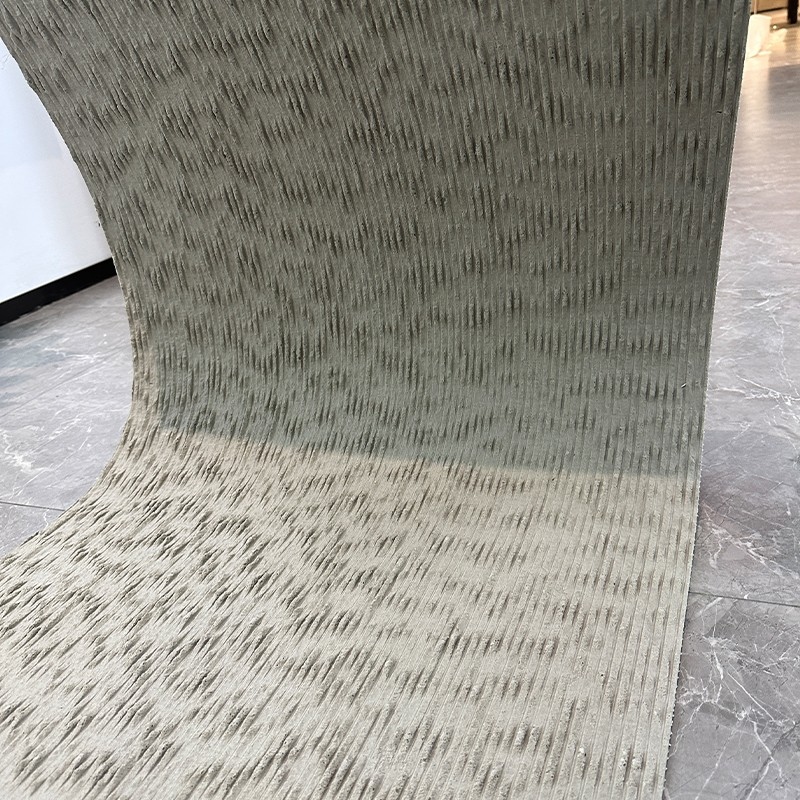
Most MCM installation manuals breeze past substrate prep with a quick 'surface must be clean, dry, and sound.' That phrase hides a stack of site conditions that decide whether panels stay flat or start telegraphing every stud and seam within a season. Concrete, CMU, plywood, and gypsum sheathing all move and hold moisture differently, and none of them arrive on site within the flatness tolerance that factory-finished MCM demands.
The real issues show up as waves, popped fasteners, or adhesive failures. A substrate that measures 3/16 inch out of plane across a 10-foot span won't look like much before installation, but once 4 mm panels go up, the ripples read as poor workmanship. Moisture vapor drive matters just as much—trapping damp substrate behind an impervious panel can push bond lines apart long before anyone notices a leak. Checking moisture content and pH before you commit to an adhesive or barrier isn't optional; it's the difference between a 5-year and a 30-year wall.
Then there's the fastening substrate itself. Many guides specify screw spacing without asking what the screw is actually biting into. Steel studs, aged concrete, or OSB that has been rained on twice can all pass a visual check and fail a pull-out test. Running a handful of test fasteners in the actual wall assembly—not a lab coupon—gives you numbers you can trust. Until that substrate reality is part of the installation checklist, all the panel warranty language in the world won't keep the wall from moving.
Why MCM Finishes Are Not Interchangeable From Room to Room
A hallway and a bathroom place entirely different demands on a metal composite panel. The finish rated for dry, low-contact spaces will often buckle, fade, or lose its bond once it's moved into a room with constant humidity and temperature swings. That's not a minor aesthetic issue—it's a structural one, because the core and coating respond to moisture and heat at different rates, and what holds up in one environment can start to delaminate in another.
Lighting changes everything, too. The same matte charcoal MCM finish can read as warm and soft next to a north-facing window, but turn almost metallic and cold under LED strips in a kitchen. Since you rarely control the light fixture choices room by room, choosing the finish per room becomes the only way to keep the intended color and texture from drifting. Designers don't just match swatches; they match how a swatch behaves under that specific room's light.
Wear patterns also make finishes non-transferable. A glossy, high-sheen panel looks stunning in a guest bedroom but shows every fingerprint and scuff in a mudroom or laundry area. Conversely, a textured, low-sheen finish chosen for durability can feel too rough or industrial for a formal dining room. Each room's daily routine—foot traffic, cleaning chemicals, even how often the door is opened—dictates which coating system will survive without constant maintenance.
Expansion Gaps: The Small Detail That Prevents Big MCM Failures
Most discussions around metal composite material (MCM) failures jump straight to panel thickness, finish quality, or installation torque. Yet field observations repeatedly point to a quieter culprit: the expansion gap. MCM skins, typically aluminum with a polyethylene or fire-retardant core, expand and contract with temperature swings far more than the supporting steel or aluminum framing. Without properly sized and positioned gaps between panels, thermal movement has nowhere to go. The result is not immediate collapse but a slow accumulation of stress at fasteners, seam adhesives, and corner joints. Over a few seasonal cycles, those stresses turn into visible oil-canning, cracked sealant lines, and eventually panel edge pull-through.
The precise gap width depends on panel length, color, orientation, and local climate, but a common rule of thumb is to allow at least 1/16 inch per 10 feet of panel length for every 100°F temperature differential. Dark-colored panels on south-facing walls in desert climates can hit surface temperatures above 180°F, while nighttime lows drop below 50°F, creating a differential that easily exceeds 130°F. A 20-foot panel under those conditions needs roughly 1/4 inch of movement accommodation at each end. Skipping this calculation or using a fixed 1/8-inch gap because it looks neater is a recipe for buckling at mid-span or fastener slot elongation. The fix is not just wider gaps but also slotted fastener holes with proper gasketing that allow the panel to slide without binding.
Installers often treat expansion gaps as an aesthetic afterthought, reducing them to minimize visible seams or caulking them solid for a cleaner look. That well-intentioned mistake locks the panel into a rigid frame, converting a dynamic system into a static one. Then the first hot afternoon does the work no one expected: the panel bows outward between fasteners, or the sealant tears away from one edge and adheres to the other. Once that happens, water gets behind the MCM, and the real failures begin—corrosion of the support system, loss of core adhesion, and interior moisture damage. A simple, well-detailed expansion gap, maintained consistently across every elevation and transition, costs almost nothing at installation but prevents the kind of large-scale remediation that gives MCM a bad name.
Can MCM Wall Coverings Handle Real-Life Humidity Without Warping?
Humidity has a way of exposing weaknesses in wall finishes, but MCM panels approach moisture differently than traditional wood or gypsum. The material is mineral-based and naturally dimensionally stable, meaning it doesn't absorb water the way organic fibers do. In high-humidity rooms like bathrooms, mudrooms, or laundry areas, the panels maintain their shape because there's no cellulose structure to swell or contract. That stability translates directly into fewer worries about edges lifting or seams opening up over time.
What really matters is how the installation handles vapor drive. MCM itself won't warp from moisture in the air, but it still needs a proper substrate and adhesive rated for damp conditions. When installed over a flat, dry backer with the recommended adhesive, the panels stay flat even when the room cycles between steamy and dry. This is a key difference from laminates or wood veneers: the panel itself isn't the weak link.
Real-life tests often include prolonged exposure to bathroom steam, splash zones behind sinks, and even occasional direct water contact. In those situations, MCM panels hold up without cupping, buckling, or visible joints. That doesn't mean they're intended for submerged use, but for normal residential humidity swings they offer a level of dimensional reliability that's hard to match with organic-based wall materials.
The Fastener and Adhesive Combination Your Installer Should Justify
When an installer specifies both mechanical fasteners and adhesive, that decision should come with a clear rationale. Some materials move at a different rate than the substrate; adhesive alone may handle shear but not uplift, while fasteners alone can cause localized stress or visible telegraphing. A justified combination usually targets a specific failure mode that one method can't cover.
Ask the installer to walk through the load path and expected movement. If the explanation involves thermal cycling, wind uplift, or vibration, the paired approach makes sense. If it sounds vague or like habit, treat that as a warning sign. Experienced installers can point to manufacturer data, site conditions, or past callbacks that led them to specify both.
The point isn't to question every detail. It's to confirm the combination isn't just inflating material cost. A credible justification ties the fastener pattern, adhesive type, and cure time to the actual assembly. Without that, you may be paying for redundancy that isn't needed—or worse, creating a bond line that works against the mechanical connection.
FAQ
In most cases, yes. As long as the drywall is flat, clean, and structurally sound, MCM panels can be bonded directly to it using the recommended adhesive. For heavily damaged or uneven walls, we suggest installing furring strips or a leveling compound first to avoid visible waviness in the finished surface.
We keep a broad stock of woodgrain, solid colors, brushed metal, and stone-look finishes, but custom work is where things get interesting. You can pick a specific RAL or Pantone color, choose a gloss level, or even add perforations or embossed patterns. Minimums apply for fully custom runs, so it's worth asking early in the design phase.
That's a common concern. We provide matching trim pieces—outside corners, inside corners, J-channels, and end caps—in the same finish as the panels. For a seamless look, many installers use mitered edges on outside corners. We also supply shop drawings that call out these details so there's no guesswork on site.
Yes, with the right panel core. For wet or humid spaces, we recommend panels with a non-absorbent core and factory-sealed edges. They hold up well to frequent wiping and don't support mold growth. Just avoid continuous water immersion—these are wall coverings, not shower liners.
Very little. A soft cloth and mild soap and water handle most marks. Avoid abrasive cleaners or steel wool, which can dull the finish. For textured or matte surfaces, a microfiber cloth works best. No waxing, sealing, or special treatments are needed.
We offer on-site training for larger projects and a detailed installation guide that covers adhesive selection, cutting, and edge sealing. Most experienced carpenters or drywallers pick it up quickly. If you'd rather not handle it, we can connect you with certified installers in your area.
Standard lead time is 2–3 weeks from approved drawings and color samples, depending on order size. Rush orders are possible for stock finishes—sometimes within a week—but custom colors or textures will add time. Let us know your deadline before finalizing the spec and we'll tell you what's realistic.
Most of our interior MCM panels meet Class A fire-rated requirements when tested to ASTM E84. We can supply test reports and certifications for your permit package. For projects with stricter requirements, such as healthcare or high-rise, we offer fire-retardant core options—just specify that need early.
Conclusion
MCM interior wall coverings have moved far beyond the decorative accent wall, proving their value in high-traffic hallways, retail spaces and hospitality settings where scuffs and daily wear would quickly age ordinary panels. The real story, though, is in the installation details that most guides skip. The substrate matters more than many realize: a stable, flat and moisture-stable backer is non-negotiable, because even the best MCM panel will telegraph waves or lose adhesion if the wall behind it shifts or holds residual dampness. Finish selection is another place where rooms cannot simply share the same spec. A matte, low-sheen finish that works in a bedroom will not survive the humidity and chemical exposure of a bathroom or kitchen, so the coating has to match the room's actual conditions rather than just the designer's color palette.
Expansion gaps often get treated as a minor trim detail, but they are the difference between a wall that stays flat for a decade and one that buckles within the first seasonal change. Leaving a consistent perimeter gap lets panels move without pressing against floors, ceilings or adjoining walls. That brings up the humidity question directly: yes, MCM wall coverings can handle real-life moisture when the joints are properly sealed and the substrate is dry at installation. A panel itself won't warp from bathroom steam if movement is allowed and edges are protected, but a trapped pocket of moisture behind the panel will cause trouble long before the face shows it. Finally, the fastener and adhesive combination should never be a guess. A trustworthy installer ought to justify why they are using mechanical fasteners along the top edge with adhesive in the field—or vice versa—because relying on one method alone is how panels pop loose over time.
Contact Us
Contact Person: Vito
Email: [email protected]
Tel/WhatsApp: 86 13088879266
Website: https://www.magicstonemcm.com