

Karate Hand Guards Maker: Crafting Durable Protection for Martial Artists
2026-08-19
In the demanding world of karate, every punch, block, and strike puts your hands on the line. That's why serious martial artists don't settle for flimsy gear—they rely on a dedicated karate hand guards maker that understands durability from the inside out. At PandaWin Sports, we don’t just craft hand guards; we engineer confidence for every dojo session. But what really goes into making protection that survives round after round? Let’s take a closer look before you trust your training to anything less.
What Really Happens to Your Hands During a Karate Strike
When your fist meets a solid target, the first thing that takes the hit is the skin over the knuckles. It compresses instantly, forcing blood out of the capillaries and leaving a pale, flattened patch that stings for a second before the deeper ache sets in. Underneath, the metacarpal bones flex slightly—more than you'd expect—and the cartilage at the knuckle joints absorbs a shock wave that travels up through the wrist and into the forearm. If the angle is even a few degrees off, the force concentrates on one metacarpal instead of spreading across all four, and that's when stress fractures start to form, often too small to see on an X-ray at first.
Then there's the connective tissue. The extensor tendons on the back of the hand stretch taut as the wrist locks into place, while the flexor tendons on the palm side bunch up like cables. That tension is what gives a trained karateka that hard, rigid feel when they make a fist. But repeated impact also causes micro-tears in the tendon sheaths, which the body repairs with scar tissue. Over months, this makes the hands stiffer in the morning, and you learn to shake them out or run them under warm water before practice. Nerves get involved too: the dorsal branch of the ulnar nerve runs right across the striking surface, and repeated compression can dull sensation there, so a punch that would have felt like a jolt now registers as dull pressure.
Long-term, the body adapts in ways that are both impressive and a little alarming. Bone density in the knuckles and the heads of the metacarpals increases measurably after a few years of heavy bag work, and the joint capsules thicken. Some practitioners develop visible calcium deposits that look like bumps under the skin. There's a trade-off, though. The same adaptation that turns the hand into a blunt weapon also reduces fine dexterity—typing, playing guitar, or threading a needle can become clumsier. And the cartilage doesn't always keep up with the bone growth, so osteoarthritis in the hands is a real risk later in life, even for people who stopped training decades ago.
Why Most Hand Guards Fail by the Third Month
The first thing most riders notice around week ten is a subtle shift in feel. The guard that once locked tight against the bar end now rattles over rough pavement, and the plastic develops a chalky haze that no amount of cleaning removes. This isn't a single dramatic failure but a slow surrender of material properties. The UV stabilizers in cheap polycarbonate break down faster than expected, especially if the bike sits outdoors during lunch hours. What seemed like a durable shell in March becomes brittle by June, cracking at the mounting points where vibration concentrates stress.
Installation habits also play a quiet role in early failure. Many guards are mounted with the clamp bolts torqued by feel rather than spec, and that extra half-turn creates micro-fractures around the threaded inserts. Add in the daily temperature swings between morning chill and afternoon sun, and those fractures widen invisibly. The real killer, though, is moisture. Water seeps behind the guard where it meets the lever perch, and without proper drainage it sits against the metal hardware until corrosion eats away the anchor points. By month three, what looks like a solid unit is hanging on by a few stressed threads.
Finally, there's the mismatch between expectation and engineering. Most budget guards are designed as roost deflectors for casual trail riding, not as structural supports for daily commuting on potholed streets. When a rider leans the bike against a wall or catches the guard on a doorframe, the load path travels straight into the weak points near the inner clamp. Repeated small impacts accumulate damage that doesn't show until a cold morning turns the plastic rigid. That's when the guard finally snaps, and the owner is left wondering why a three-hundred-dollar accessory couldn't survive a single season of use.
Designing Padding That Moves With You, Not Against You
Most padding is built as a static block—soft enough on impact, but the moment you bend a knee, swing an arm, or shift your weight, it fights back. The foam bunches at the joint, the edges dig in, and you end up adjusting your gear instead of focusing on the motion. That subtle resistance isn't just annoying; it changes how you move. Over the course of a long run or a heavy training session, those micro-adjustments add up to real fatigue and even altered mechanics.
We started from a different question: what if the padding didn't just sit on the body, but moved with its natural lines? Instead of adding thickness uniformly, we mapped the way limbs flex and twist under real conditions. High-flex zones got thinner, pre-curved channels that open and close like gills when you move, while impact areas were layered with a gradient density foam that transitions from firm to pliable without a hard edge. The result is a pad that bends where you bend and stays put where you need coverage.
The difference shows up in the details. During a deep squat, the material doesn't fold into the back of the knee. On a sprint, it doesn't creep up the thigh. Testers describe it less as wearing a protective layer and more as having an extra, resilient skin—one that absorbs shock but never reminds you it's there. That's what happens when padding is designed around movement, not just placed on top of it.
The Materials We Trust (and the Ones We Won’t Use)
There’s a quiet confidence in a solid oak table that has outlived three moves and still holds its edges. Trust, in materials, is less about newness and more about how a surface accepts the years. Leather scuffs, brass dulls, wool pills a little at the elbows, and none of these are failures. They’re evidence that the material is doing its job without pretending to be something it isn’t. What earns trust is that slow, legible wear: cracks that stay shallow, finishes that can be reapplied, joints that tighten rather than loosen when the seasons shift.
The materials we avoid tend to share a different kind of dishonesty. Vinyl printed with a wood grain, plastic molded to look like cast iron, laminates that peel at the first scratch — these are surfaces performing a role they cannot sustain. They don’t age; they degrade. A chip in a melamine shelf reveals fibrous cardboard underneath. A scratch on a faux-leather chair leaves a white scar no polish can hide. Worse, they rarely reward repair. Once damaged, the logical step is replacement, not mending, which tells you everything about the relationship the maker expected you to have.
Sometimes the refusal is practical rather than moral. Thin glass tabletops that shatter without warning, soft metals that bend under normal use, textiles that fade unevenly after one summer — these aren’t about taste but about predictability. A trustworthy material doesn’t have to be expensive or rare. Plywood with exposed edges can be as honest as walnut, as long as it’s cut clean and sealed properly. The real test is simple: if you can imagine repairing it, oiling it, or handing it to someone else in ten years without apologizing, it probably belongs in the first category.
From First Pattern to Final Stitch: Inside Our Workshop
The first pattern always carries a certain tension. We spread the paper across the cutting table, smoothing its creases before a single blade touches cloth. Chalk lines follow ancient curves, but each body asks for small adjustments — a half-inch here, a deeper dart there. It's slow work, and we prefer it that way.
In the next corner, our stitchers thread machines that have outlived trends. Pedal speed stays low until the seam feels right under their fingers. Some pieces pass through seven pairs of hands before the final press; if any one of them hesitates, the garment waits. We'd rather redo a collar than let a flaw hide behind a lining.
The last step happens under a warm iron, not a clock. Steam settles wool, sharpens lapels, and erases the day's handling. Only then does a jacket earn its hanger. From first pattern to final stitch, nothing leaves this room without carrying the smell of steam and a bit of our patience.
Built for Sparring, Not Just for Display
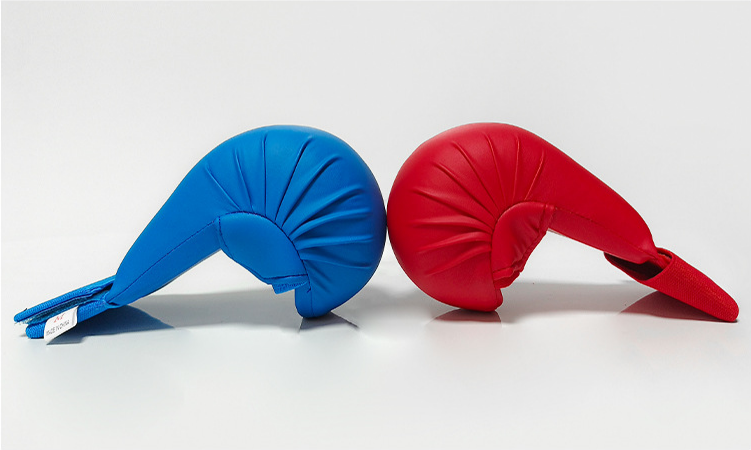
Most gloves look great on a shelf, but the first time you hit a heavy bag with real intent, the padding shifts and the lining starts to tear. That’s not what these are about. The foam stack is dense enough to protect your knuckles through hundreds of rounds, yet forgiving enough that you're not throwing bricks. You'll notice it right away—no soft spots near the thumb, no lumps forming after the first week.
The closure system is where a lot of gloves fail. Here, the hook-and-loop strap wraps far enough down the wrist to keep your hand from rolling on impact. You can adjust it with gloves already on, mid-round, without needing a teammate to yank it tight. That small detail matters more than any flashy colorway.
After a few hard sparring sessions, the leather softens in the right places and holds its shape everywhere else. The palm bar stays put. The thumb doesn't catch. If you've ever had a glove that felt broken-in after one session and blown out after three, this is built to skip that disappointment.
FAQ
We primarily work with high-density foam, full-grain leather, and reinforced stitching. The foam absorbs shock while the leather shell resists tearing. Some models use a carbon-fiber plate across the knuckles for extra rigidity.
They are built with cross-stitched seams and an anti-slip inner lining, so they stay put and don't break down after a few hard hits. The outer layer is treated to resist moisture and scuffs.
Yes. We offer a simple measurement guide and can adjust the pattern before cutting. Custom sizing doesn't cost extra on most orders, and we keep the same protective layering.
Each pair is cut and assembled by hand, not run off a factory line. We also reinforce the thumb and index finger area, which is where cheaper guards tend to split first.
They work well for any striking art that allows hand protection. The padding is dense enough for full-contact training, but flexible enough for fast combinations and open-hand techniques.
Wipe them down with a damp cloth after training and let them air dry away from direct heat. Avoid soaking the leather. A light leather conditioner once a month keeps the surface from cracking.
We do minor repairs like restitching or replacing straps at a low cost. If the damage is from a manufacturing flaw within the first year, we cover it under warranty.
Most custom pairs ship within 10 to 14 business days. During peak competition season it can take up to three weeks, and we send tracking as soon as the order leaves our workshop.
Conclusion
A solid karate strike sends shockwaves through the metacarpals, often bruising the soft tissue between knuckles and leaving micro-fractures that show up weeks later. The worst of it isn't the immediate pain—it's the slow buildup of damage from repeated impact on poorly protected hands. Most hand guards fail by the third month because their padding compresses unevenly after a few hard sessions, or the stitching pulls apart right where the fist flexes. We approach padding as something that must move with your hand. Instead of a stiff block of foam, we layer high-density closed-cell foam over a flexible shell that follows the natural curl of your knuckles during a punch. This reduces shear stress on the skin and lets you open your hand for grabs and blocks without fighting the guard.
In the workshop, every pattern starts from a 3D scan of real fighters' hands—not a generic size chart. We cut and stitch each pair with double-stitched seams, reinforcing the thumb webbing and the knuckle ridge where guards typically blow out. We won't use cheap EVA that hardens after exposure to sweat or leather that cracks at the crease. Materials are chosen for long-term compression recovery and abrasion resistance, tested on heavy bags and makiwara before they ever reach a customer. The final product is built for daily sparring: sweat-wicking lining, ventilation channels, and a low-profile fit that doesn't shift when you strike. These aren't display pieces. They're meant to be beaten up, washed, and thrown back on for another round.
Contact Us
Contact Person: Fei Xu
Email: [email protected]
Tel/WhatsApp: +8618631245578
Website: https://www.pandawinsports.com/