

Isopropylated Triphenyl Phosphate Manufacturer for Consistent Quality and Reliable Supply
2026-11-16
Ask any purchasing manager what keeps them up at night, and unreliable chemical suppliers rank near the top. One batch of isopropylated triphenyl phosphate tests perfectly, the next drifts off-spec, and suddenly your production line is scrambling. Fortune decided that 'good enough' wasn't acceptable. We built our manufacturing around a single promise: every drum shipped matches the last, and the next one is already on its way. If consistent quality and dependable supply feel like a gamble with your current vendor, this post will give you a clear look at what you should expect from a partner—and what we deliver without the usual excuses.
Batch-to-Batch Uniformity Without Compromise
Every production run brings its own subtle shifts—raw material nuances, ambient conditions, operator handling. The hard part isn't producing one flawless batch; it's making sure the next fifty match it. That's where most processes quietly fail, accepting minor drift as inevitable. Rejecting that mindset starts with treating uniformity not as a quality checkbox, but as a design constraint baked into the workflow itself.
Real batch-to-batch consistency comes from tightening the feedback loop. Instead of waiting for post-run lab results, inline sensors and adaptive controls adjust parameters while the batch is still in motion. This isn't about chasing a fixed recipe; it's about holding the product's critical attributes steady even when inputs wander. The goal is to make variation uneconomical, not just detectable.
When uniformity is achieved without compromise, it changes how teams operate. Changeovers stop being nervous events. Specifications stop being debated. Customers stop asking which batch they received. The process becomes quietly dependable—not because nothing ever changes, but because the system absorbs change without breaking stride.
Supply Chain Stability Built on Decades of Expertise
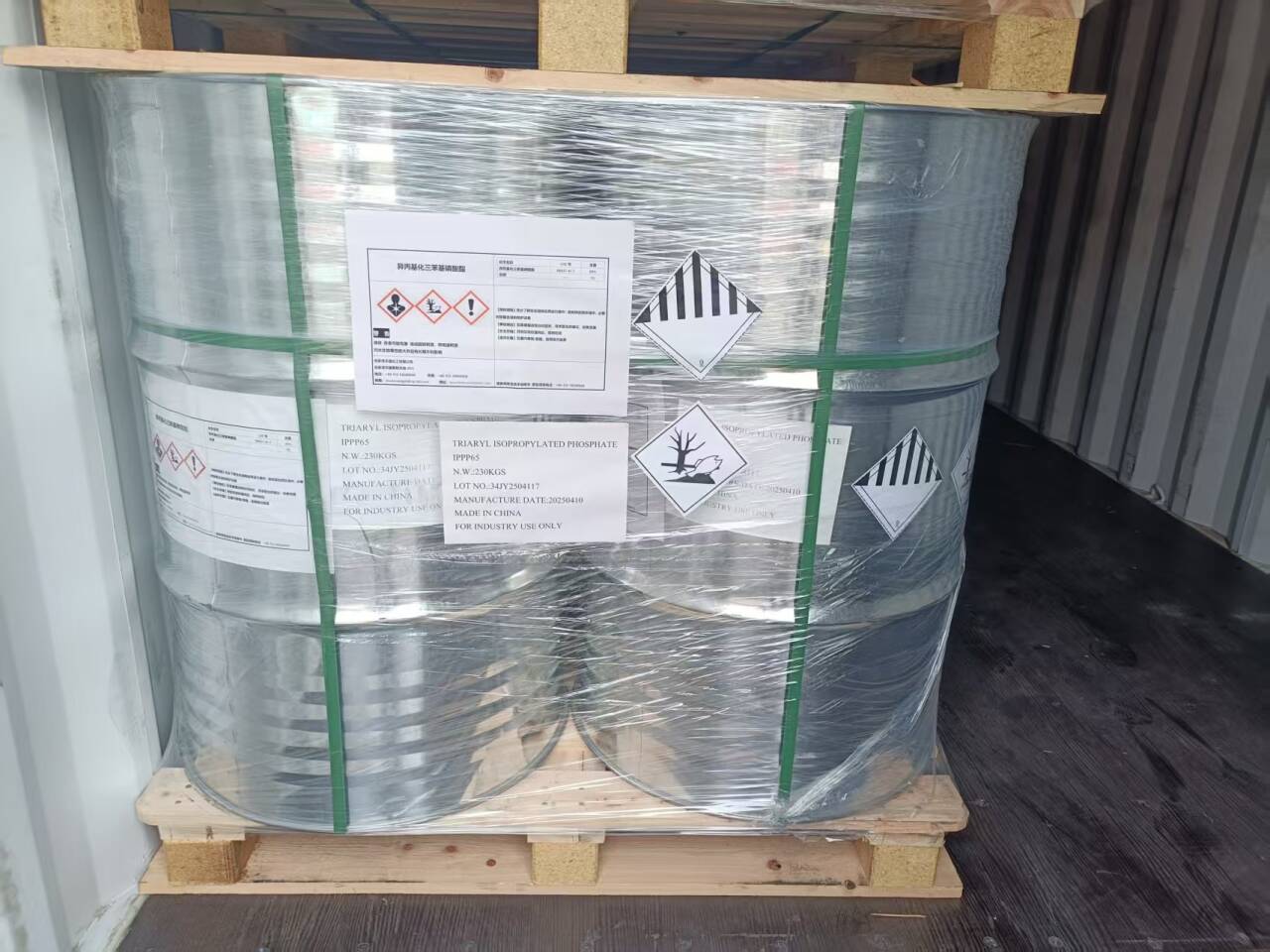
Stability here does not come from software dashboards or last-minute expediting. It is the result of supplier relationships that have been tested through raw material shortages, shipping bottlenecks, and sudden demand shifts. Our production planners keep dual or even triple sources for every critical input, and they maintain regional buffer stock in markets where lead times tend to drift. That means a delay in one lane rarely becomes a delay for the customer.
The same network has been refined over more than twenty years through regular on-site audits, shared demand forecasts, and long-term contracts that give suppliers enough confidence to reserve capacity for us. When a new product ramps up, our teams already know which factories can add volume without sacrificing quality, because they have seen those factories perform under pressure before.
For our customers, the result is quieter operations. They can plan launches and replenishment cycles around realistic lead times instead of constant firefighting. And when disruptions do occur, they usually hear from us before they notice the problem themselves.
Custom Formulations for Specialty Applications
Specialty applications rarely fit neatly into off-the-shelf product lines. A formulation built for a narrow set of conditions—unusual substrates, tight cure windows, or aggressive exposure—usually outperforms a general-purpose alternative, but only when the chemistry is shaped around the actual job.
Custom work often starts with field observations rather than a data sheet. Small adjustments to viscosity, open time, or adhesion can remove steps on the line or eliminate the need for secondary primers and activators. The goal is not more ingredients; it is the right combination for a specific failure mode or process constraint.
The practical payoff tends to be quieter than marketing claims suggest: fewer rejects, less rework, and a process that holds up across shifts. When a formulation matches the application instead of asking the application to adapt, the improvements show up in yield and repeatability long before they appear in a brochure.
Rigorous In-House Testing Beyond Industry Norms
Most manufacturers rely on external labs or spot checks to validate product durability. Our approach is different: we run every unit through a gauntlet of stress tests inside our own facility, pushing components well past their rated limits. From repeated thermal cycling that simulates years of seasonal shifts in days, to vibration profiles modeled on real-world transport abuse, nothing leaves our floor until it has survived conditions far harsher than any normal use case.
This internal rigor isn't about checking boxes for a compliance sheet. It's about discovering failure points before our customers ever could. We document each test, analyze every anomaly, and feed those findings directly back into design refinements. A single weak solder joint or a seal that leaks under extreme pressure gets fixed at the source—not written off as an acceptable defect rate. The result is a product line where reliability isn't a marketing claim but a measured, repeatable outcome.
What sets our process apart is the refusal to stop at industry baselines. Where standard protocols might require a few hundred hours of continuous operation, we run thousands. Where typical tests use idealized conditions, we introduce dust, humidity, and erratic power fluctuations. By the time a unit earns its serial number, it has already endured more punishment than most equipment sees in a decade. That's the real meaning of testing beyond norms—and it's why our field failure rates remain a fraction of the sector average.
Responsive Logistics for Uninterrupted Production
Production lines don't stop for convenience, and neither should your material flow. Keeping every station fed requires more than a static schedule. It calls for a logistics setup that can read the floor in real time and shift routes, quantities, and timing before a small hiccup becomes a costly line-down event.
The core of this approach is flexibility with a short feedback loop. When a supplier runs late or a machine consumes parts faster than expected, the system should flag the deviation immediately and offer an alternative, whether that is pulling from a nearby buffer, rerouting a delivery, or adjusting the next replenishment window. Small, frequent deliveries often beat large, infrequent ones because they leave less room for surprise.
In practice, that means close coordination between warehouse, transport, and production planning. It also means building in a few carefully placed buffers rather than trying to run everything lean to the point of fragility. The goal is not to store more inventory overall, but to position the right inventory in the right place at the right moment, so that production continues even when the unexpected happens.
Technical Partnerships That Outlast Market Shifts
Partnerships that last aren't built on quarterly roadmaps or feature checklists. They come from a shared willingness to solve hard problems together, even when the immediate payoff isn't obvious. When two technical teams trust each other enough to trade early prototypes, debug each other's edge cases, and push back on assumptions, the relationship stops being transactional and starts behaving like a distributed engineering org.
Market shifts expose which alliances were only aligned on paper. A genuine technical partnership absorbs disruption because both sides understand each other's stack, constraints, and decision-making logic. That means investing in documentation, joint test environments, and direct access between engineers—not just account managers—so that when priorities change, the collaboration can reprioritize without falling apart.
The collaborations that outlast downturns are the ones where each side has made itself harder to replace, not through contracts but through accumulated technical context. When your partner can anticipate how a change in one system will ripple through another, or when their team flags a design flaw before it reaches production, the value goes beyond any single release. That kind of working memory doesn't transfer with a handover document.
FAQ
Its thermal stability, low volatility, and compatibility with a range of polymers make it a practical choice for PVC, polyurethane, and engineering plastics. It delivers dependable flame retardancy while preserving the mechanical properties of the base material, unlike some alternatives that can embrittle the final product.
Consistency comes from tight process controls and batch-by-batch testing. We monitor isomer distribution, acid value, moisture content, and phosphorus levels using gas chromatography and mass spectrometry. Each lot is checked against internal specifications before release, and retained samples allow traceability for years.
Reliable supply involves keeping strategic safety stock, using multiple warehouses, and working with long-term logistics partners. Demand forecasting and having alternative raw material sources also help avoid disruptions. Some manufacturers maintain backup production lines to cover unexpected downtime.
Automotive, construction, electronics, and furniture sectors use it in flame-retardant polyurethane foam, PVC cables, hydraulic fluids, and lubricants. It also serves as a partial replacement for other aryl phosphate esters where a balance of cost and performance is needed.
Request a certificate of analysis, safety data sheet, and if possible a pre-shipment sample. Key indicators include triphenyl phosphate content, isomer ratio, acidity, water content, and thermal gravimetric profile. Running a small-scale trial in your own formulation is the most reliable way to confirm suitability.
Yes, manufacturers can adjust the isomer blend or offer different viscosity grades to align with particular polymer processing conditions or fire safety standards. Customization is usually done without sacrificing the core flame-retardant performance, but it requires close communication about your end-use requirements.
Compliance with chemical regulations such as REACH and TSCA is essential, along with application-specific directives like RoHS or low-smoke zero-halogen requirements. A responsible manufacturer provides current compliance documents and keeps customers informed about any regulatory changes that may affect usage.
Even a short shortage can halt production lines that depend on a steady input of flame retardant. A dependable supplier reduces that risk through stable production schedules, safety stock, and proactive communication about lead times, helping customers maintain their own product consistency and delivery commitments.
Conclusion
Finding a supplier for isopropylated triphenyl phosphate that can deliver the same performance batch after batch is harder than most procurement teams expect. We built our manufacturing around one principle: no drift. Every production run goes through a series of in-house checks that go well beyond standard industry requirements, so the flame retardant or plasticizer you receive matches the specification you approved months ago. That consistency isn't accidental; it comes from decades of fine-tuning raw material sourcing and reaction conditions. When your downstream process depends on narrow viscosity and phosphorus content windows, this kind of repeatability becomes a cost saver, not just a quality metric.
Beyond the lab, reliable supply means something different when markets shift or logistics tighten. Our long-standing feedstock relationships and regional warehousing let us absorb demand spikes without forcing you to revalidate a new source. For specialty applications, we can adjust the isopropylation level or blend characteristics to fit unusual polymer systems, and our technical team stays involved after delivery to troubleshoot processing issues. This is what uninterrupted production actually looks like on your floor every day. That ongoing partnership is why customers stay with us through capacity expansions and regulatory changes instead of chasing lower spot prices.
Contact Us
Contact Person: WANG SIHAI
Email: [email protected]
Tel/WhatsApp: +86-13815295628
Website: https://www.fortunechemtech.com/index_en.html