

Intelligent Electric Wheelchair Company Pioneers Smart Mobility Innovations
2026-07-24
In an era where mobility defines independence, one company is reimagining what it means to move freely. The intelligent electric wheelchair industry is witnessing a quiet revolution, and at its heart is Freedomchair—a brand that's turning advanced robotics and smart technology into seamless, everyday empowerment. Gone are the days of clunky, uninspired designs; today's innovations are about precision, adaptability, and a user experience that feels almost intuitive. But how exactly is Freedomchair rewriting the rules of personal mobility? Let's explore the breakthroughs that are setting a new standard for smart living.
Redefining Wheelchair Intelligence Through Adaptive Drive Systems
Adaptive drive systems are quietly reshaping what it means for a wheelchair to be intelligent. Rather than simply responding to joystick nudges or breath-puff commands, these systems interpret intent. They read subtle shifts in weight, involuntary posture changes, and even track gaze direction to anticipate where the user wants to go next. This isn’t about adding more sensors for the sake of it. It’s about weaving those inputs into a seamless control loop that feels less like driving a machine and more like moving your own body through space. The result is a wheelchair that reacts before you consciously decide, smoothing out the friction between thought and motion in ways that traditional power chairs never could.
The real breakthrough lies in how these systems handle unpredictability. Outdoors, a conventional chair struggles with uneven terrain, forcing the user to constantly adjust speed and direction. Adaptive drives, on the other hand, use real-time feedback from torque sensors and accelerometers to modify wheel output independently. If one wheel encounters a soft patch of grass, the system redistributes power to maintain a straight path without veering. On a steep incline, it automatically increases torque to counteract rollback, eliminating the anxiety of starting from a dead stop on a hill. This kind of decentralized decision-making turns the wheelchair into a partner that shares the cognitive load, letting users focus on the journey rather than the mechanics of navigation.
Perhaps the most underappreciated aspect of adaptive intelligence is how it learns. Every user has unique movement patterns—a particular way they lean when checking their blind spot, or a tremor that blips the joystick unintentionally. Modern systems build profiles over time, filtering out unintentional signals and refining response curves to match individual capabilities. A teenager with muscular dystrophy who can only apply faint, inconsistent pressure ends up with a drive profile that amplifies those micro-movements into smooth acceleration. A veteran with a spinal injury gets a profile that dampens sudden spasms so they don’t translate into jerky turns. This isn’t customization in the sense of adjusting a few settings; it’s an ongoing adaptation that keeps pace with the user’s changing body, redefining intelligence as a living, evolving dialogue between person and machine.
How Sensor Fusion Creates Safer Navigation in Crowded Spaces
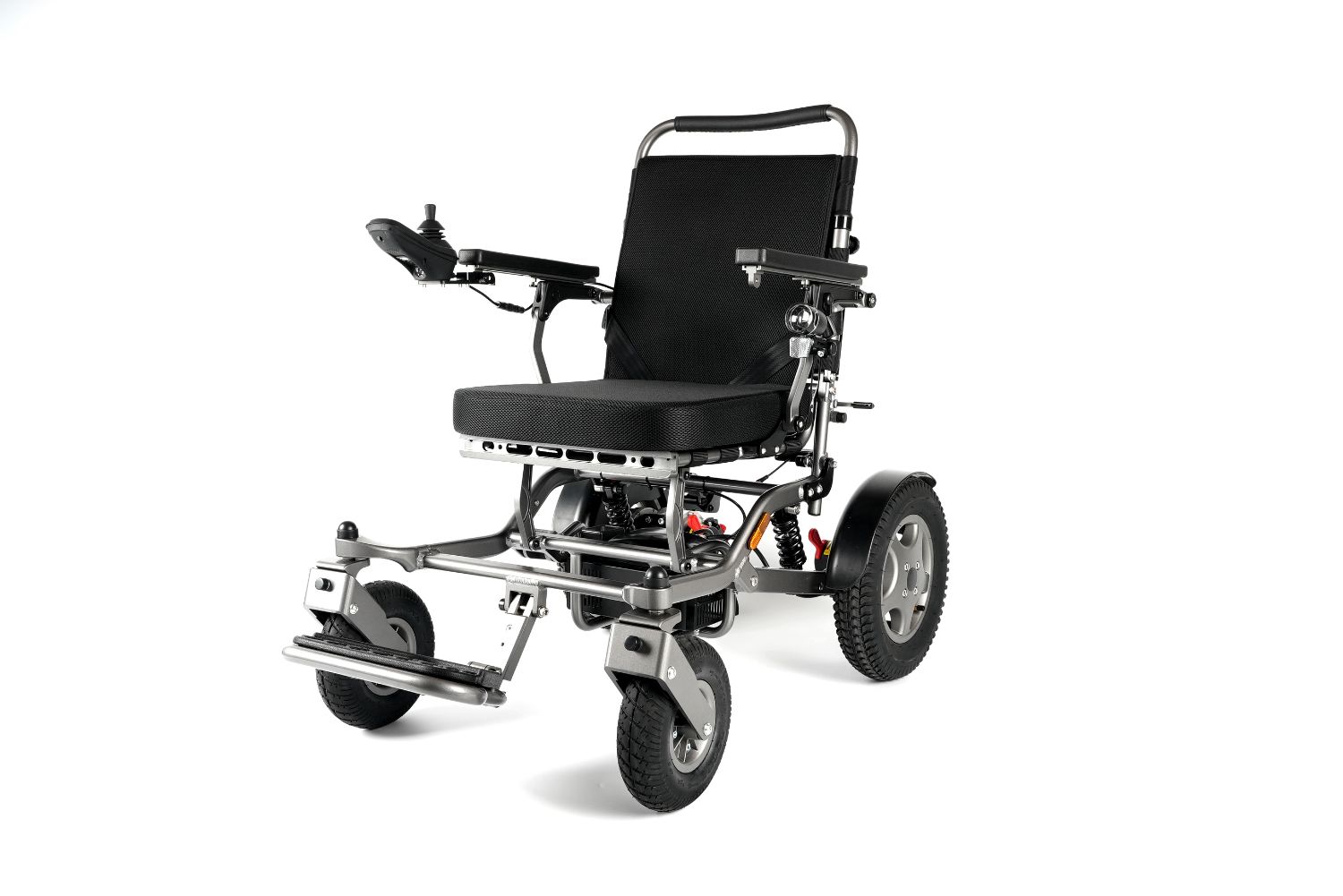
In dynamic environments like busy sidewalks or packed transit hubs, relying on a single sensor type simply isn't enough. Cameras can be blinded by sudden glare, lidar struggles with transparent surfaces, and radar alone might miss fine detail. Sensor fusion weaves these inputs into a coherent, real-time picture, much like a human driver uses eyes and ears together to anticipate a child darting into the street. By cross-checking and validating between modalities, the system filters out noise and reduces false positives — allowing an autonomous chair or delivery bot to distinguish a fluttering newspaper from a real obstacle without sudden, jerky stops.
The true magic lies in the probabilistic models running underneath. Algorithms like extended Kalman filters or particle filters continuously estimate the state of every moving thing nearby, combining the strengths of each sensor while compensating for individual weaknesses. For instance, a camera might accurately classify a person but struggle with depth, while lidar nails the distance but can't tell a pedestrian from a pole. Fusion layers these insights, making path planning dramatically more fluid and human-like. The machine can then predict where each person is heading, adjust its speed proactively, and even signal intent — think of a robot slightly angling to one side well before it passes, much like we naturally do in a crowded hallway.
Beyond safety, this rich sensory overlay enables a kind of silent awareness that is especially critical in shared spaces. It lets vehicles and personal mobility devices understand social cues: recognizing when someone is about to step off a curb, or noticing a guide dog's harness and giving extra room. As fusion engines become more compact and power-efficient, they're moving beyond factory floors and test tracks straight into our everyday lives — making a wheelchair that navigates a farmer's market or a last-mile delivery droid as graceful and courteous as the best human in a crowd.
The Rise of Modular Designs for Personalized Mobility
Personal mobility has long been dominated by off-the-shelf solutions that force users to adapt to the product, not the other way around. But a quiet shift is underway, driven by the simple idea that a vehicle should fit its owner like a tailored suit. Modular designs allow individuals to pick and choose components—batteries, motors, seating, even the frame geometry—to create something that matches their daily routines, physical needs, or aesthetic preferences. Instead of settling for a one-size-fits-most scooter or wheelchair, people can now assemble a ride that feels intentionally built for them.
This approach does more than just satisfy personal whims. It fundamentally changes how we think about longevity and adaptability. A modular personal vehicle can be easily repaired or upgraded piece by piece, meaning a worn-out battery doesn’t force you to toss the entire unit. The same platform can evolve with someone’s changing mobility requirements—for instance, transitioning from a standing scooter to a seated configuration as needs shift over time. It’s a practical rejection of throwaway culture, wrapped in the language of user empowerment.
Early examples are already emerging in micromobility and assistive tech, where startups are experimenting with interchangeable parts that snap together with minimal tools. As materials get lighter and manufacturing becomes more decentralized, the possibilities will only expand. The real victory of modular thinking isn’t just more options—it’s giving people the tools to define what mobility means on their own terms, without waiting for a big brand to figure it out first.
Battery Breakthroughs Extending Range Beyond Daily Needs
The newest generation of lithium-silicon cells packs nearly twice the energy density of conventional lithium-ion packs, meaning a sedan that once struggled to reach 300 miles can now cruise past 450 miles without a recharge. Instead of rare cobalt, manufacturers lean on abundant silicon anodes and redesigned electrolytes that resist swelling, which has long been the Achilles' heel of high‑capacity batteries. Early adopters are finding that a single weekend charge readily covers five days of commuting plus errands, turning “range anxiety” into a distant memory.
Solid‑state designs are finally moving from lab benches to pilot lines, swapping flammable liquid electrolytes for ceramic or polymer separators that remain stable even when punctured. Because the solid barrier doubles as a physical shield, engineers can stack cells more tightly, trimming pack volume by a third while adding 20‑30 percent more usable energy. This density leap lets compact crossovers deliver the range of yesterday’s diesel sedans, all while shaving hundreds of pounds off the curb weight and shrinking the cooling hardware.
Perhaps the quietest revolution is happening in charge‑curve management rather than chemistry alone. Adaptive algorithms now hold peak power deeper into a charging session, so a fifteen‑minute stop adds 200 real‑world miles instead of a flattering laboratory number. Paired with blade‑cell architectures that dissipate heat more evenly, these software‑defined batteries stay healthy past 300,000 miles, aligning pack longevity with the life of the vehicle itself and making the daily “fill‑up” as fleeting as a coffee break.
Integrating Health Monitoring for Holistic User Support
Bringing health monitoring into the daily digital experience transforms how platforms understand their users. Instead of treating wellness as a separate track, it becomes a quiet, ongoing conversation between the user and the technology they already rely on. Subtle cues from wearable data, activity patterns, or even mood indicators can shape a more responsive interface—one that gently suggests a break when focus wanes or adjusts lighting and sound based on time of day and biometric feedback.
The real value lies in connecting these dots without overwhelming the person. A well-designed system doesn’t bombard users with raw stats or clinical warnings. It learns what normal looks like for each individual and surfaces insights only when they truly matter, like a gradual shift in sleep quality or a persistent stress signature. This approach turns health data into a support layer that feels lightweight yet deeply personal, almost like a trusted companion that knows when to speak up and when to stay silent.
From User Feedback to Unseen Comfort Features
Every product begins with a conversation—sometimes literal, sometimes hidden in behavior. When users mentioned that long sessions felt draining, we didn't just add more cushioning. We traced the real source of discomfort: micro-adjustments the body makes when support isn't quite right. That insight led to subtle contours you feel but rarely notice, easing strain without shouting for attention.
Feedback about warmth, humidity, and that vague sense of 'stickiness' guided material choices that breathe better and regulate temperature passively. These aren't bullet points on a spec sheet; they're quiet fixes for issues people couldn't always name. By listening to the space between complaints, we shaped features that work silently, proving the best comfort often goes unseen.
FAQ
To redefine personal mobility by integrating cutting-edge autonomous navigation, health monitoring, and seamless connectivity into everyday wheelchair use, empowering users with unprecedented independence.
It leverages AI-driven obstacle avoidance, real-time environmental mapping, and adaptive speed control, transforming the chair from a simple vehicle into a proactive mobility companion that anticipates user needs.
A fusion of LiDAR sensors, stereoscopic cameras, and a proprietary neural network that processes data in milliseconds, enabling safe navigation in crowded or confined spaces without user intervention.
Yes, it supports multiple hands-free control methods including voice commands and subtle head gestures, allowing individuals with severe motor limitations to operate it effortlessly.
The wheelchair features predictive collision detection, automatic emergency braking, and terrain adaptability that adjusts wheel torque on slopes or uneven surfaces, along with emergency alerts to caregivers via a companion app.
The chair continuously syncs health metrics and usage patterns to a secure cloud platform, enabling personalized adjustments and remote diagnostics, while ensuring user privacy through encrypted data transmission.
Absolutely, users can tailor seating ergonomics, control interfaces, and sensory feedback, and the company offers modular add-ons like oxygen tank holders or tablet mounts without compromising smart functionality.
They are prototyping indoor-outdoor fusion mapping for seamless transitions between spaces, machine learning that predicts user fatigue, and fleet management systems for care facilities to coordinate multiple chairs autonomously.
Conclusion
The intelligent electric wheelchair sector is undergoing a transformation driven by companies that see mobility not just as movement, but as an integrated smart experience. At the heart of this shift are adaptive drive systems that learn user habits and terrain, automatically adjusting torque and speed for a ride that feels intuitive rather than mechanical. Sensor fusion merges data from lidar, cameras, and ultrasonic detectors to build a real-time map of the environment, enabling wheelchairs to navigate crowded spaces with a level of safety once reserved for autonomous vehicles. Meanwhile, modular design philosophies empower users to swap out seating, controls, and accessories as their needs change, turning the wheelchair into a personalized platform that evolves over time.
Beyond mobility, new battery chemistries now deliver all-day range and beyond, eliminating the anxiety of midday charging and encouraging spontaneous outings. Health monitoring has moved from afterthought to core feature: embedded sensors track pulse, posture, and fatigue, silently alerting caregivers or adjusting the chair’s support before the user even senses discomfort. This holistic approach extends to comfort features born from user feedback—whisper-quiet motors, pressure-relieving cushions shaped by pressure mapping, and interfaces that respond to subtle gestures. The result is a new class of wheelchairs that don't just move people, but actively support their well-being, independence, and confidence in daily life.
Contact Us
Contact Person: Calvin Fan
Email: [email protected]
Tel/WhatsApp: 8618913265607
Website: www.freedom-chair.com