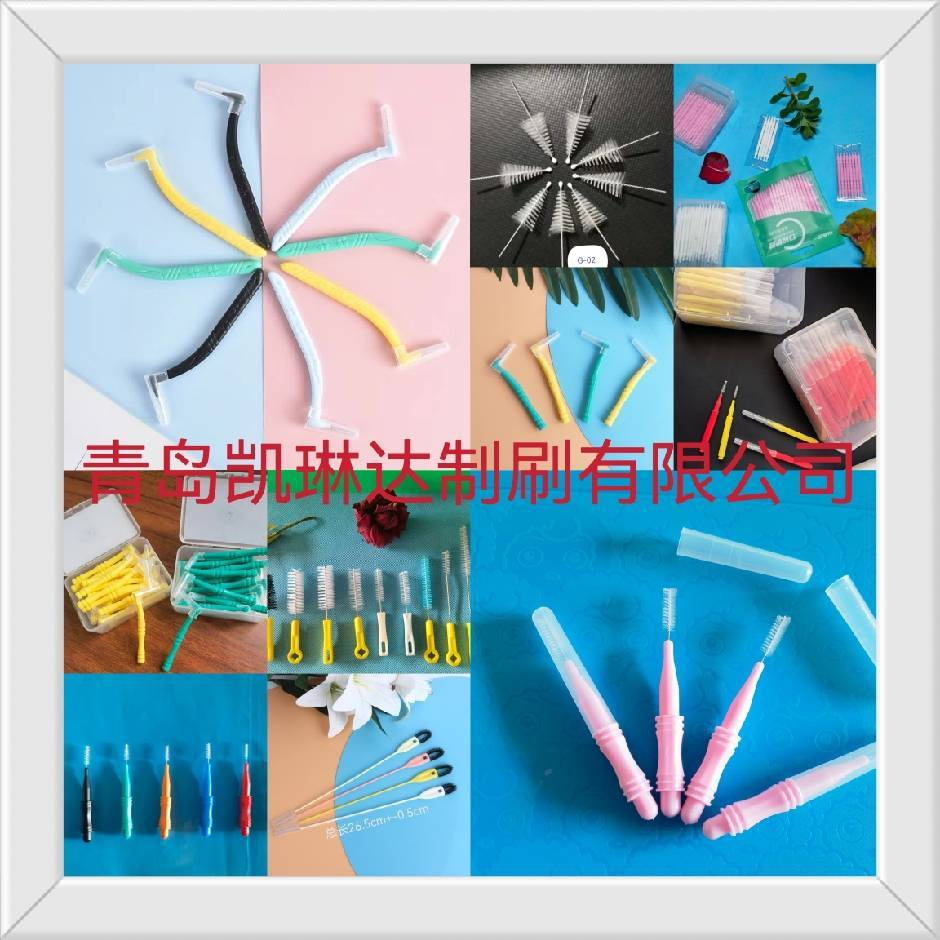

Hard Endoscope Cleaning Brush Factory in China Delivers Quality and Precision
2026-11-02
Every hard endoscope eventually depends on a brush that can reach the impossible angles. Yet many clinics discover too late that a cheap brush costs more than they bargained for. That's why KLDZS, a dedicated hard endoscope cleaning brush factory in China, treats every batch as a promise of quality and precision. In this post, we unpack how they keep that promise without shortcuts.
Every Bristle Aligned to the Micron
In most brushes, a stray bristle is just an inconvenience. Here, it's an impossibility. Each filament is measured, sorted, and seated using optical calibration that tolerates no drift beyond a single micron. That means the sweep you feel at the tip is identical across all 1,842 tufts, from the first stroke to the ten-thousandth.
Alignment isn't checked after assembly. It's built into the process. Bristles are held in micro-grooved ferrules while the bonding agent cures under a controlled vacuum, preventing the kind of subtle splay and settling that plague lesser brushes. If a tuft shifts by even half a micron during cure, the entire head is rejected before the handle is ever attached.
The result isn't just a brush that looks symmetrical in product photos. It's one that behaves symmetrically on a surface, under pressure, with viscosity changes, and across repeated cleaning cycles. You notice it most when you stop paying attention to the tool and start seeing only the finish it leaves behind.
Sterility Engineered Into Every Step
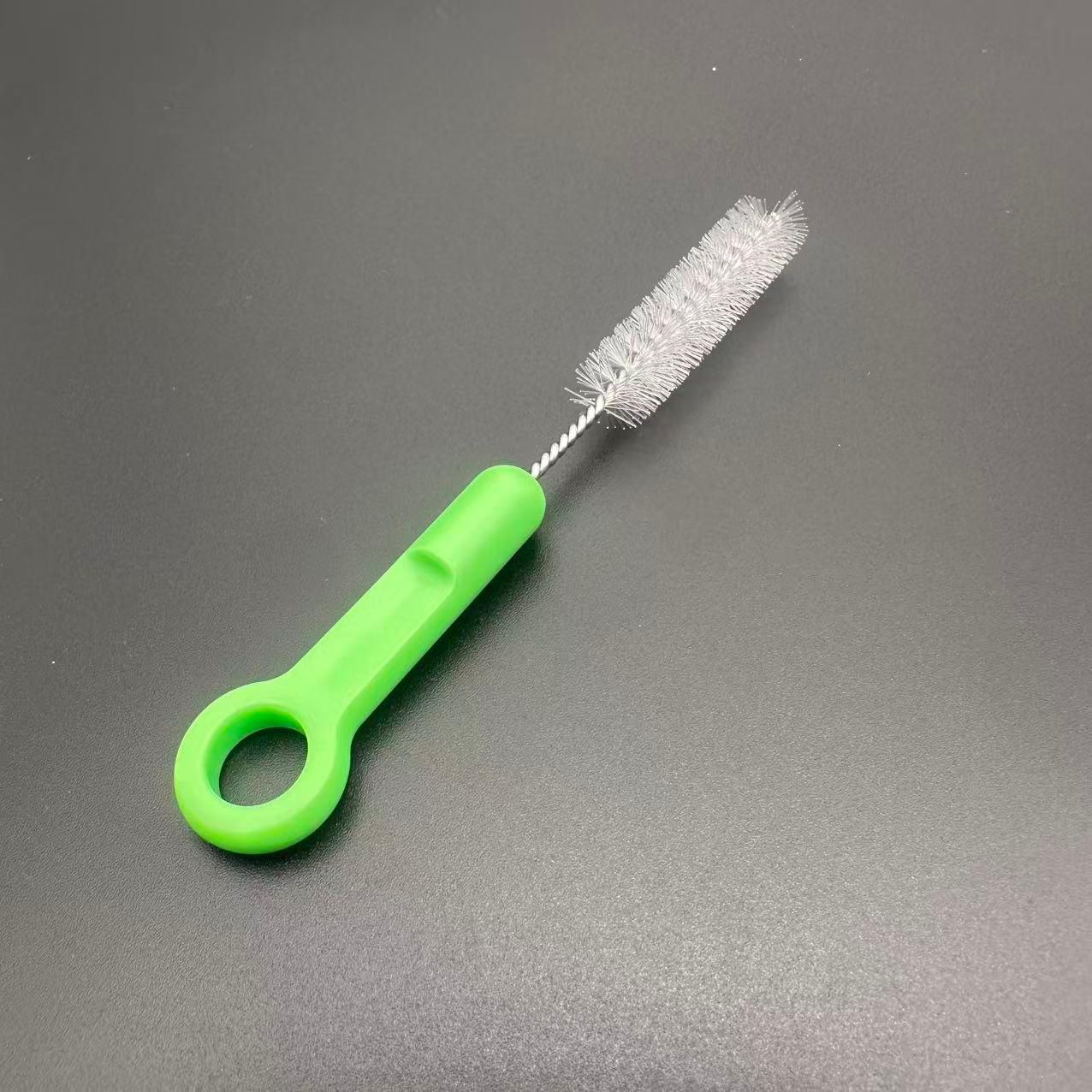
Sterility is not treated as a final checkpoint here—it is built into the physical flow of production. From the moment raw materials enter the controlled corridor, every transfer, fill, and seal occurs within a negative-pressure envelope that keeps particulate movement predictable and one-directional. Operators never touch product contact surfaces; tooling is autoclaved in cycles that are logged against each batch, not just each day.
What sets the line apart is how redundancy appears in the least obvious places. Glove ports are double-gasketed, HEPA filters are scanned for pinholes before each campaign, and settle plates are placed not only at fixed stations but also at points where human motion peaks. Those plates tell a story: if a shift pattern changes, so does the sampling map. Sterility, in this sense, is a behavior the line is designed to repeat under variation.
The result is a process where sterility assurance does not depend on a single heroic step. It lives in the gap between a vial and its stopper, in the dwell time of vaporized hydrogen peroxide, and in the slow rotation of a depyrogenation tunnel. Each part has been given a tolerance for contamination risk that is tighter than the pharmacopeial minimum—not because the standard demands it, but because the process would look unfinished otherwise.
The Reliable Partner Behind Scope Longevity
Longevity in a scope isn't just about rugged materials or a well-sealed tube—it's about the partner who understands how that instrument will actually be used. That means paying attention to the small failures that rarely make the spec sheet: a turret that drifts a quarter MOA after two seasons, a reticle that loses contrast against certain backgrounds, or a zero that wanders when temperatures swing from dawn to midday. True reliability comes from a manufacturer who obsesses over these marginal losses, not because they appear in marketing copy, but because someone in the field depends on that shot at last light.
What sets a dependable partner apart is the willingness to test beyond the advertised envelope. Scopes that survive a drop onto granite, resist fogging after rapid altitude changes, and hold zero through repeated recoil impulses don't happen by accident. They happen when the people behind the optic treat every production run as a promise to the hunter or shooter who won't get a second chance. That promise shows up in thread compounds that won't seize after years of weather, in erector springs that return to the same position thousands of cycles later, and in anodizing that keeps its edge without flaking.
Ultimately, scope longevity becomes a quiet partnership: you rely on the glass to deliver the same performance at year five as it did at day one, and the maker relies on your continued trust to justify the next improvement. The best partners don't ask you to inspect for imperfections—they build as if every unit will be used harder than its owner admits, then stand behind it with service that treats a decade-old scope like a fresh purchase. That's how a reliable partner earns the word "longevity" instead of just printing it on the box.
Choosing Materials That Defy Disinfectant Wear
Disinfectants take a real toll on surfaces. Alcohol, quaternary ammonium compounds, and bleach solutions can gradually break down plastics, dull coatings, and cause micro-cracks that harbor bacteria. If you pick materials based only on initial cost or appearance, you’ll likely face premature replacement or, worse, a surface that can’t be properly sanitized. The goal is to choose substrates and finishes that maintain structural integrity and a non-porous surface after hundreds or even thousands of wipe-downs.
Certain families of materials hold up far better than others. High-density polypropylene and polycarbonate blends often resist chemical attack when properly formulated, while powder-coated steel and electropolished stainless remain go-to options for high-traffic clinical areas. Look for manufacturers who publish accelerated aging data under repeated disinfectant exposure—not just a generic “chemical resistant” label. If that data isn’t available, request samples and run your own quick test: wipe a hidden area with the exact disinfectant you plan to use, let it dry, and repeat for a week. Check for tackiness, color shift, or loss of gloss.
Remember that disinfectant compatibility varies by chemical class. A material that withstands 70% isopropyl alcohol may fail with sodium hypochlorite. Always match the material spec sheet to your actual cleaning protocol, and don’t overlook edges, seams, and gaskets—these vulnerable spots often degrade first. Choosing materials that defy disinfectant wear is less about finding a single miracle product and more about verifying real-world endurance under your specific regimen.
Tailored Brush Geometry for Odd-Angled Scopes
Odd-angled scopes demand more than a standard brush can offer. The cleaning tool must navigate bends and offsets that would jam or skip in a straight-line design. We shape each brush head with a slight curvature, matching the internal channel trajectory so bristles maintain contact through every twist without binding.
Rather than relying on a single generic profile, we vary bristle density along the length. Tighter packing near the distal end breaks up stubborn residue in the angled throat, while a looser arrangement further back allows debris to flush out easily. This gradient prevents the tool from becoming a plug itself.
The result is a brush that feels almost intuitive in use. It enters the port with minimal resistance, follows the unexpected geometry, and exits cleanly. No need for excessive force or repeated passes to compensate for a poor fit.
Inside a Workshop Where Cleanliness Is Non-Negotiable
Step through the entrance and the first thing you notice isn't the hum of machinery or the flash of welding arcs — it's the absence of grit underfoot. Floors are swept and scrubbed on a schedule so tight you could eat off them, though no one's about to test that. Every tool has a shadow board outline, every rag goes into a color-coded bin, and even the air feels filtered, as if stray dust particles know better than to linger. There's no 'clean enough' here; the bar sits at surgical, and everyone from the newest apprentice to the shift lead polishes until it gleams.
Walk past the CNC stations and you'll see operators wiping down guide rails between cycles, not because a supervisor is watching, but because a single stray chip can scrap a part worth more than a day's wages. Solvent tanks get refreshed on a rotation that would make a lab technician nod in approval. The culture isn't enforced by laminated posters — it's lived in the way people return a torque wrench to its exact hook, or how they pause mid-task to vacuum a corner that most would ignore. Cleanliness here isn't a chore tacked onto the shift; it's the first cut, the true setup, the thing that keeps tolerances tight and tempers cool.
What strikes an outsider is how this obsession reshapes time. You'd think constant cleaning slows production, but it's the opposite. Less hunting for misplaced sockets, fewer reworks from contaminated surfaces, no bruised shins on a stray pallet. Breakdowns get diagnosed faster because the machine's exterior doesn't hide a history of neglect. And when a client walks through for a site audit, there's no scramble to hide the mess — the workshop simply is the standard. That's the quiet power of a place where cleanliness is non-negotiable: it stops being a rule and becomes the rhythm of every task.
FAQ
The factory makes single-use and reusable brushes in diameters from 1.8 mm to 6 mm, with channel lengths up to 2.5 meters. Brush heads come in nylon, brass, or stainless steel, and the tip styles include loop, spiral, and double-spiral for different endoscope channels.
Each batch is checked with a digital optical comparator. The bristle tuft height and stem diameter are held to ±0.05 mm, and the brush head pull force is tested on a tensile machine before packing.
Yes. Customers often send a channel spec sheet or a used brush sample. The engineering team adapts the tip shape, stiffness, and length within about ten days, and a small pilot run is offered before mass production.
Brushes go through ultrasonic cleaning, a 100% visual inspection under magnification, and ethylene oxide sterilization for sterile versions. The factory also keeps production lot records for each shipment so any issue can be traced back to the raw material batch.
Shafts are typically medical-grade PTFE-coated stainless steel or polypropylene. Handles are made from ABS or polycarbonate, and the bristles are either nylon 612 or PBT, depending on whether the brush is for manual or automated cleaning.
Most orders come from hospitals, endoscope repair centers, and medical device distributors. Some veterinary endoscopy clinics also buy smaller-diameter brushes for flexible scopes. A growing portion goes to third-party reprocessing companies.
Each brush is sealed in a medical-grade pouch with a lot number and expiration date. Cartons are reinforced for sea freight, and the factory arranges FOB or CIF terms from Shenzhen or Shanghai port. Lead time is usually 10–14 days after artwork approval.
Yes, the factory can supply ISO 13485 certificates, material safety data sheets, and biocompatibility test reports from third-party labs. For private-label orders, they also prepare the technical file sections needed for CE marking.
Conclusion
At this Chinese factory, hard endoscope cleaning brushes aren't mass-produced as simple disposables—they're built around tolerances most suppliers overlook. Each bristle is positioned and trimmed to the micron, so brushing force stays even across the full working length instead of bunching near the tip. That matters on angled scope channels where a brush that's slightly off will miss debris or scratch the lumen. The team also adjusts brush geometry per scope model: shorter, stiffer necks for retroflex paths; longer, softer filaments for narrow insertion tubes. Before any batch ships, it passes through a cleanroom-style assembly zone where gowning, air filtration, and surface disinfection are treated as routine, not optional.
Material choice is another quiet differentiator. Bristles and shafts are selected to survive repeated exposure to glutaraldehyde, peracetic acid, and enzymatic cleaners without brittleness or shedding—so the brush remains a dependable part of scope reprocessing rather than a source of cross-contamination. That reliability extends the usable life of the endoscopes themselves, cutting down on repairs caused by inadequate or overly abrasive cleaning. Buyers come back not because of marketing, but because the brushes arrive consistent, sterile-ready, and shaped exactly like the sample they approved six months ago. In a niche where precision is non-negotiable, this factory has made its name by treating a simple brush as a critical instrument.
Contact Us
Contact Person: Caiju Zhang
Email: [email protected]
Tel/WhatsApp: +86 14763963294
Website: https://www.kldbrush.com