

Gel Pad Supplier: How to Choose the Best Manufacturer for Comfort and Durability
2026-11-02
Choosing the right gel pad supplier can make or break your product's reputation for comfort and durability. Too often, businesses settle for manufacturers who cut corners on materials or ignore consistent quality control. That's why at Kunbao, we emphasize transparency and proven performance over empty claims. Before you commit to a long-term partnership, it's essential to know what separates a top-tier manufacturer from a short-term compromise. This guide will walk you through the critical factors—from gel formulation to durability testing—so you can make a confident, informed choice.
Material Purity Matters More Than Marketing Claims
Most buyers never question what actually sits inside a supplement capsule or powder scoop. They read words like “premium,” “lab-tested,” or “clinically proven” and assume the material itself is pure. But those phrases often describe a marketing budget, not a molecule. A cheap synthetic filler can wear the same label as a pharmaceutical-grade compound, and the difference only shows up under a mass spectrometer. This gap between advertised quality and actual composition is where real problems begin.
Purity isn't a buzzword you can print on a box. It's a measurable property: the absence of heavy metals, residual solvents, isomers you didn't ask for, and degradation byproducts that form during careless storage. When a raw material arrives with a certificate of analysis that says 99.2% pure, someone has to verify that number independently. Skip that step and you're not selling a supplement anymore—you're selling a story. Stories don't dissolve predictably, absorb reliably, or pass an audit.
The uncomfortable truth is that two suppliers can offer the “same” ingredient at wildly different prices, and the cheaper one is rarely cheaper by accident. It's cheaper because someone cut a corner: a non-pharmacopeial grade, a recycled solvent, a batch that failed spec and got resold downstream. Marketing claims can be written in an afternoon. Material purity has to be earned through sourcing discipline, third-party testing, and a refusal to accept borderline certificates. In the long run, that's the only claim that matters.
The Comfort Test: Density, Thickness, and Real-World Pressure Relief
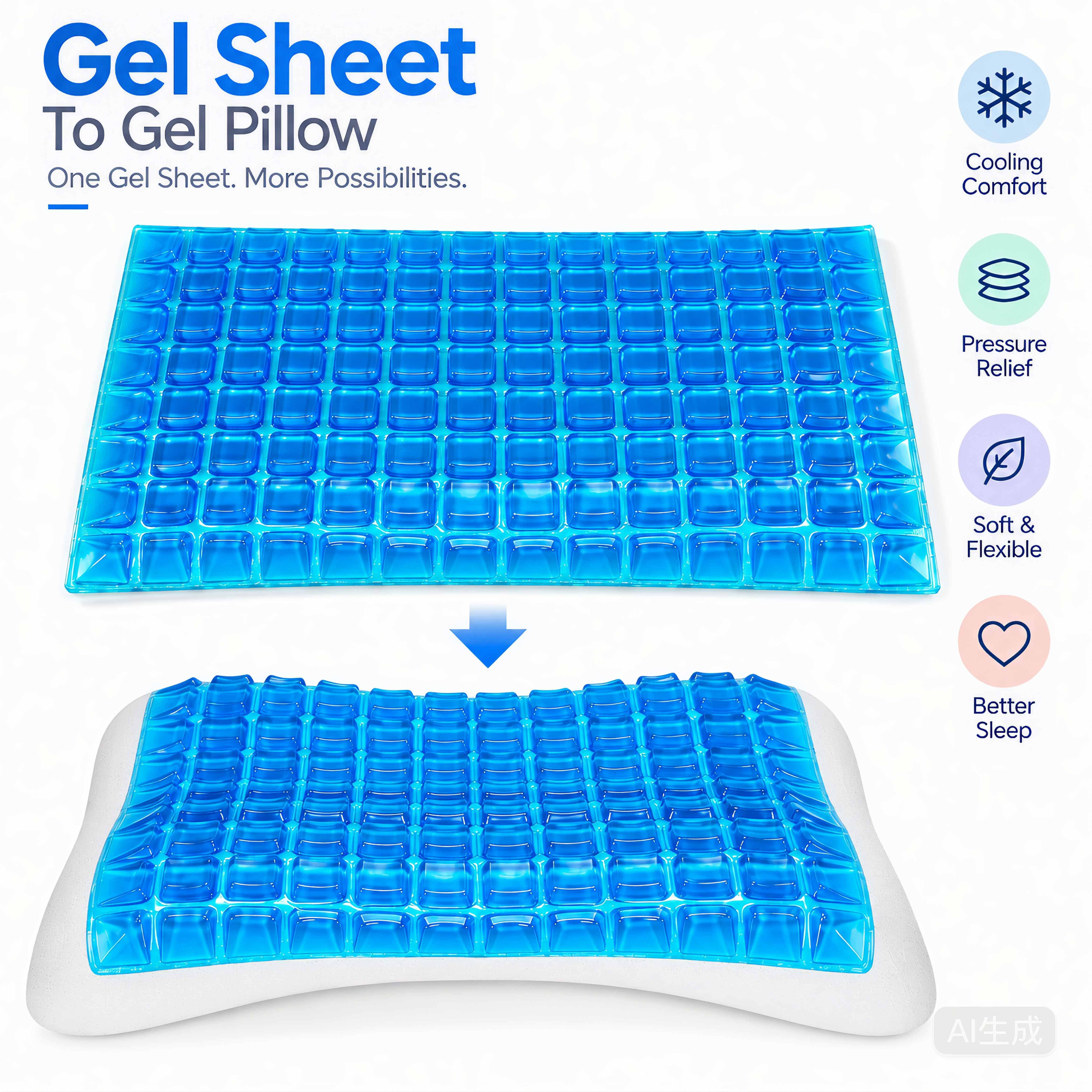
Most people think a firmer mattress or cushion means better support, but density tells a different story. High-density foam might feel stiff when you press it with your hand, yet it slowly yields under body heat and weight, cradling your hips and shoulders without that sinking quicksand sensation. Low-density options bounce back quickly and feel plush at first, but after an hour of sitting or lying down, they compress unevenly, leaving your lower back suspended and your tailbone digging in. The comfort test isn't about initial softness—it's about whether the material holds its shape while distributing your weight across the entire contact surface, not just the prominent points.
Thickness plays a trickier role than most shoppers realize. A two-inch topper over a solid base can offer more pressure relief than a ten-inch slab of the same foam, simply because the thinner layer allows your body to sink just enough to reach the supportive core beneath. Too much thickness, and you lose that firm foundation—your spine curves into a hammock position, and pressure actually builds around your lumbar discs. Too little, and you feel every coil or slat underneath. The sweet spot varies by sleep position and body weight: side sleepers need enough give for their shoulder to drop in, while back sleepers want a surface that fills the gap under their waist without pushing up into their ribs.
Real-world pressure relief shows up in the moments you stop thinking about the surface altogether. After a long flight or a day on your feet, you sit down and expect that sharp ache in your sit bones to fade within minutes. If the cushion passes, your weight gradually melts across the material, and you feel blood flowing back into the compressed areas—a warm, tingling release rather than a numb deadness. The same applies to a mattress: wake up without the usual stiffness between your shoulder blades, and you've found a surface that manages density and thickness correctly. It's not about marketing specs or lab graphs, but about how your body responds after eight hours of unconscious shifting.
Durability Clues Hidden in Gel Formulation and Bonding Methods
A gel's long-term wear often comes down to how the formulation balances rigidity and flex. Too much crosslinker creates a brittle network that chips under repetitive stress, while too little leaves the surface prone to dulling and micro-tears. Photoinitiator concentration also leaves clues—over-curing can embrittle the top layer, yet under-curing traps unreacted monomers that weaken the entire matrix. The real tell is whether the cured film stays clear and resists solvent swelling after repeated exposure.
Bonding failures rarely start in the gel itself. The interface between the natural nail or substrate and the first gel layer is where lifting begins, and the clues are usually hidden in prep steps. Lightly roughing the surface, removing residual oils, and using a primer matched to the gel's pH can make a bigger difference than adding more layers. A lot of technicians still rely on visual dryness instead of timing, which undermines even the toughest formulation.
When a gel is applied over a flexible surface, the bonding method has to accommodate movement without buckling. Some formulations are designed to etch into the keratin or create a mechanical lock, but that only works if the primer doesn't over-dry. Watching where the product fails—edge lifting versus center cracking—gives a direct read on whether the issue is adhesion or cohesive strength. Matching cure time to the specific lamp output is another overlooked clue; mismatched wavelengths leave a weak bottom layer that passes a surface test but fails under real wear.
Customization Flexibility Without Minimum Order Nightmares
Getting the exact look you want shouldn’t mean committing to thousands of units before you’ve even tested the market. We’ve streamlined the whole process so you can tweak materials, dimensions, colors, and finishing touches in small batches, and still receive the same care as a bulk order. No pushy account managers, no hidden tier jumps—just a straightforward way to see your idea come to life without overstock piling up.
It starts with a simple conversation about what you actually need, not what a catalog says you should take. From there, our team adjusts the production run to match your schedule and budget. If you need a single prototype or a modest first run, that’s fine. And when demand picks up, scaling is just as painless. The result is a supply chain that bends around your plans, not the other way around.
Certifications and Test Reports Worth Asking For
When evaluating a supplier, certifications aren't just decorative badges — they reveal how seriously a manufacturer takes consistency and safety. Ask for documents that match your specific product category rather than accepting a generic ISO 9001 alone. For example, if you're sourcing electronic components, request IEC or UL test reports that cover the exact model you plan to buy. A supplier who hesitates or offers outdated paperwork is often hiding process gaps.
Look beyond the certificate number. Ask for the actual test report behind each certification, including the testing laboratory's name and date. Reputable labs like TÜV, SGS, or Intertek issue reports with traceable reference codes — you can call the lab to verify authenticity. This step filters out suppliers who photoshop certificates or reuse reports from a different batch. It's not about distrust; it's about confirming the document applies to the current production run, not one from three years ago.
Finally, request certifications that align with your market's legal requirements. A CE mark means little if your customers are in North America, where UL or CSA marks carry more weight. Similarly, RoHS or REACH compliance matters for chemical-heavy products. Don't assume all certificates are equal — ask for the ones that a compliance officer in your target country would actually inspect. A good supplier will understand why you're asking and provide the paperwork without unnecessary delay.
After-Sales Support That Doesn't Disappear After the Invoice
Plenty of suppliers vanish the moment payment clears, leaving you to wrestle with setup issues on your own. Not here. Our support team picks up the phone after the first ring, remembers your order history, and actually walks through the problem with you instead of pasting a link to a generic FAQ. Whether it's a wiring question at 7 a.m. or a compatibility snag during installation, you get a straight answer from someone who knows the product line inside out.
We also keep spare parts and firmware updates flowing long after a model gets replaced by a newer version. That means no surprise obsolescence, no “we stopped making that” conversations, and no pressure to buy an upgrade you don't need. If something breaks three years down the road, we'll help you fix it or find a workable substitute without treating your old equipment like a lost cause.
The real difference shows up in the follow-through. Every support case gets a written summary of what was done, plus a check-in a week later to make sure the fix held. You're not left guessing whether the issue will resurface. And because we log every interaction, you can call in months later and pick up right where you left off, no need to re-explain your setup to a stranger.
FAQ
Ask for detailed information about the gel formulation and density. A reputable supplier will openly share how the gel is cured, what additives are used to prevent flattening, and how the pad distributes pressure. Request samples that you can test under real use conditions for at least a few weeks, paying attention to whether the pad loses its shape or softens unevenly.
Examine the edge finishing and the way the gel is bonded to any outer fabric or backing. Look for reinforced seams, clean trimming, and no signs of gel bleeding or tackiness after repeated flexing. A manufacturer that provides accelerated aging data or real-world stress test results is usually more confident in their product's lifespan.
The base polymer matters more than the marketing language. Medical-grade or industrial-grade thermoplastic elastomers generally hold up better than low-cost PVC blends. Also check whether the gel layer is poured as a single uniform sheet or assembled from smaller pieces, because seams and joins are the first place cracks and tears appear.
Ask how often they inspect the gel during mixing, curing, and cutting. A good answer includes batch-level testing for hardness, thickness tolerance, and rebound rate. You also want to know what happens when a batch fails: does the manufacturer quarantine and rework it, or does it quietly ship anyway?
Request a range of shore hardness options and ask to see cross-section samples at different thicknesses. A capable supplier will ask you about the intended user, seating or lying position, and expected daily use hours before recommending a formulation. If they only offer one universal firmness, customization is probably limited.
Look for independent lab reports covering compression set, tensile strength, and tear resistance rather than just material safety sheets. Certifications like REACH or RoHS confirm chemical safety, but they do not prove durability. A manufacturer that can show fatigue testing over thousands of cycles gives you a clearer picture of how the pad will perform in daily use.
Be cautious if the supplier is vague about the gel formula, cannot explain how they prevent the pad from bottoming out under body weight, or offers a very low price without clear material specifications. Also watch for excessive air bubbles in samples, a strong chemical smell, or a sticky surface after repeated use, all of which point to poor curing or low-quality polymers.
Avoid judging on unit price alone. Calculate the expected lifespan and replacement frequency for each option, then compare that against the cost of returned goods or user complaints. A slightly more expensive pad that lasts three times longer is often the cheaper choice, especially if the manufacturer offers a warranty that covers flattening and tearing.
Conclusion
Most gel pad buyers start with spec sheets, but the real differentiator is what the manufacturer does not advertise. Material purity is a case in point: many suppliers use industrial-grade gels that off-gas or harden within months, while medical-grade or food-safe formulations feel identical on day one yet behave completely differently under repeated loading. Ask for the exact polymer base and plasticizer type, not just a vague silicone gel label. Comfort is equally easy to fake on a single sample. You need to evaluate density in relation to thickness—a thin, high-density pad can bottom out under sharp pressure, whereas a thick, low-density pad may feel mushy and lack rebound. Real-world pressure relief requires mapping weight distribution over time, not just a 30-second hand press. Look for suppliers who can provide durometer readings and compression set data for the specific thickness you are ordering.
Durability hinges on the gel formulation and how the pad is bonded to its cover or backing. A poorly crosslinked gel will tear at the edges or leach plasticizer into the fabric, and heat-sealed seams often fail before the gel itself degrades. Check whether the supplier uses chemical bonding, mechanical interlocking, or a combination, and request accelerated aging reports. Customization flexibility matters too—some manufacturers advertise low minimums but then charge outrageous tooling fees or force you into standard mold shapes. A good supplier will adjust hardness, color, and contour without treating every tweak as a new project. Finally, verify certifications like REACH, RoHS, or FDA compliance with actual test reports, not just logos on a website, and confirm who handles warranty claims after the invoice is paid. The best manufacturers assign a technical contact, not a salesperson, to resolve field issues quickly.
Contact Us
Contact Person: Catherine Peng
Email: [email protected]
Tel/WhatsApp: +86-13434169510
Website: https://www.kbcoolgel.com/