

Fuel Pump Manufacturer Tips for Choosing a Reliable Partner
2026-10-23
A fuel pump may be a small component, but choosing the wrong manufacturer can quietly drain your uptime and reputation. Finding a reliable partner isn’t about flashy catalogs or the lowest quote—it’s about knowing which questions expose real capability. In this guide, we’ll walk through practical selection tips, and show why we built BEILIN to meet those standards without shortcuts.
Look Beyond the Catalog: Ask About Engineering Depth
Most spec sheets tell you what a product does, not how well it does it under stress. When you're comparing options, skip the polished bullet points and dig into the materials, tolerances, and failure points. A gearbox rated for 10,000 hours on paper might have plastic bushings that deform after 500 cycles of real-world thermal swing. Ask the vendor what happens at the edges: cold starts, overload conditions, maintenance access after installation. If they can't answer with specifics, the catalog page is doing too much heavy lifting.
Engineering depth shows up in the details that never make it to marketing copy. Ask about design revisions, test rigs, and the percentage of parts that are actually custom versus off-the-shelf. A team that has instrumented their own prototypes, logged thousands of hours of teardown data, and revised a seal geometry three times to stop a slow leak is telling you something important. The catalog might say "high performance," but the engineer's notebook says how they got there.
Verify Real-World Testing, Not Just Datasheet Promises
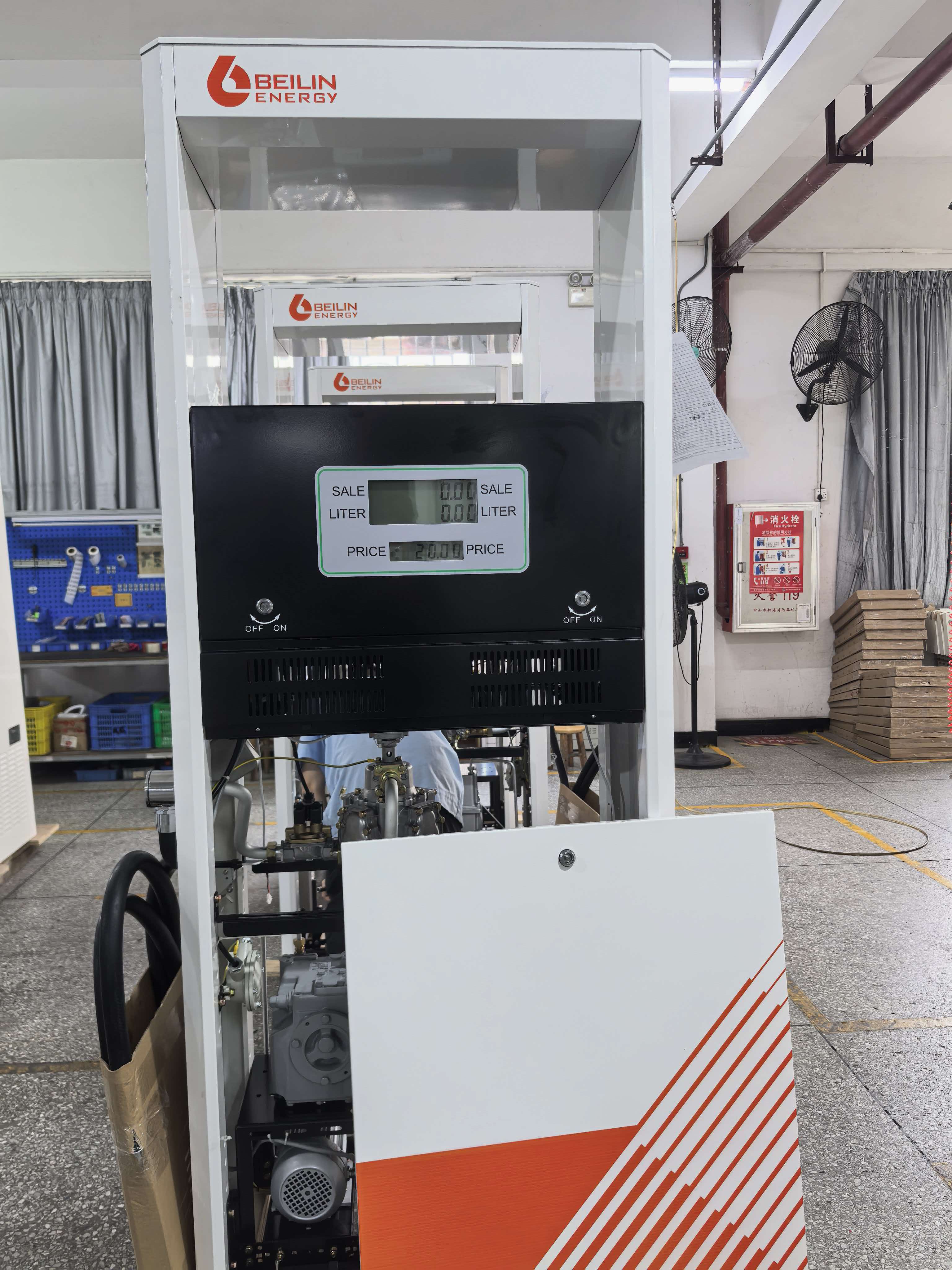
Lab benches don't replicate the vibration, thermal cycling, or electrical noise that hardware sees in the field. Before trusting a component's datasheet numbers, ask for test data from actual deployments—units that ran for months under load, not hours in a temperature-controlled room.
One sensor we evaluated claimed 0.1% accuracy at 25°C, but a quick outdoor trial showed drift to 0.6% once the enclosure hit 50°C and humidity climbed. That gap doesn't show up in the glossy PDF. Demand evidence of long-term stability, repeated power cycles, and operation at the edge of the specified range.
Real-world testing also means watching for failures that only appear with mixed loads, dirty power, or undersized heat sinks. If a vendor can't provide field data or a loaner unit for your own stress test, treat the datasheet as a hypothesis, not a guarantee.
Check How They Handle Custom Pressure and Flow Requirements
Not every project fits neatly into a catalog spec. When you sit down with a supplier, ask for concrete examples of past work where they had to juggle unusual pressure drops, pulsating flow, or a mix of high and low demand cycles within the same system. A vendor who can describe how they re-mapped a pump curve or selected a different seal material for a spike-prone line tells you more than a brochure ever will.
Dig into their process for verifying performance under variable conditions. Do they run actual tests with your fluid, or rely purely on software simulations? The best partners will walk you through how a valve behaves at 80% of maximum rated pressure, or how a flow meter holds accuracy when the velocity dips into the laminar range. If they shy away from discussing worst-case scenarios, that hesitation is worth noting.
Finally, consider how they document their choices. A clear datasheet showing pressure ratings, flow coefficients, and material compatibility for your specific operating window is a sign of rigor. If they hand you a generic spec sheet and say it should be fine, keep looking. Custom requirements deserve more than a guess.
Evaluate Supply Chain Transparency and Lead Time Honesty
A supplier’s marketing deck might promise full visibility, but the real test comes when you ask for a production schedule and see whether it matches the shipment log. Clear supply chain transparency means you can trace an order from raw material allocation to final dispatch without chasing someone for updates. If a vendor hesitates to share this data or only offers vague milestones, treat that as a signal.
Lead time honesty shows up in the gap between quoted dates and actual delivery history. Pull the last ten orders and compare confirmed ship dates to what was initially promised. A partner with consistent two-day slips is easier to work with than one whose lead times jump from two weeks to six without explanation. Look for patterns of buffer padding—suppliers sometimes inflate quotes to look reliable, which inflates your inventory costs.
Instead of asking “Are you transparent?” ask for concrete evidence: a live tracking link, a weekly WIP report, or raw data from their logistics system. True honesty is verifiable, not rhetorical. The goal is a supply partner whose lead time numbers you can plug into your own planning without building in a hidden safety margin.
Assess After-Sales Support Before You Sign the Contract
Before you commit to any purchase, dig into the reality of what happens after the ink dries. Ask pointed questions: How quickly do they respond to support tickets? Is there a direct line to a human, or will you be trapped in a chatbot loop? Request concrete examples of recent customer issues and how they were resolved, including timelines. A vendor that hesitates or gives vague answers about post-sale care is often revealing a gap between their sales pitch and their actual commitment.
Look beyond the glossy service-level agreements. Instead, check independent reviews, community forums, and social media mentions for unfiltered feedback. Pay attention to patterns: recurring complaints about slow parts delivery, unhelpful troubleshooting, or surprise fees for basic support are red flags. If possible, speak directly with current customers who have had to use the after-sales service—their experiences will tell you far more than any polished brochure.
Finally, put the after-sales terms under a microscope before signing. Clarify exactly what is covered: software updates, hardware repairs, labor costs, and response windows. Understand what is excluded and whether support is tiered—you might be buying a lower tier that only offers email support during business hours. If the contract language is ambiguous, insist on written clarification. A clear, enforceable after-sales commitment protects you from becoming an afterthought once the deal is closed.
Demand Proof of Consistent Quality Across Production Batches
When sourcing components at scale, the last thing you need is a surprise variation between the first batch and the tenth. Insist that your supplier provides batch-level documentation for every shipment, not just a one-time certificate. This means actual test results for each production run, covering the same parameters you approved during sampling: dimensions, material composition, surface finish, hardness, or any other property critical to your application.
Compare these records side by side before accepting delivery. Look for statistical control data, such as process capability indices or control charts, that show the manufacturer is holding tolerances over time rather than chasing specs on paper. If the supplier cannot produce this evidence, or if their batches show wider swings than your tolerance stack can absorb, treat it as a red flag. Consistency isn't a bonus; it's what keeps your own production line from stalling.
A trustworthy partner will welcome this scrutiny and often share their in-house quality systems without hesitation. Push for a defined escalation path if a batch falls outside the agreed range: will they rework, replace, or issue a concession with full traceability? Getting this in writing before you place a large order turns quality from a hope into a contractual obligation.
FAQ
Ask for their specific test protocols rather than generic quality claims. A solid partner will walk you through endurance cycling, pressure ripple testing, contamination limits, and how they track batches from raw material to final assembly.
Look for in-house failure analysis and design-for-manufacturing feedback. If they can explain why a pump fails under certain conditions and suggest material or geometry changes before tooling, that is a strong sign of actual engineering depth.
Differences usually come down to component sourcing, tooling ownership, and production scheduling. Some manufacturers stock common subassemblies and only customize the housing, while others start from scratch every time, which adds weeks or months.
Ask about previous non-standard projects, how they handle DFM reviews, and whether they can modify an existing platform instead of forcing a fully bespoke design. Their answers will show if they are truly flexible or just selling from a catalog.
It is non-negotiable if you care about long-term durability and safety compliance. Request lot-level traceability for every critical component, including seals, impellers, and motor parts, and ask how they quarantine and track suspect batches.
Beyond the warranty, a dependable partner provides failure analysis reports, a clear RMA process, and feedback loops from field returns to production. They should also commit to spare parts availability for a defined period after the last shipment.
Ask for the exact test conditions behind each specification. For example, what temperature range, vibration profile, and pressure cycle count did they use? If they hesitate or offer only marketing language, treat that as a gap in technical transparency.
Be wary of quotes far below the market average, unwillingness to share test data or customer references, and vague answers about material substitutions. Also watch for communication gaps during sampling, because problems usually multiply after production starts.
Conclusion
A catalog can make any fuel pump manufacturer look competent, but the real differentiator emerges when you push past the glossy spec sheets. You want a partner whose engineers ask about your operating environment, fuel chemistry, and duty cycle before quoting a part number. That conversation reveals whether they truly understand pump curves, material compatibility, and failure modes—or whether they're just matching dimensions. Equally important is evidence of testing outside a controlled lab. Ask to see results from vibration benches, thermal cycling, contamination runs, and life tests performed on production-intent units, not hand-built prototypes. If a supplier hesitates to walk you through raw test data, treat that hesitation as a warning sign. Custom pressure and flow requirements also separate serious manufacturers from order-takers. A reliable partner will discuss impeller geometry, bypass valve settings, and motor winding changes rather than simply telling you to accept a close-enough off-the-shelf model.
Supply chain honesty matters just as much as technical skill. A manufacturer who admits to realistic lead times, names their key material suppliers, and flags potential bottlenecks before you place a purchase order is far more valuable than one who promises the impossible to win the business. After-sales support should be evaluated before signing anything: confirm how warranty claims are handled, whether application engineers remain available after delivery, and if they offer failure analysis on returned pumps. Finally, demand proof of consistency across production batches. Request data from consecutive lot inspections, SPC charts, or audit reports showing variance control in dimensional tolerances, flow output, and current draw. Any manufacturer can build one perfect sample; dependable partners prove they can build the thousandth unit exactly like the first.
Contact Us
Contact Person: Jason
Email: [email protected]
Tel/WhatsApp: 8615876017548
Website: https://www.bei-lin.com/