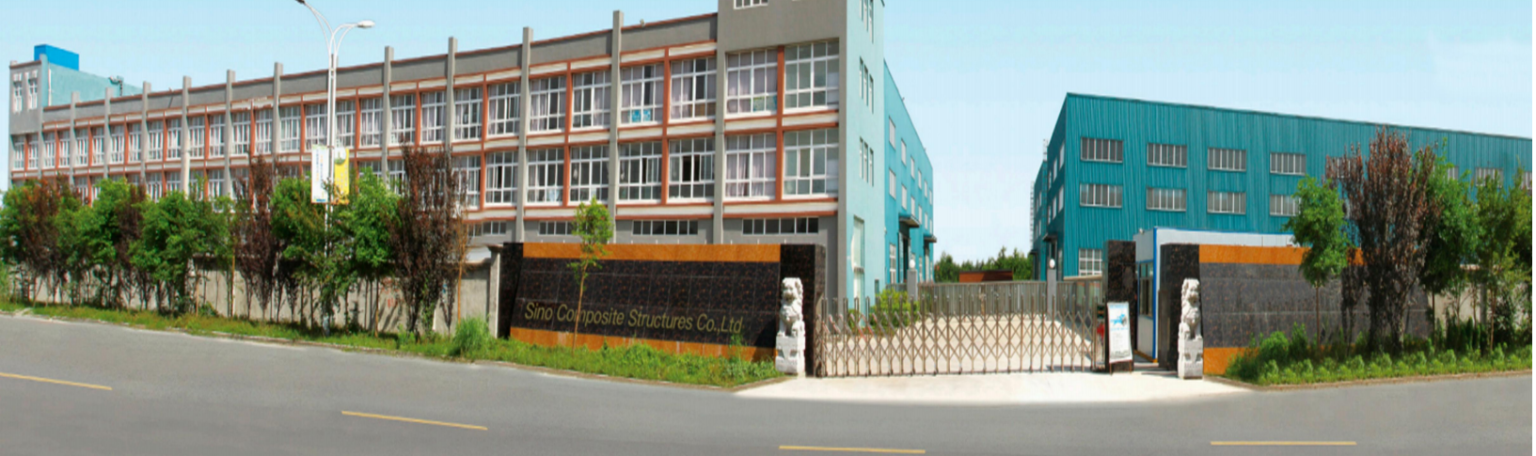

FRP Structure Factory: What to Look for in a Trusted Composite Manufacturer
2026-11-02
Not every FRP structure factory is built the same. Some cut corners on raw materials; others rush curing cycles and hope nobody notices. The real difference between a trusted composite manufacturer and a costly mistake lies in the details you never see on a quote. Before selecting your next supplier, ask what they actually prove—not just what they promise. That’s where Sino Grating stands apart, with a track record built on measurable performance.
Where Raw Resin Choices Reveal Long-Term Durability
In most composite failures we see in the field, the resin was never really the problem at the start—it was the mismatch between what the resin could handle and what the environment actually demanded. A general-purpose polyester might hold up fine indoors for a decade, but put the same laminate near a saltwater splash zone and you'll notice the surface dulling and the glass fibers starting to bloom within a couple of seasons. That's not a manufacturing defect; it's the ester linkages quietly hydrolyzing under constant moisture and thermal cycling.
The differences become glaring when you compare epoxy and vinyl ester side by side in the same application. Epoxy tends to win on adhesion and resistance to water ingress, which is why it remains the default for marine hulls and chemical containment liners. Vinyl ester, on the other hand, brings better toughness and tolerance to acidic or caustic spills without the cure-time headaches of epoxy. We've swapped out polyester gel coats on industrial scrubber housings for vinyl ester and watched the replacement interval stretch from eighteen months to over five years—same thickness, same fiber, only the resin changed.
Raw resin choice also dictates how well UV stabilizers and fire retardants perform over time. A low-quality orthophthalic resin will consume more additives to reach the same weathering benchmark as an isophthalic or terephthalic grade, and even then the surface tends to chalk sooner. When you're spec'ing for anything that has to survive outdoor exposure, chlorinated water, or wide temperature swings, the smart money goes into the resin backbone first—not into extra topcoats hoping to patch a weak matrix later.
How a Factory Handles Bad Batches Defines Its Character
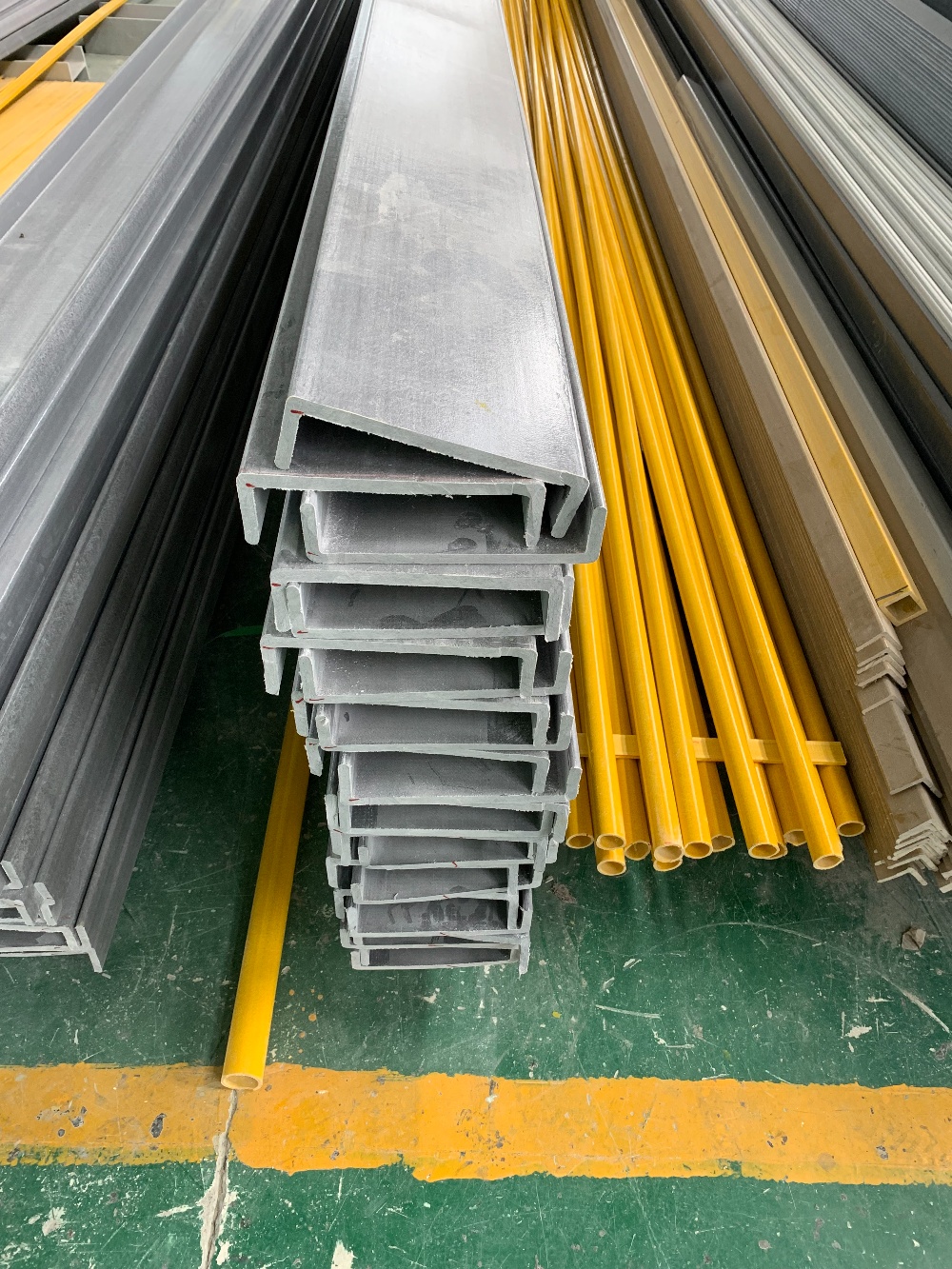
A factory's truest habits rarely show up on the days when everything runs smoothly. They emerge when a batch drifts out of spec, when the numbers on the lab sheet slip past the tolerance line, or when a pallet of finished goods gets flagged during a routine pull. The first instinct says a lot: hide it, blend it back in, or shut the line down and find the root cause. Some plants treat a bad batch as an accounting problem to be quietly absorbed; others treat it as an insult to the process that demands a full trace-back before the shift ends.
The way a floor handles that moment creates a kind of memory. Operators learn whether the manager will really stop production or just nod and keep the line moving. Quality teams learn whether their hold tags carry actual weight or are just paperwork for the file. Over time, those small decisions become the factory's actual standard—not the one printed in the manual, but the one people rely on when batch 1147 turns out wrong at two in the morning.
There is also a quieter test: what happens after the bad batch is quarantined. Does the plant dig into the raw material lot, the mixer settings, the moisture readings from that particular shift? Or does it settle for a plausible story and move on? The factories with real character tend to be the ones that keep asking questions after the immediate pressure passes, because they know that a bad batch is not just a loss—it is a signal about where the system is getting weaker.
A Walk Through the Curing Area Can Replace a Thousand Spec Sheets
Spec sheets list cure times and temperatures, but they don't capture how the air feels on the back of your neck when the ovens have been running a little hot. Walking the floor, you notice the subtle bloom on a freshly cured surface, the way the sheen changes near the far wall where airflow is uneven. That kind of detail never makes it into a PDF.
Operators who spend their shifts in that area can point to a batch and tell you it's ready before the timer goes off. They read the faint color shift, the slight give under a thumbnail, the quiet pop of escaping gas. None of this is documented, but it is the real recipe. A single slow walk, eyes open, saves a week of back-and-forth over data columns that don't add up.
Ask Who Owns the Tooling and You Will Learn Who Controls Quality
Ownership of tooling rarely appears on an org chart, but it quietly shapes every quality decision that follows. The team or individual who maintains the build scripts, test harnesses, and delivery pipelines ends up defining what “done” looks like, regardless of what the official process documents claim. If a testing framework is cumbersome, the people who own it will naturally steer work toward paths that avoid friction, even when that means fewer edge cases get covered. Quality stops being an abstract standard and starts reflecting the preferences, shortcuts, and blind spots of those who control the instruments.
This dynamic becomes especially visible when tooling ownership is concentrated in a single role or a small group. Their choices about which metrics to surface, which linters to enforce, and which environments to prioritize determine what the rest of the team notices and fixes. A developer might write clean, careful code, but if the deployment tool only reports success or failure without exposing warnings, latent issues slip through unnoticed. The conversation about quality shifts from “did we meet the requirement” to “did we satisfy the tool,” and that distinction often goes unquestioned for months.
Paying attention to who owns the tooling is therefore a practical way to diagnose where quality actually lives in an organization. When tool maintenance is shared, revisited, and rotated, the team is forced to confront the trade-offs baked into their workflow. When it stays locked away, quality becomes dependent on the goodwill and perspective of a few people. Ask that simple question in your next retrospective or planning session, and you will likely uncover the real gatekeepers of your product’s quality.
Surface Finish Is Where Shortcuts Hide in Plain Sight
A quick glance at a machined part rarely tells the whole story. The surface might reflect light evenly from a distance, but run a fingernail across the edge or hold it under magnification and the shortcuts start to surface. Chatter marks, inconsistent tool paths, skipped finishing passes—they all live in the finish long after the dimensional checks pass.
What makes surface finish so revealing is that it cannot be faked with a tighter tolerance on a drawing. Polishing compounds and abrasive pads can mask some defects, but they also smear metal and leave their own signature. Experienced inspectors learn to read these patterns: a rippled sheen points to vibration, a dull patch to dwell time, and a bright streak to a fresh insert that was never blended into the rest of the cut.
Shops that treat finish as an afterthought end up chasing problems they already created. A better habit is to sample finish in the middle of a run, not just at the end, and compare it against a reference standard kept near the machine. That reference part becomes the quiet referee—no debate about what "good enough" looks like, just a side-by-side check that exposes any shortcut before it reaches the customer.
The Best FRP Partners Share Their QA Logs Without Hesitation
Transparency is a rare commodity in the FRP supply chain, but the best partners treat QA logs like an open book. They don't wait for a client to ask about batch consistency or test results; they send over the full record with the shipment. That log includes raw material certifications, cure cycle temperatures, and any deviations flagged during production. When a partner shares this level of detail without being prompted, it says more about their confidence than any marketing brochure could.
There is a practical reason this habit matters. FRP components often go into load-bearing or corrosion-critical applications, where a hidden defect can fail years later. A partner who hands over QA logs immediately understands that their reputation is built on repeat inspection, not on one-time acceptance. It also makes troubleshooting faster. If a problem does appear on site, the log gives engineers a clear starting point instead of a guessing game.
In contrast, partners who hesitate or provide only summary reports often create more work for everyone. The best ones treat the log as a working document, not a legal shield. They are not afraid to show a minor adjustment during a shift or a test that initially fell outside spec and was corrected. That honesty builds a different kind of trust—one based on evidence rather than promises.
FAQ
Look for a team that talks comfortably about resin systems, fiber orientation, and load paths. Ask how they handle laminate schedules or corrosion barriers, and see whether they offer engineering input rather than simply quoting from a drawing.
Ask for material certifications, test coupons, or batch traceability logs. A responsible factory will share details on curing conditions, dimensional tolerances, and third-party testing without making you chase them.
FRP structures are rarely off-the-shelf, so it matters a lot. The right partner should be able to adjust profiles, UV protection, fire retardancy, or connection details to match site conditions and real load requirements.
Request case studies tied to specific locations or environments similar to yours, such as chemical exposure, coastal weather, or heavy traffic. Listen for concrete details like panel spans, resin selection, and how they prevented failures.
It often reflects internal organization. Factories that give realistic lead times, update you on material procurement, and flag potential delays early tend to have tighter production controls than those that promise everything immediately.
Find out which resin and glass suppliers they use and ask for certificates of analysis. Consistent raw material sourcing usually leads to more predictable mechanical properties and longer service life.
A dependable factory should provide clear installation guidance, handling recommendations, and a straightforward warranty process. A manufacturer that remains responsive after delivery is more likely to stand behind the structural integrity of its work.
Yes, size is less important than process discipline. A smaller facility with documented procedures, skilled laminators, and a controlled environment can outperform a large plant that rushes production or skips quality steps.
Conclusion
A dependable FRP structure factory gives itself away long before you see a finished part. The raw resin selection is the first honest signal—vinyl ester and isophthalic formulations hold up against moisture and chemical attack, while cheaper orthophthalic blends often fail early in demanding environments. Just as telling is how the plant treats a bad batch. If technicians quietly quarantine the resin, log the gel time drift, and cut open a test panel to inspect for voids, you are dealing with a team that values structural truth over shipping schedules. That habit prevents latent defects from reaching your project.
Walking through the curing area can replace a thick stack of spec sheets. Look for stable temperature control, clean mold surfaces, and staged demolding times that match the resin system—these details reveal whether the process is genuinely controlled. Tooling ownership matters more than most buyers realize: a factory that invests in its own molds is accountable for dimensional accuracy and repeatability. Surface finish offers another quiet warning sign; wavy gelcoat, uneven thickness, or trapped air usually point to rushed layup or skipped vacuum steps. Finally, ask to see the QA logs. Shops that share batch records, laminate coupons, and inspection notes without hesitation are the ones you can trust when a structure has to perform for decades.
Contact Us
Contact Person: Nicholas Zhu
Email: [email protected]
Tel/WhatsApp: 18921275456
Website: https://www.sino-grate.com