
Food Grade Adsorbent Silica from China: Essential Guide to Safe and Effective Moisture Control
2026-07-19
Keeping food fresh and free from moisture damage is a constant challenge for manufacturers and consumers alike. Excess humidity can ruin texture, invite mold, and shorten shelf life—but not all solutions are safe enough for direct food contact. That’s where food grade adsorbent silica from China comes into play, offering a reliable and non-toxic way to control moisture without compromising quality. Among the leading suppliers, Zhonglian stands out for its commitment to rigorous safety standards and effective performance. Whether you’re packaging delicate snacks, pharmaceuticals, or dry ingredients, understanding how this specialized silica works can transform your approach to product protection and safety.
What Makes Silica a Food-Safe Desiccant?
Silica gel earns its food-safe status largely because it’s chemically inert. The desiccant is composed of silicon dioxide, a naturally occurring mineral that doesn’t react with food, release harmful byproducts, or alter flavors. Even when fully saturated with moisture, it remains stable and won’t dissolve or leak, so there’s no risk of contaminating dry goods like spices, jerky, or supplements.
Beyond its stability, silica’s safety is reinforced by how it works. It adsorbs moisture through physical attraction rather than a chemical reaction that could generate heat or toxic substances. Regulatory bodies including the FDA recognize it as generally safe for indirect food contact, which is why you’ll find those familiar little packets tucked inside everything from vitamin bottles to dried seaweed packs. As long as it isn’t eaten directly, silica provides silent, reliable protection without compromising food integrity.
How Adsorbent Silica Actually Captures Moisture
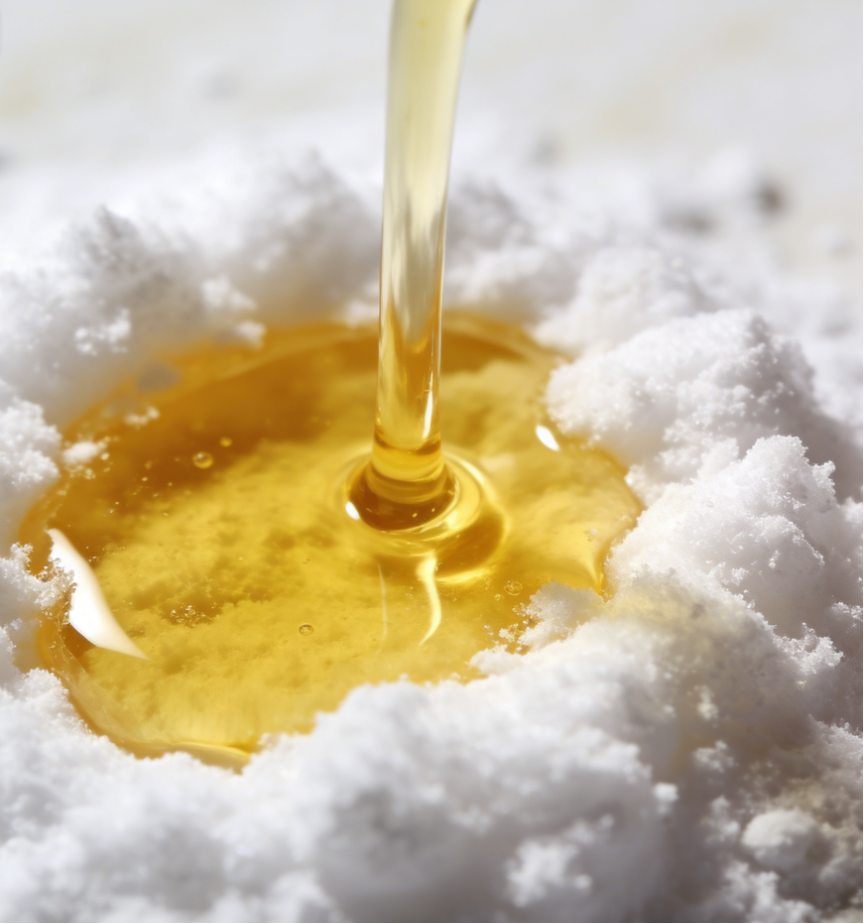
Silica gel doesn’t soak up water like a sponge. Instead, it relies on a process called adsorption, where water molecules cling to the surface of its microscopic pores rather than being absorbed into the bulk of the material. Each granule is a labyrinth of nano-sized cavities, and the sheer surface area inside—often exceeding 800 square meters per gram—provides countless sites for moisture to accumulate. As humid air flows past, water vapor condenses within these pores and binds through weak van der Waals forces, effectively pulling moisture out of the air without the silica ever becoming wet to the touch.
The real magic lies in the chemistry of the silica surface. Tiny hydroxyl groups (–OH) stud the pore walls, creating a polar environment that eagerly latches onto water molecules through hydrogen bonds. This makes the silica highly selective for moisture over other gases. As the pores fill, capillary action draws in more water, layering molecules until equilibrium is reached between the trapped moisture and the surrounding humidity. When the silica becomes saturated, heating it gently breaks these bonds, driving off the water and resetting the material for another round—a reversible cycle that makes it indispensable for moisture-sensitive goods.
What sets silica gel apart from other desiccants is how it handles different humidity levels. At low relative humidity, it can outperform many alternatives because its pore structure is tuned to trap moisture even when the air feels dry. This sensitivity comes from the precise pore size distribution, which determines how aggressively the silica pulls in water vapor. Whether it’s preserving electronics during shipping or keeping museum artifacts pristine, the process is a quiet, continuous sweep of moisture that never demands attention—just dry air on demand.
Spotting Genuine Food Grade vs Industrial Grades
When it comes to chemical substances or additives, looks can be deceiving. A white powder or clear liquid might appear identical whether it’s meant for your dinner plate or your car’s engine. The real difference lies in purity standards, manufacturing protocols, and traceability. Food grade materials undergo rigorous testing to ensure they don’t contain harmful impurities like heavy metals, which are often tolerated in industrial versions. Without proper documentation, there’s no reliable way to tell them apart by sight or smell alone.
Another subtle giveaway is packaging and labeling practices. Genuine food grade supplies come in containers that prevent contamination and display clear lot numbers, production dates, and compliance marks. Industrial grades might skip these details or use shortcuts like recycled drums that can leach unwanted chemicals. Always look for certifications from recognized bodies, and be wary of deals that seem too good to be true—cutting corners on purity can have serious health consequences.
Finally, consider the supplier’s reputation and transparency. Trustworthy vendors openly share technical data sheets, third-party test results, and are willing to answer detailed questions about their sourcing. If a seller dodges inquiries or offers vague assurances, that’s a red flag. Spotting true food grade is about insisting on proof, not just promises, because what you don’t see can hurt you.
Best Practices for Dosing and Placement in Packaging
Getting the dose right starts well before the product reaches the consumer. It’s not merely about filling a container to a target weight; precision involves understanding the density, flow characteristics, and settling behavior of the material. For powders and granules, vibration during transport can lead to compaction, effectively reducing the perceived volume and potentially causing under-dosing if not anticipated. A common oversight is ignoring the fill volume’s relationship to the package headspace—too much air and the product shifts excessively, too little and you risk spoilage or pressure buildup. Testing under simulated transit and storage conditions often reveals dosing adjustments that otherwise go unnoticed until customers complain.
Placement within the package is equally critical, especially for multi-component kits or blister packs. The sequence in which items are accessed shouldn’t force users to contaminate unused portions—think of a cream jar where the spatula nestles directly above the product, or a tablet strip where breaking one foil compromises the adjacent cavity. Designers should map the natural flow of use: which hand opens the package, where the user’s gaze lands first, and how gravity assists or hinders retrieval. Subtle cues like a slight recess for a desiccant or a color break to indicate fill level remove guesswork and reduce waste.
Beyond the mechanics, thoughtful dosing and placement elevate the overall experience. A package that dispenses neatly, whether it’s a sachet that tears cleanly along a laser score or a bottle with an integral measuring cup that cannot be misplaced, signals care and quality. When the placement aligns with ergonomic principles, it also minimizes strain—imagine a heavy liquid detergent with a handle positioned to pour without awkward wrist rotation. These details rarely make it onto a spec sheet, but they define whether a product feels intuitive or becomes a daily annoyance.
Regulatory Certifications You Should Check
Navigating the world of electronics often means paying attention to seals and marks that are easy to overlook. These aren't just decorative logos; they represent mandatory tests your device had to pass before landing in your hands. A missing mark can be a quick signal that a gadget might not meet baseline safety or environmental standards, which can affect both performance and your own peace of mind.
Different regions enforce their own requirements, so the certifications you'll spot depend on where the product was sold. You might notice a CE marking on items intended for the European market, indicating conformity with health and safety rules, while FCC labels show compliance with radio frequency limits in the United States. Meanwhile, an RoHS stamp tells you the manufacturer avoided certain hazardous substances, and a UL mark signals rigorous independent testing for electrical safety. These small icons bridge the gap between complex regulations and your daily trust in a device.
When you examine a new purchase or compare gear, let your eyes linger on those tiny symbols. It's worth checking that they appear genuine and match the product's origin story—counterfeit marks are a real problem. Doing so not only helps you avoid subpar equipment but also nudges makers to keep quality high. In a crowded market, that quick scan for the right certifications can be the difference between a reliable companion and a costly mistake.
Common Pitfalls When Sourcing from Overseas Suppliers
Many buyers underestimate how easily a simple miscommunication can derail an entire order. A brief email that seems clear on your side might be interpreted completely differently by a supplier working in another time zone and language. This is not just about translation errors; it is about unspoken assumptions regarding material quality, finish standards, or even packaging details. If you have never discussed what acceptable truly means with your supplier, chances are you will find out only after the shipment arrives.
Quality control is often treated as a one-time checkpoint, but without consistent oversight, standards can slide between production runs. A pre-shipment inspection catches visible defects, but process-related shortcomings—like weak solder joints or inconsistent fabric dyeing—may not surface until customers use the product. Moreover, freight and tariff costs are frequently miscalculated at the quoting stage. You might lock in a great unit price only to get blindsided by unexpected port charges, customs clearance fees, or a sudden spike in air freight rates if your timeline tightens.
Overlooking intellectual property protection is another risk that goes beyond factories intentionally leaking designs. In many markets, failing to register IP locally means you have no legal recourse if a supplier lists your product on a B2B platform under a different brand. Combine this with the fact that production delays are almost inevitable—whether due to raw material shortages or holiday shutdowns—and it becomes clear that a buffer built into your timeline and a legally vetted contract are not optional extras.
FAQ
Food grade adsorbent silica is a purified form of silicon dioxide specifically processed to meet safety standards for direct or indirect contact with food. Its highly porous structure traps moisture through physical adsorption, effectively reducing humidity in sealed environments without chemical reactions. This prevents clumping, spoilage, and mold growth in dry food products.
China has become a leading source due to advanced manufacturing capabilities, stringent quality control aligned with international standards, and cost-effective production. Many Chinese suppliers offer customized particle sizes and packaging options while maintaining consistent purity levels required for food safety, making it a reliable choice for global buyers.
Always verify that the product carries certifications like FDA, EU food contact compliance, or USP/NF grade. Request a certificate of analysis to confirm heavy metal limits and purity. It's also crucial to source from manufacturers who follow GMP and can provide traceability documentation for each batch.
Silica gel offers high absorption capacity even at low humidity levels, remains dry and free-flowing when saturated, and can be regenerated for reuse. Unlike clay or molecular sieves, it is chemically inert, non-corrosive, and tasteless, making it particularly suitable for protecting sensitive food ingredients without altering their quality.
Select the appropriate sachet size based on package volume and expected moisture load. Place packs so they don't directly touch the food, using food-grade barrier materials if needed. Seal packages immediately after insertion, and for long-term storage, consider humidity indicator cards to monitor effectiveness. Always dispose of spent packs responsibly to avoid accidental ingestion.
Yes, regulations vary by region. In the US, silica must meet FDA 21 CFR provisions. The EU requires compliance with EC No 1935/2004 and specific migration limits. Many Asian countries have their own frameworks, but most reference Codex Alimentarius guidelines. Export-oriented Chinese manufacturers typically design products to meet the strictest target market requirements to ensure smooth customs clearance.
Conclusion
Food grade adsorbent silica from China offers a potent, inert solution for moisture control, standing apart due to its amorphous silicon dioxide composition—deemed safe by major food safety authorities for indirect contact. This synthetic material's real advantage lies in its physical adsorption mechanism: a vast internal pore network captures water molecules through van der Waals forces, pulling humidity into microscopic channels without any chemical change. Even in high-moisture environments, it remains non-sweating and non-corrosive, preserving product texture and preventing mold growth. Recognizing authentic food-grade quality starts with clear supplier documentation that specifies purity levels, absence of cobalt chloride indicators, and compliance with relevant food contact regulations rather than generic industrial specs.
Effective use hinges on precise dosing—commonly 3–5 grams per small sealed package, adjusted based on expected shelf life and headspace volume—and placing sachets strategically to avoid direct contact with consumables. When sourcing from China, insist on verifiable certifications like ISO 22000, HACCP, and EU 1935/2004 or FDA 21 CFR listings; third-party lab reports for heavy metals and dimethyl fumarate are non-negotiable. Beware of bait-and-switch tactics where low-cost offers mask industrial-grade silica or incomplete paperwork. Partnering with established suppliers who routinely conduct accelerated aging tests and provide batch-level traceability turns a simple desiccant into a reliable shield against moisture-related spoilage, ensuring both safety and extended product integrity.
Contact Us
Contact Person: Levin Wang
Email: [email protected]
Tel/WhatsApp: 8618668999988
Website: https://www.silicaplant.com/