
Flyknit Bag Vendor: How to Choose the Right Supplier for Your Brand
2026-11-02
You’ve nailed the design. Now comes the part no one talks about: finding a flyknit bag vendor who won’t ghost you after the first sample. Choosing the right supplier isn’t just about price per unit—it’s about material integrity, lead times, and whether they treat your brand like a priority. In this guide, we break down what to look for, what to avoid, and how YONGFENG fits into a smarter sourcing strategy.
Reading the Weave: What Construction Details Reveal About a Factory
Pick up a length of woven fabric and the first thing worth checking is how even the yarns sit under tension. In a shop that keeps its looms calibrated and its warping process steady, the edges stay flat and the pick count never drifts more than a thread or two across the width. When you see bowing, skipped ends, or a wavy selvage, it usually means somebody rushed setup or skipped a maintenance cycle. None of that is accidental; it travels straight from the floor to the roll.
Seams tell a different side of the same story. A stitch line that holds its spacing turn after turn, with no puckering at the curves and no loose tails at the ends, points to a sewing room where speed is balanced against inspection. If the thread tension wanders or the backtacking looks sloppy, chances are the operators are under pressure to hit numbers and quality checks happen only at the final table. Factories that care about repeatability tend to leave evidence in the smallest topstitch.
Even the hardware and finish details give the game away. Buttons anchored with lockstitch instead of a quick tack, zipper ends secured with a bar or a folded stop, hems folded to a consistent width rather than guessed at the iron — these choices cost a few extra seconds per piece. A plant that spends that time on what customers rarely see is usually the same plant that keeps spare parts on the shelf and trains new sewers properly, and it shows up later as fewer returns and a more uniform run.
Sample Orders and Hidden Flaws: Testing Consistency Before You Scale
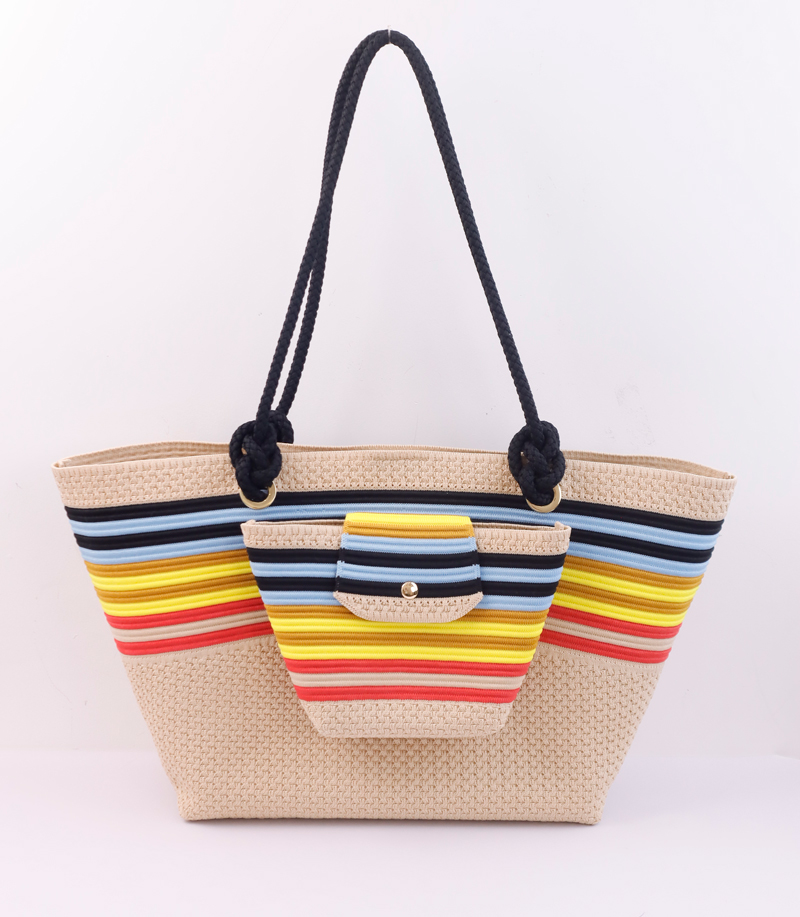
A single perfect sample is not a promise; it is often a best-case accident. The first unit out of a workshop may be cut by the most skilled pair of hands, checked twice, and packaged with extra care. Place a small order of ten or twenty pieces, though, and the less glamorous reality starts to surface: a seam that drifts a few millimeters from one garment to the next, a dye lot that shifts just enough to notice under daylight, or a clasp that gets substituted because the original hardware ran out mid-run. These are not dramatic failures, but they are exactly the kind of hidden flaws that erode buyer trust once you scale.
Consistency testing works best when you avoid treating a single sample as the standard. Request pieces from multiple production days or from parallel lines, and measure them against each other rather than against the first photo you approved. Check thread tension, edge finishing, weight, color density, and even the way items are folded and packed. If two units from the same low-volume order already differ in ways you can feel but not easily photograph, that drift will not shrink when volume triples. Fix the process now, while the cost of correction is still low.
Beyond Pantone: Matching Custom Colors and Logos Without Compromise
Many brands treat Pantone chips as gospel, but a swatch book can't account for how a coated paper stock drinks in ink or how a matte laminate shifts a red toward brown. Matching a custom logo color means starting with the substrate, not the fan deck. We pull spectrophotometer readings from the actual material, adjust pigment loads for surface energy, and then lock those numbers into a shared library that every supplier sees. That way a plastic cap, a cardboard carton, and a screen-based ad all start from the same measured reality, not a guess based on someone's office lighting.
The real work happens after the first proof. Colors drift in production because line speeds change, anilox rolls wear down, or a new batch of resin behaves slightly different. Instead of chasing approvals by eye, we keep a running delta-E tolerance against the master spectral curve. If a flexo press can hold within 0.8 on a brown kraft liner, we say so upfront and design the separations accordingly. Logos stay crisp and the color stays true, even when the job moves from a boutique letterpress to a high-volume corrugated run.
There's also a practical side most style guides ignore. A brand color that looks perfect on a white polybag can turn muddy on recycled greyboard or vanish under warm retail lighting. Matching without compromise means testing the logo under the exact illuminants where customers will see it, then tweaking the tint base or adding a touch of optical brightener if needed. It's not about hitting a Pantone number; it's about making the color feel inevitable in every context.
Lead Times, Minimums, and the True Cost of Scaling Your Line
When you start digging into production, lead times stop being an abstract number on a supplier's quote sheet. They dictate how much cash you'll have tied up in inventory before a single unit sells. A 90-day lead time means you're placing orders a full season ahead, guessing at demand while your money sits in fabric and factory deposits. Shorten that to 30 days and suddenly you can react to what's actually selling, but you'll often pay a premium for the speed or sacrifice consistency in quality.
Minimum order quantities work the same way. A low MOQ feels safer for a small brand, letting you test silhouettes without committing to thousands of units, but the per-unit cost is almost always higher. That eats into your margins before you've even factored in shipping and duties. Raise the MOQ and the math improves, but now you're on the hook for storage, slower-moving sizes, and the risk of a design that doesn't land.
The true cost of scaling isn't just the difference between $8 and $6 per unit. It's the warehouse space you need when 500 units become 5,000, the time spent managing reorders instead of designing, and the strain on relationships when a factory misses a deadline and your launch window slips. Scaling without accounting for those hidden costs is how brands grow themselves into a cash crunch.
Material Sourcing and Sustainability: Questions That Separate Fact from Fiction
The line between responsible sourcing and green noise is thinner than most product sheets suggest. One material can be a clear environmental win in one region and a net burden in another, depending on how it is grown, extracted, transported, and treated. Rather than trusting broad labels like "eco-friendly" or "natural," it helps to ask pointed questions: What is the actual input per kilogram? How much water and energy are used at the processing stage? Does the supply chain provide batch-level data, or only averages that hide bad months and weak suppliers?
Recycled content is often treated as a universal improvement, but that framing collapses under scrutiny. If collection rates are low, contamination is high, or the recycling process demands more heat and chemicals than virgin production, the supposed advantage shrinks or disappears. The same logic applies to bio-based materials: a crop may be renewable, but if it competes with food land, requires heavy irrigation, or depends on synthetic fertilizers, its footprint may be no better than the petrochemical option it replaces.
A more reliable approach is to judge materials by measurable outcomes over a full life cycle, including durability, repair potential, and end-of-use pathways. Ask suppliers for specific figures tied to the exact production run, not generic industry claims. When a material holds up longer and can be recovered without downcycling, that often matters more than whether its raw input started as a plant, a recycled bottle, or a novel bio-polymer.
Payment Terms and Communication: Red Flags That Signal Trouble Ahead
A client who suddenly goes quiet after you send an invoice is often sending a message without saying a word. Healthy business relationships include routine updates like “check’s in the mail” or a quick note about a delay. When those small courtesies disappear, it usually means the payment process has hit a snag—or worse, the client is hoping you’ll forget about the balance.
Watch for shifts in how payment terms are discussed. If a customer who used to pay within 15 days now pushes for net-60 or asks to “restructure” the schedule after work has already started, that’s a pattern worth flagging. Repeated requests to split an invoice into smaller chunks, or promises to wire funds that never arrive, rarely lead to a full recovery without extra friction.
The most telling red flag is inconsistency. One week you’re told the accounting department is closed, the next it’s a lost invoice, then a sudden family emergency. A single excuse is normal; a rotating cast of reasons is not. Trust that unease and set a firmer boundary before the next milestone—whether that means requiring a deposit, pausing work, or moving to a shorter payment cycle.
FAQ
Start with their material sourcing. A dependable vendor will be transparent about where the flyknit yarn comes from and how it's woven. Also ask to see samples from their last three production runs, not just a single showpiece.
Request a pre-production sample and then a random pull from the first bulk order. Compare stitch density, color fastness, and edge finishing between the two. If the factory has an in-house QC team, ask them to share the checklists they use at each station.
It varies widely by factory size. Some smaller workshops accept 300 to 500 units per colorway, while larger mills may require 1,000 or more. Be upfront about your volume expectations early so you don't waste time on a vendor whose setup can't flex with you.
Listen to how they talk about tension and stretch recovery. True flyknit specialists will mention yarn denier, needle gauge, and how they handle 3D-knit zones without seams. Ask for a tear-down of a sample bag: if they can explain the knit structure layer by layer, that's a good sign.
Flyknit can reduce offcuts, but only if the factory has precise digital knitting machines. Ask about their waste rate per bag and whether they recycle scrap yarn. Some vendors also use solution-dyed yarn to cut water use, which matters if your brand markets eco-friendly products.
Landed cost gives a truer picture. A slightly higher unit price from a supplier closer to your fulfillment center or with fewer defect returns can easily beat a cheap factory that adds freight, duties, and rework. Get quotes that include packaging, labeling, and inspection fees.
It's often the main reason to choose one vendor over another. Check whether they can do multi-color jacquard knits, gradient effects, or brand logos incorporated directly into the knit. Ask for a digital proof and a physical color blanket before you commit.
Slow or vague answers about lead times, reluctance to share factory floor photos, and inconsistent pricing between emails are all warning signs. A solid vendor will give you one point of contact, a clear timeline with buffer days, and honest updates if something slips.
Conclusion
Most brands stumble here because they treat flyknit production like a commodity purchase. You can learn far more from a factory's seam junctions, tension consistency, and edge finishing than from any catalog. Request three separate sample runs—not one—and inspect for subtle variations in weave density, logo placement drift, and thread ends. If the supplier can't reproduce the same result twice without supervision, scaling will turn into a customer service nightmare. Push for a detailed construction breakdown before placing a real order. A factory that hesitates to explain how they anchor the knit panels or reinforce stress points is likely hiding shortcuts.
Color matching goes well beyond a Pantone code on a spreadsheet. Ask for physical strike-offs under different lighting and against your actual hardware or zipper tapes, because flyknit yarns shift hue when stretched. On scaling, be brutally honest about lead times and minimums: a quote that looks cheap often ignores rework costs, shipping delays, and the price of holding buffer inventory. Dig into where the yarn comes from—ask for mill certificates and recycling content proof rather than accepting vague "eco-friendly" claims. Finally, watch how the factory communicates about payment terms. Reluctance to discuss defect liability, late penalties, or raw material price fluctuation clauses in writing is a stronger warning sign than any missed email. Choose the supplier that asks you hard questions back.
Contact Us
Contact Person: Mr Deng
Email: [email protected]
Tel/WhatsApp: +86-18926872657
Website: https://www.uniyongfeng.com/