

Feline GS-441524 Factory Quality Checklist for Informed Cat Owners
2026-11-02
Feline GS-441524 has become a beacon of hope for cats with FIP, yet the manufacturing quality behind each vial can vary alarmingly from one supplier to the next. As an informed cat owner, you deserve more than vague promises—you need a clear factory quality checklist to spot red flags before your purchase. Lucpets built this guide to walk you through the key production standards that separate trustworthy manufacturers from risky shortcuts, so your cat gets the safe, effective treatment it deserves.
Why Your Cat’s Recovery Hinges on Batch-Level Purity Data
A cat's body doesn't process impurities the way a dog's or a human's does. The liver enzymes responsible for breaking down foreign compounds are more limited in felines, which means even small contaminants in a supplement or medication can linger longer and cause setbacks during recovery. Batch-level purity data shows what actually ended up in the specific lot you're using, not just what the label promises on average.
Recovery is rarely linear, and the last thing a weakened cat needs is a variable it can't handle. Two batches of the same product can differ because raw ingredients shift, equipment gets recalibrated, or storage conditions fluctuate. When you can see the purity profile for each batch, you're able to spot these swings before they become a clinical problem. That's the difference between treating the cat in front of you and treating a statistical ideal.
Vets and owners who insist on this level of detail aren't being difficult. They're reading the fine print because a cat's recovery window is short, and there's no room for avoidable reactions. Batch-level data turns a generic promise into something you can actually check against your cat's response, and that makes every follow-up decision a little less uncertain.
Inside the Cleanroom: What 'Sterile' Actually Means for Injectable GS
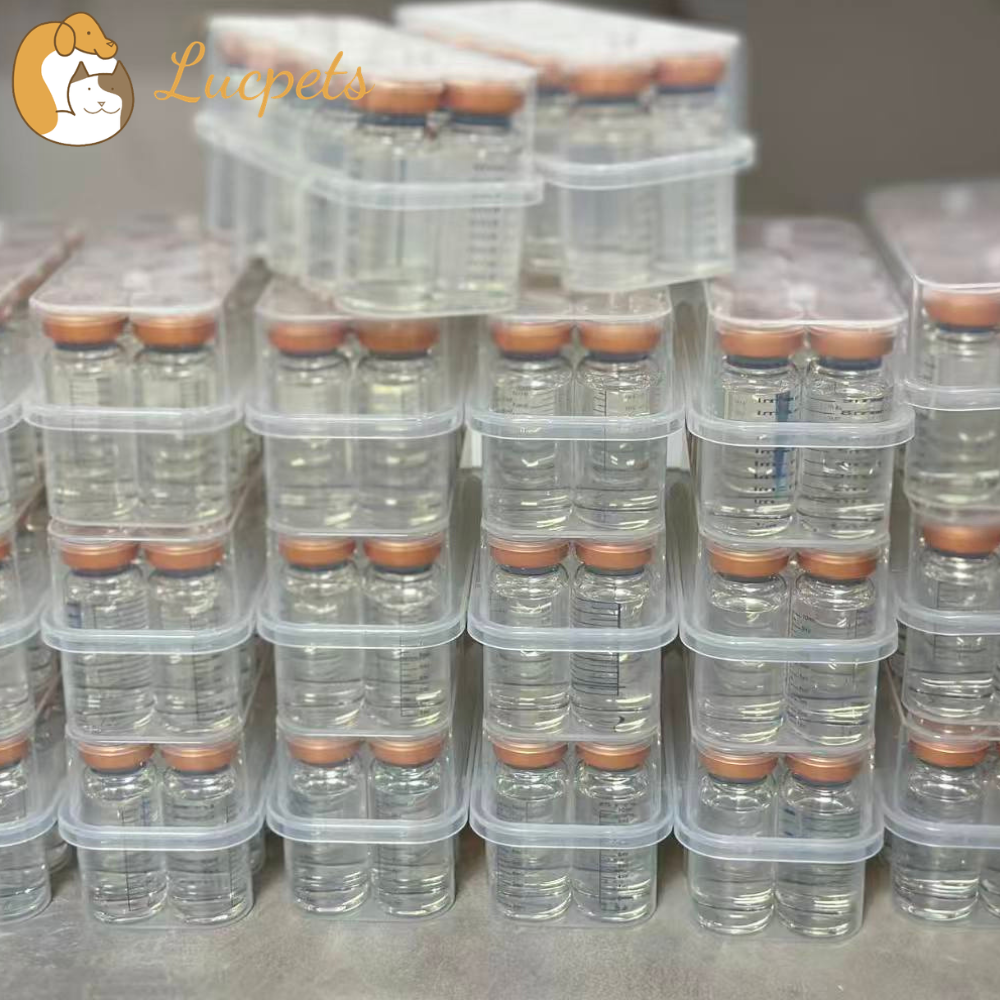
Sterility in injectable manufacturing is never an absolute—it’s a probability game. The cleanroom doesn’t make a product sterile; it reduces the chance of a stray microbe finding its way into a vial to something like one in a million. For Injectable GS, that means controlling every variable inside the ISO 5 filling zone, from the unidirectional airflow pushing particles away from open containers to the number of times a technician reaches past a critical surface. A particle counter reading zero doesn’t tell the whole story—it just tells you nobody sneezed near the probe recently. The real assurance comes from media fills, where operators run the entire line with nutrient broth instead of drug, then watch for growth. If three consecutive batches pass with zero positives, the process earns its sterile claim. It’s less about sterile as a state and more about sterile as a statistically defended routine.
The weak point isn’t the HEPA filter or the sterilizing tunnel—it’s the human hand. In a conventional cleanroom, a person in full gown can shed millions of skin cells per hour, and each one is a potential contamination vehicle. That’s why modern Injectable GS lines lean hard on restricted access barrier systems or isolators, where gloves are the only point of entry and the interior is bio-decontaminated with vaporized hydrogen peroxide. Yet even with automation, the path from depyrogenated vial to crimped cap is where things go wrong: a bent fill needle, a jammed stopper bowl, a glove tear during a manual adjustment. Environmental monitoring catches these after the fact, but the culture of the cleanroom is to treat every intervention as a near-miss. Daily settle plates and contact plates aren’t just paperwork—they’re a trailing indicator of how disciplined the team was yesterday.
Injectable GS sits in an uncomfortable middle ground. It’s an aminoglycoside with some inherent antimicrobial activity, but that doesn’t let a manufacturer relax—sterility is a product quality attribute, not a guess based on the drug’s ability to kill bacteria. Because GS is heat-sensitive, terminal sterilization at 121°C for 15 minutes often isn’t viable without degrading the active ingredient, so many formulations rely on aseptic filtration into pre-sterilized containers. That makes the cleanroom more than a backdrop; it’s the primary sterility assurance step. A vial of Injectable GS that passes visual inspection but was filled during a shift with three operator interventions may still be “sterile” by test, but the process history tells a riskier story. This is why batch release for such products doesn’t hinge on a single sterility test—it hinges on whether the cleanroom itself behaved like a cleanroom for every second the line was running.
Red Flags in Supplier Paperwork That Most Owners Miss
Many owners glance at supplier invoices and only verify totals, but subtle mismatches in unit pricing, freight terms, or payment deadlines often point to deeper contract drift. A supplier might quietly shift from EXW to DDP or swap a fixed surcharge for a variable one; these changes rarely appear in the header, only buried in line-item notes.
Another overlooked signal is inconsistent revision dates across associated documents. If the quote references version 3.1 but the packing list cites 3.0, someone is working from outdated specs—and that usually means downstream quality or compliance gaps. Owners should compare the revision log, not just the summary page.
Watch for handwritten alterations or white-out on bank details, HS codes, or incoterms. Legitimate suppliers rarely amend these fields without issuing a formal correction; a last-minute change to wire instructions is a classic fraud indicator. Also, missing contact info for the issuing department or a generic signature block can hide an unauthorized intermediary.
From Raw Powder to Final Vial: The Testing Steps That Matter
The moment raw powder enters the facility, it carries a hidden resume that only rigorous testing can verify. Identity and purity checks come first—HPLC traces, mass spectrometry fingerprints, and residual solvent scans. A single out-of-spec result here stops the line before a single vial is filled, and that's exactly the point. Catching a mismatched lot or a degradation spike at this stage saves months of downstream troubleshooting.
Once the powder passes the gate, the real choreography begins. Blend uniformity studies confirm that every scoop contains the same dose, while moisture and particle-size analyses flag any drift that could jam filling needles or alter dissolution. Before the liquid ever touches glass, a bioburden test and filter integrity check make sure nothing alive or leaky sneaks into the batch. These midstream tests are rarely glamorous, but they turn a promising powder into a predictable product.
The final vial doesn't get a free pass just because it looks sealed and clean. Sterility testing, endotoxin assays, and visual inspection for sub-visible particles run in parallel with potency and pH verification. Stability pulls from the finished lot sit on shelves for months, mimicking real-world storage to catch any slow-motion failures. Only when every one of these layers lines up does the batch earn its release—because a vial on a truck is a promise, and testing is how you keep it.
How to Spot a Factory That Treats Cats Like Patients, Not Just Numbers
Walk in and watch how the staff reacts when a cat sneezes. In a place that treats cats like patients, someone stops what they're doing, checks the cat's breathing, and logs it. In a numbers-driven operation, the sneeze gets ignored unless it affects output. Pay attention to whether anyone knows each cat's name or just the cage number. A quiet cat with a runny nose should trigger a gentle exam, not a shrug. If you hear a worker say "that one's not productive anymore," you've already got your answer.
Look at the individual records. You should find a folder or tablet entry for each cat with vaccine dates, weight changes, and notes on temperament. If the only thing they can tell you is how many cats they moved last month, that's a problem. A patient-first facility will know that the shy calico prefers wet food left at the back of the cage, not just her ID number. Ask how often a vet comes by. Places that treat cats as patients usually have a standing visit schedule, not just an emergency afterthought.
Ask about their offboarding or adoption process. Facilities that treat cats like patients don't rush a cat out the door the moment someone shows interest. They'll want to know about the new home's setup, other pets, and whether the adopter understands the cat's medical quirks. If the answer is "we have a lot of cats, take one," keep looking. A place that views cats as individuals will sit down and talk through a timid cat's history, not just hand you a carrier and a receipt.
The One Question to Ask Before You Buy Another Vial
Before you tap that checkout button or twist open yet another tiny glass bottle, pause and ask: what happens when this one runs out? Not whether it smells nice or whether the label looks pretty on your shelf. The real test is whether you'll actually reach for it until the last drop—or if it'll join the half-used lineup already gathering dust.
Most collections don't fail because the fragrance is bad. They fail because the promise was bigger than the habit. You buy a vial thinking it will change your mornings, your mood, your confidence. But if you can't picture the specific moment you'll wear it—Tuesday's commute, Sunday's brunch, the post-gym cool-down—then another bottle won't fix the gap.
So before you add it to the cart, name the occasion. Not the fantasy occasion, the real one. If a single honest answer comes to mind without reaching for excuses, that's the vial worth buying. If your brain stays quiet, put it back. The shelf space it saves is worth more than the sample you'll forget.
FAQ
Look for a certificate of analysis from an independent lab that includes HPLC purity results, endotoxin levels, and sterility test outcomes. The supplier should also be able to share batch production records, cleanroom environmental monitoring data, and a detailed manufacturing flow chart. If they hesitate or offer only a vague 'we guarantee purity,' treat that as a gap.
Sterile injectables require more than a clean room. Ask whether the supplier uses aseptic filling, terminal sterilization, or both. Legitimate facilities will report environmental monitoring results such as air particulate counts, surface sampling, and media fill simulations. Look for evidence that each vial is sealed under controlled airflow and that random samples from every batch were incubated for sterility testing.
Watch for missing lot numbers, undated lab reports, and certificates that come from the supplier's own lab rather than an outside party. Also be wary of pricing that seems too low, labels with inconsistent concentration claims, or refusal to share the country and address of the manufacturing site. A factory that cannot produce an audit trail for a specific batch is not operating to pharmaceutical norms.
GS-441524 dosing is based on weight and disease severity, so a small shift in concentration from one vial to the next can mean underdosing or overdosing. Reputable manufacturers validate their mixing, filling, and lyophilization steps to keep variance within a narrow range. Consistency also reduces the chance that a cat will experience injection site reactions or a sudden relapse from an ineffective lot.
High-performance liquid chromatography (HPLC) is the gold standard for confirming both identity and purity, typically aiming for 98% or higher. Mass spectrometry can further verify molecular weight. Endotoxin testing, often by limulus amebocyte lysate assay, matters for injectable safety, and a microbial sterility test confirms the final product is free from viable organisms. Ask for all three, not just a thin-layer chromatography image.
Ask what ISO class the cleanroom is, how often it is recertified, and whether personnel follow full gowning protocols. Request the pressure differential and air change rate records if possible. A trustworthy supplier will explain how materials enter and leave the cleanroom without breaking the controlled environment. Vague answers like 'we are very clean' are not enough for an injectable drug.
GMP is not just paperwork; it covers everything from raw material qualification to equipment calibration and batch release. While GS-441524 is often sold in a regulatory gray zone, a factory that voluntarily follows GMP-style controls is far more likely to prevent contamination and dosage errors. Ask whether they have a quality unit that can reject a batch, rather than shipping everything that comes off the line.
The starting material for GS-441524 synthesis can carry heavy metals, residual solvents, or unreacted intermediates if not properly purified. A reputable factory will test incoming raw materials and show you a supplier qualification program. If the source of the active pharmaceutical ingredient is hidden or changes frequently, it becomes much harder to trust that the final product is safe to inject.
Conclusion
A vial's label won't tell you whether the GS-441524 inside was filtered, tested for endotoxins, or made in a room with controlled air pressure. Batch-level purity data is the only window into that reality. If a supplier can't produce a certificate of analysis showing at least 98.5% purity—and the method used to confirm it—walk away. "Sterile" on a box means nothing unless the injectable was compounded in an ISO-classified cleanroom with environmental monitoring, not just a wiped-down kitchen counter. Owners often miss red flags like misspelled active ingredient names, missing lot numbers, or test reports that come from a lab with no accreditation. These aren't paperwork annoyances; they're signals that the batch may never have been independently verified.
Trace the journey from raw powder to final vial. Reputable factories test the raw API for identity and residual solvents, check each intermediate batch for pH and osmolality, sterilize by filtration into depyrogenated vials, and then hold product for sterility testing before release. If any step is skipped, the risk shifts to your cat. The best manufacturers treat feline patients like patients: they keep retention samples, track adverse events, and welcome third-party audits. Before you buy another vial, ask one question: "Will you send me the full batch record, including the name of the independent lab that tested this lot?" A hesitation or a generic "trust us" is your answer.
Contact Us
Contact Person: Aaron
Email: [email protected]
Tel/WhatsApp: +86 18177165140
Website: https://www.lucpetsglobal.com