

Current Sensing Resistor List: Top Recommended Picks for Precision Circuits
2026-07-04
Precision circuits demand components that don’t compromise on accuracy, and current sensing resistors are at the heart of reliable measurements. Whether you’re designing power management systems or fine-tuning motor controls, the right shunt resistor can make all the difference. In this curated list, we’ve handpicked top-performing current sense resistors that balance low resistance, tight tolerance, and thermal stability. For deeper insights and a wider selection, Milliohm offers an unmatched resource. Dive in to discover the picks that could elevate your next design.
When Precision Is Non-Negotiable: Selecting Resistors forUltra-Accurate Current Measurement
In applications where the slightest measurement error can lead to system failure or regulatory non-compliance, resistor choice becomes the cornerstone of current sensing. The seemingly simple shunt resistor must exhibit an extraordinarily stable resistance value across temperature and time, with minimal thermal electromotive force (EMF) and noise. For ultra-accurate designs, moving beyond generic thick-film parts to specialized metal foil or wirewound types with TCRs in the single-digit ppm/°C range is not optional—it's a fundamental requirement. One must carefully evaluate the resistor's power coefficient, as self-heating effects can introduce nonlinearities that no amount of calibration can fully correct.
Beyond the datasheet, practical PCB layout and thermal management dictate real-world performance. Even a precision resistor will underperform if placed in a high thermal gradient zone or if the sense traces pick up parasitic voltage drops. Symmetrical, Kelvin-connected layouts are mandatory to eliminate trace resistance from the measurement. Additionally, designers should consider the resistor's long-term stability and load life ratings, often overlooked in fast prototyping cycles. For mission-critical systems, it's wise to consult the manufacturer's characterization data beyond the headline specifications, looking at how the device behaves under pulsed loads or in high-humidity environments.
Finally, the selection process must account for the entire signal chain's error budget. A sub-milliohm shunt with 0.01% tolerance might seem ideal, but if the accompanying amplifier's input offset drift is high, system accuracy degrades rapidly. The resistor's value itself is a trade-off: lower resistance minimizes voltage drop and power loss but demands higher amplification, making the circuit more susceptible to noise and offset errors. Thus, the art of choosing the right resistor lies in balancing these electrical, thermal, and mechanical factors—viewing the component not in isolation, but as an integral part of a precision measurement ecosystem.
Beyond the Datasheet: How Temperature and Noise Profiles Shape Real-World Performance
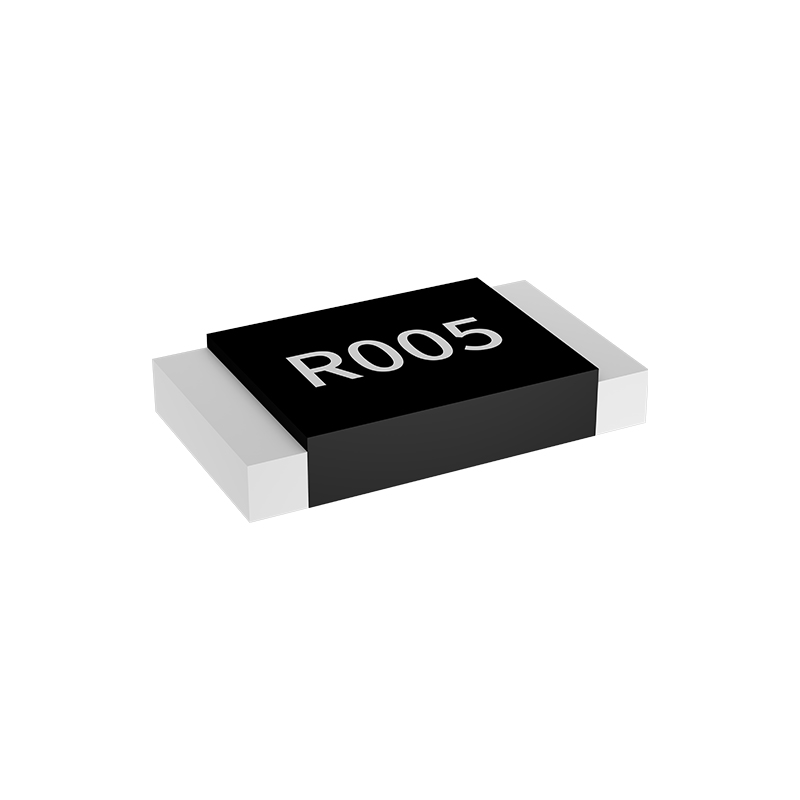
Engineering specs paint a tidy picture, but real-world electronics rarely get the memo. A component's datasheet might promise stable gain and low distortion under lab conditions, yet once it's squeezed into a cramped enclosure or left baking in direct sunlight, those curves can shift in ways that turn a carefully tuned circuit into a temperamental performer. Temperature is the silent architect of these deviations: bias points drift, resistors change value, and semiconductor characteristics warp just enough to push a design out of its sweet spot. It's not that the datasheet is dishonest—it simply cannot rehearse every thermal dance a device will face once it leaves the test bench.
Noise, meanwhile, is the ghost in the machine that no single number can exorcise. A microphone preamp might boast an impressive equivalent input noise figure on paper, but that figure is typically measured with a specific source impedance, in a shielded room, with power rails as quiet as a monastery. Hook it up to a real sensor at the end of a meter-long cable, and suddenly the mains hum, switch-mode supply artifacts, and even the triboelectric rustle of the wire itself become part of the audible picture. The difference between a quiet measurement and a quiet system often lives in the details the datasheet omits: how noise density changes with temperature, whether 1/f corners drift under load, or how adjacent digital circuitry couples trash into analog rails when the whole assembly draws current in staccato bursts.
The interplay between these two factors creates performance contours no graph can fully capture. A chip that runs whisper-quiet when cold might develop a hissing personality as it warms, not because it's faulty, but because its internal bias generators were never intended to maintain equal stability across a forty-degree span. Likewise, an RF amplifier's noise figure can degrade more from a slight temperature gradient on the board than from the active device itself—thermal differences create mismatch, mismatch reflects signal, and the reflected signal finds its way into places designers never intended. Getting a circuit to behave in the wild requires reading between the lines of the datasheet, designing for the thermal reality it will inhabit, and treating noise not as a fixed characteristic but as a living, breathing parameter that shapeshifts with every degree of temperature change.
Low Ohms, High Stakes: Tackling Parasitics in Milliohm-Range Current Sensing
Measuring current with a milliohm-range shunt resistor seems straightforward until you realize the PCB trace resistance itself can swamp your signal. The inductive kick from fast-switching loads turns a clean voltage drop into a ringing nightmare, while thermoelectric voltages at the solder joints can easily add tens of microvolts of offset—enough to ruin a 1% measurement. Every millimeter of copper between the shunt and the amplifier input becomes a parasitic element that demands careful accounting.
The real art lies in knowing which parasitics you can cancel and which ones you must starve. Kelvin sensing helps tame trace resistance, but it does nothing for the magnetic coupling between the high-current loop and your sense lines. You might find yourself twisting sense wires, adding guard traces, or even carving slots in the ground plane to steer eddy currents away. Board layout becomes a three-dimensional puzzle where component placement, layer stackup, and via stitching all play critical roles.
At the circuit level, you often need to fight fire with fire: adding a small RC filter right at the amplifier pins buys you noise immunity at the expense of bandwidth, while a well-chosen instrumentation amplifier with high common-mode rejection can forgive some layout sins. The best designs often combine multiple techniques, treating the parasitic inductance, capacitance, and thermocouple effects not as enemies to eliminate but as constraints to balance. After all, in the milliohm world, the difference between a successful design and a frustrating prototype often comes down to a few picohenries and a handful of microvolts.
Alloy vs. Thin Film: The Hidden Trade-offs Every Designer Should Know
When selecting resistor technology for precision circuits, the alloy-versus-thin-film debate often overshadows a more nuanced reality. Alloy resistors, with their bulk metal foil or wirewound construction, deliver exceptional surge tolerance and low-inductance paths that thin films struggle to match. Yet many designers overlook how alloy's inherent inhomogeneity can introduce micro-volt level thermoelectric offsets at junctions with copper traces, an effect thin film's homogeneous sputtered layers almost entirely avoid.
Thin film components shine in stable, low-drift applications where consistent TCR across the entire resistive element is non-negotiable. Their laser-trimmed serpentine patterns, however, create localized hot spots that accelerate aging under pulsed loads, a failure mode rarely flagged in datasheets. Meanwhile, alloy resistors can suffer from non-linear behavior at high frequencies due to skin effect in their bulk material, turning a seemingly simple choice into a cascade of hidden compromises.
The real distinction emerges not from headline specifications but from application-specific blind spots. A designer might optimize for long-term stability only to find that a thin film's passivation layer becomes a parasitic capacitor in high-impedance circuits, while an alloy resistor's lower excess noise gets erased by a poorly chosen lead frame. Understanding these quiet trade-offs requires looking past the data sheet to the physics that neither technology advertises.
Layout Lessons from the Lab: How PCB Design Makes or Breaks Sense Resistor Accuracy
We’ve all been there—spending extra on 0.1% sense resistors, only to see the actual measurement drift all over the place once the PCB is assembled. The culprit is rarely the component itself. The truth is, how you place and route that innocent-looking four-terminal Kelvin resistor can introduce errors that completely drown out the datasheet’s precision claims. In one of our lab experiments, simply rotating a 2512 resistor by 90 degrees changed the sensed current by nearly 2%, purely because the copper pour beneath interacted asymmetrically with the internal resistance foil.
Thermal gradients across the resistor package are another silent killer. A difference of just a few degrees Celsius between the two Kelvin sense pads creates a Seebeck voltage that adds directly to your measured millivolt signal. We traced a persistent 50 µV offset in a high-current board back to an LDO placed a little too close to the sense resistor’s ground‑side pad. The fix wasn’t a better resistor; it was moving the LDO and balancing the thermal mass with dummy copper fills on the other side.
Even the solder fillet geometry matters more than you’d think. With Kelvin connections, the sense trace must tap exactly at the resistor’s internal termination point—not on the pad, not on the thick copper pour. We learned this the hard way when a customer’s production batch showed a bimodal distribution of current readings. Half the boards were fine, the other half were 1.5% low. Under the microscope, the difference boiled down to the reflow profile: slightly more solder on the low‑reading units had created a fillet that shifted the effective sense point onto the PCB copper instead of the resistor’s internal element. Tightening the paste mask and adjusting the stencil aperture eliminated that bimodal spread entirely.
From Battery Gauges to Motor Drives: Matching the Resistor to the Application Pulse
In battery fuel gauges, the sense resistor faces brief, low-energy current pulses during coulomb counting. Precision is paramount, so thick-film or metal-alloy chip resistors with low thermal EMF and tight tolerance are favored. Their ability to handle repetitive microsecond spikes without drifting in value ensures accurate state-of-charge readings over the product’s life.
Stepping into motor drives, the demands shift dramatically. Here, resistors contend with high-current, fast-rising PWM pulses that generate intense thermal stress. Wirewound or metal-element resistors, often with anti-surge construction, excel in absorbing these energy bursts. The key is sizing the resistor not just for continuous power, but for its pulse energy rating, ensuring it doesn't fuse open or create hot spots during acceleration or braking.
Between these extremes lies a spectrum of pulse scenarios—from inrush limiting to snubber circuits. Matching the resistor means digging into datasheets for pulse load curves and thermal time constants, not just the steady-state wattage. A resistor that thrives in a narrow-pulse, low-duty-cycle battery monitor may fail instantly in a high-repetition gate drive, underscoring why the pulse shape and repetition rate dictate the technology choice.
FAQ
Our go-to picks include Vishay's WSLP series for their ultra-low resistance and excellent stability, Susumu's KRL series for tight tolerance and low TCR, and Ohmite's LVK series for high-power needs. For surface-mount options, the Panasonic ERJ-6BW series delivers consistent performance, while Caddock's MV series shines in ultra-precision applications with non-inductive design.
Start by nailing down your required resistance value and power dissipation. Then scrutinize the temperature coefficient (TCR); below 50 ppm/°C is ideal. Tolerance should be 1% or better. For very low resistance values, four-terminal (Kelvin) configuration is a must to eliminate lead resistance errors. Don't overlook the thermal EMF if you're measuring DC currents at low levels.
Low TCR minimizes resistance drift as temperature rises from self-heating or ambient changes, which directly translates to consistent current readings. In precision circuits, even a 50 ppm/°C shift can throw off a 12-bit ADC's accuracy. Aim for TCR under 25 ppm/°C if your system operates over a wide temperature range.
For high-side sensing, where the shunt sits between the supply and load, you need a resistor with excellent common-mode rejection. Vishay's WSLF series is robust, while the TT Electronics OAR series handles up to 50A with a 4-terminal design. If board space is tight, try the small-footprint Susumu RL series with flip-chip terminations.
Definitely. Thin film resistors inherently produce less noise than thick film. Susumu's RG series offers resistance down to 10mΩ with a TCR of ±25 ppm/°C and very low current noise. Stackpole's CSRT series provides wide values and high stability, making them perfect for medical or audio sensing front-ends where signal integrity is critical.
Power rating dictates how much heat the resistor can dissipate safely. Pushing a shunt too close to its limit causes temperature rise, which alters the resistance via TCR and can shorten lifespan. Derate by at least 50% in high-ambient environments. For pulse applications, check the pulse power rating to avoid transient damage.
In BMS, you need high accuracy, low drift, and often AEC-Q200 qualification. Bourns' CSM series offers 4-terminal packaging down to 20µΩ, crucial for minimal voltage drop. Rohm's UCR series combines high power in small 1206 size. For EV packs, the Isabellenhütte BVB series is the industry workhorse, handling hundreds of amps with exceptional long-term stability.
One major pitfall is underestimating self-heating—calculate I²R loss and check the thermal resistance to PCB. Another is ignoring the Kelvin connection benefit, especially below 10mΩ. Also, overlooking the resistor's inductive reactance can skew readings in high-frequency switching circuits. Finally, don't assume a resistor's TCR is flat across its entire temperature range; check the curve.
Conclusion
The choice of a current sensing resistor in precision circuits extends far beyond a simple resistance value and tolerance rating. When every millivolt matters, subtle performance shifts driven by temperature coefficient and thermal EMF can quietly undermine measurement accuracy. Resistors built on thick film cermet materials often exhibit nonlinear behavior under self‑heating, whereas metal foil or wirewound types deliver near‑ideal stability as temperatures climb. Noise, too, is easily overlooked: low‑ohmic sensing resistors generate Johnson noise that can swamp tiny signal changes, forcing designers to consider the entire noise profile rather than just the nominal resistance. At milliohm levels, parasitic inductance and excess capacitance transform a simple two‑terminal component into a complex impedance network, masking the true DC value. Four‑terminal Kelvin connections help bypass these parasitics, but their effectiveness hinges on careful layout decisions that keep sense traces far from high‑current paths and avoid ground‑plane interruptions that create error‑inducing voltage drops.
Beyond material and construction choices, the real‑world performance gap between alloy and thin‑film resistors often surprises even experienced engineers. Metal alloy current shunts excel at handling pulse overloads and thermal surges, but their bulkier packages may compromise board real estate and thermal management in compact gauges. Thin‑film chips, by contrast, offer supreme precision and low TCR in standard footprints, yet their limited surge capability demands derating in motor‑drive or solenoid circuits where inrush currents spike unpredictably. PCB layout acts as a silent partner, with track resistance and via placement easily adding milliohms of error that no polished datasheet can predict. A well‑routed Kelvin pad pair can recover accuracy that a rushed prototype squanders. Ultimately, tailoring the resistor to the load profile — steady‑state battery monitoring versus pulsating inverter currents — separates a reliable, drift‑free front end from a temperamental circuit that demands constant recalibration. These practical insights, rather than catalog specs alone, define the top recommended picks for any high‑precision current‑sensing design.
Contact Us
Contact Person: Yuying Gao
Email: [email protected]
Tel/WhatsApp: +86 18926013721
Website: https://en.milliohm.net/