

China Pharmaceutical Excipient Silica: Unlocking Superior Drug Performance
2026-05-26
The search for higher-performing pharmaceuticals often overlooks a quiet workhorse: pharmaceutical excipient silica. Yet, the right silica choice can make or break a drug's stability, dissolution, and patient experience. As formulators push into complex generics and novel delivery systems, standard solutions no longer suffice. This is where Zhonglian steps in with precision-engineered excipient silica—unlocking performance gains that rival costly API tweaks, but with far less regulatory burden. Curious how a seemingly simple powder can elevate your formulation from adequate to exceptional? Read on to see the data, the mechanisms, and the real-world case studies that are reshaping expectations.
How Silica Redefines Drug Release Profiles
For decades, drug delivery struggled with a simple dilemma: how to keep a medication at the right concentration long enough to heal, without spiking to toxic levels or fading too soon. Silica-based carriers have quietly upended that balance. Their secret lies not in some exotic coating but in the very architecture of the material—a porous, spongelike network that can be tuned at the nanometer scale. By adjusting pore size, surface chemistry, and even the shape of the particles, researchers can now dictate exactly when, where, and how fast a drug enters the body. It’s less like swallowing a pill and more like programming a release schedule into the carrier itself.
What makes this possible is the versatility of silica’s surface. Unmodified, it can hold molecules through simple adsorption, releasing them as the surrounding fluid seeps in and flushes them out. But graft on a few polymer chains, and that release becomes pH-sensitive—staying locked up in the stomach’s acid but freeing the payload in the more neutral intestine. Add some molecular gatekeepers, like peptides that cleave in the presence of certain enzymes, and the system becomes responsive to specific disease markers. These aren’t just incremental improvements; they represent a fundamental shift from passive dissolution to active, environmentally aware delivery. In an era of precision medicine, that kind of control can be the difference between a generic therapy and one that adapts to a patient’s needs in real time.
The practical implications run deeper than just timing. Because silica can protect fragile molecules from degradation—think proteins, nucleic acids, or volatile small molecules—it opens the door to oral or injectable versions of drugs that previously had to be infused slowly in a hospital setting. The mechanical stability of the particles also means they can be lyophilized and stored without losing their release characteristics, which matters enormously for global health. And unlike many organic carriers, silica doesn’t swell unpredictably or degrade into sticky byproducts that can foul the surrounding tissue. It’s this rare combination of inertness in the body, high loading capacity, and programmable release that has moved silica from a lab curiosity to a genuine contender for next-generation therapies.
China’s Purity Benchmarks: Elevating Global Generics
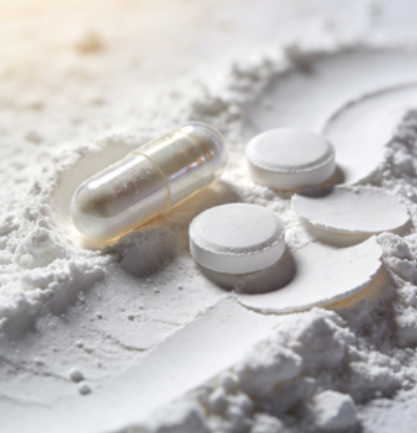
In the sprawling landscape of generic drug manufacturing, China has quietly reshaped the standards that define pharmaceutical quality. The country’s purity benchmarks—rooted in rigorous impurity profiling and stringent residual solvent limits—have become a quiet force driving a global recalibration. Where older norms tolerated minor variability, Chinese regulators now demand near-absolute precision, compelling manufacturers to adopt advanced purification technologies and real-time analytical testing. This shift isn’t just about compliance; it’s about setting a bar that often surpasses long-standing Western pharmacopoeias, forcing a reevaluation of what “acceptable” truly means in medicine.
The ripple effects are tangible across international supply chains. Active pharmaceutical ingredients (APIs) sourced from China now routinely arrive with certificates of analysis that detail impurity levels down to parts per million, often well below established thresholds. This granular consistency has upstream consequences: formulation scientists in Europe and North America find their development timelines shortened, bioequivalence studies smoothed, and batch failures reduced. It’s a quiet revolution—not announced through marketing but etched into the chemistry itself, where a lower burden of trace contaminants translates directly into medicines that healthier systems can trust with fewer hesitations.
Yet the story extends beyond technical data sheets. As China’s purity ethos permeates, it challenges the traditional dichotomy between branded and generic drugs. Patients and clinicians are beginning to notice that the generic versions of critical therapies—from cardiovascular agents to analgesics—perform with a clinical predictability once reserved for originator products. The benchmarks are no longer a low-cost proxy; they’re an elevation, transforming generics into true equivalents in spirit, not just in label. And in that transformation, China’s role as a steward of global health foundations quietly deepens.
Amorphous Silica: A Lifeline for Poorly Soluble Drugs
Amorphous silica has become an indispensable ally in the formulation of poorly soluble drugs, offering a practical route to overcome bioavailability hurdles. Its amorphous nature and high surface area allow drug molecules to be adsorbed in a non-crystalline state, which dramatically increases dissolution rates. By inhibiting recrystallization, the silica matrix helps maintain the drug in a supersaturated state upon release, significantly boosting oral absorption.
Beyond simple adsorption, amorphous silica acts as a robust carrier in solid dispersions, where it stabilizes the amorphous form of the drug even under stress conditions. The rigid silica network restricts molecular mobility, thus preventing the drug from reverting to its stable crystalline form during storage. This dual function—enhancing solubility while ensuring long-term stability—makes it a cornerstone for developing effective and shelf-stable oral medications.
Recent innovations extend its utility to mesoporous silica nanoparticles with controlled pore architectures. These advanced materials not only improve dissolution but also enable tailored release kinetics and site-specific delivery. As pharmaceutical pipelines increasingly rely on BCS Class II and IV compounds, amorphous silica stands out as a versatile and reliable lifeline, turning formerly unviable molecules into therapeutic realities.
The Invisible Force Behind Solid Dosage Excellence
The real magic in solid dosage forms rarely makes headlines. It lives in the careful selection of excipients that guide disintegration just so, in the subtle interplay between powder flow and die filling that prevents weight variation, and in the deliberate choice of a coating that masks bitterness while releasing the active ingredient at precisely the right moment.
Excellence is not a happy accident. It emerges from a deep understanding of material science—knowing that a mere 0.5% change in magnesium stearate concentration can turn a robust tablet into a brittle failure. This invisible framework demands constant vigilance, as raw material variability, environmental conditions, and equipment wear conspire to erode quality.
Ultimately, the force that delivers a tablet that splits cleanly, dissolves without residue, and works consistently batch after batch is a blend of experience and humility. It’s the willingness to listen to the powder blend, to recognize early signals of segregation, and to adapt before a single out-of-spec result appears. That’s the quiet discipline that transforms good formulations into trusted therapies.
Smart Silica: Beyond Inert Fillers to Functional Performance
Silica has long been viewed as a straightforward, inert filler in material formulations—a cost-effective way to add bulk or improve basic mechanical properties. This traditional role, however, underestimates the mineral’s potential. Advances in surface chemistry and particle engineering are revealing that silica can be transformed into an active, multifunctional component. By tailoring surface treatments, porosity, and morphology, silica now enhances performance in ways that go far beyond simple reinforcement, contributing to functions like controlled release, thermal management, and improved dispersion stability.
Contemporary silica designs leverage precise molecular interactions to solve complex industrial challenges. For instance, functionalized silica particles can act as carriers for active ingredients in coatings, delivering corrosion inhibitors on demand. In polymer composites, carefully engineered surface groups facilitate stronger interfacial bonding, resulting in materials that are not only tougher but also more durable under stress. These smart silicas are being integrated into advanced formulations where they actively participate in the material’s response to environmental stimuli—such as changes in pH or temperature—rather than remaining passive bystanders.
The shift from inert filler to functional partner is opening new avenues across sectors ranging from automotive to healthcare. Silica’s high surface area and tunable chemistry now enable its use in energy storage systems, bioactive scaffolds, and self-healing materials. This evolution demands a rethinking of formulation strategies, moving away from off-the-shelf fillers toward customized silica solutions co-developed with manufacturers. By embracing this proactive role, silica is shedding its “filler” label and emerging as a key enabler of smarter, more adaptive products that meet stringent performance and sustainability goals.
Green Synthesis: A Sustainable Path for Excipient Innovation
Shifting the excipient landscape toward eco-conscious practices begins with how these substances are actually made. Green synthesis isn’t just a lab curiosity anymore; it’s a tangible rethinking of reaction design that replaces harsh solvents and energy-intensive steps with milder, renewable alternatives. By borrowing mechanisms from enzymatic catalysis or plant-derived reducing agents, manufacturers can now produce high-purity excipients without generating a trail of toxic byproducts. What makes this path truly practical is that it often runs at ambient conditions, cutting carbon footprints and operational costs at the same time. The result is a growing portfolio of binders, disintegrants, and coatings that arrive with a cleaner pedigree—something regulators and formulators are starting to demand, not just applaud.
One of the more interesting shifts is how green chemistry invites a whole new toolbox of raw materials into excipient production. Agricultural sidestreams, microbial fermentation broths, and even captured CO₂ are being upgraded into functional polymers and sugars that rival their petrochemical counterparts. These aren't just feel-good substitutions; they often bring unexpected performance perks—better compressibility, controlled solubility, or enhanced biocompatibility that purely synthetic routes struggle to match. The trick is in harnessing nature’s own efficiency, tweaking it with minimal interference, and ending up with an excipient that not only does its job but does it with a transparent, low-impact supply chain.
Scaling these methods from a beaker to a batch reactor isn’t without its hurdles, though. Consistency can waver when you swap petroleum for a seasonal feedstock, and the regulatory framework hasn't yet caught up with the pace of innovation. Still, the momentum is undeniable. As more contract manufacturers invest in continuous-flow biocatalysis and water-based processing, the line between “green” and “standard” is blurring. For formulators, this means an expanding menu of excipients that don't force a choice between performance and planetary responsibility. It’s a quiet but profound makeover—one where the excipient itself starts telling a story about how it came to be.
FAQ
Silica acts as a multifunctional excipient, improving flowability, preventing caking, and stabilizing sensitive active ingredients. Its high porosity also allows it to carry liquid drugs, turning them into free-flowing powders for easier processing.
China combines advanced manufacturing technologies with abundant raw material resources, enabling cost-effective production of high-purity silica. Strict adherence to global pharmacopeia standards makes Chinese silica a reliable choice for international pharmaceutical companies.
By adsorbing drug molecules onto its large surface area, silica can enhance dissolution rates. This is particularly valuable for BCS class II and IV drugs, where solubility limits absorption, ultimately boosting therapeutic efficacy.
Reputable Chinese manufacturers follow stringent protocols such as ICH Q7 guidelines, with heavy metal testing, microbial limits, and particle size analysis. Many facilities are FDA-inspected and hold certifications like ISO 9001 and EXCiPACT.
Absolutely. In tablets, it improves compressibility and disintegration. In liquids, it stabilizes suspensions and prevents sedimentation. It's also used in semi-solids for gel formation and topical drug delivery.
Silica offers superior flow enhancement at lower concentrations, is chemically inert, and has a lower bulk density compared to talc. Unlike starch, it doesn't swell with moisture, making it ideal for moisture-sensitive formulations.
Conclusion
In the evolving landscape of pharmaceutical formulation, China's pharmaceutical excipient silica has emerged as a transformative component, fundamentally reshaping how drugs perform in the body. By precisely engineering silica's porous structure, manufacturers can finely tune drug release profiles, ensuring that active ingredients are delivered at optimal rates—whether immediate, sustained, or targeted. This capability is particularly vital for poorly soluble drugs, where amorphous silica acts as a carrier that enhances dissolution and bioavailability, turning once-problematic compounds into effective therapies. Complementing these functional advances, China's rigorous purity benchmarks have raised the bar for global generics, providing a foundation of consistency and safety that allows formulators to leverage silica's benefits without compromising on quality.
Beyond its role as a simple filler, silica has evolved into a smart excipient, actively contributing to solid dosage excellence through improved flowability, compressibility, and stability. Its functional performance spans from mitigating moisture sensitivity to enabling complex multi-particulate systems, all while maintaining the invisibility of a true behind-the-scenes force. Coupled with a growing emphasis on green synthesis, Chinese manufacturers are pioneering sustainable production methods that reduce environmental impact without sacrificing material performance, aligning with the industry's push toward eco-friendly innovation. Together, these advancements underscore how silica—once an overlooked ingredient—has become pivotal in unlocking superior drug performance, driving the future of pharmaceutical development both in China and worldwide.
Contact Us
Contact Person: Levin Wang
Email: [email protected]
Tel/WhatsApp: 8618668999988
Website: https://www.silicaplant.com/