

Bespoke Rubber Machinery for Precision Manufacturing Challenges
2026-11-02
Rubber may flex, but precision manufacturing doesn’t. When standard machinery falls short—whether it’s micro-tolerances, exotic compounds, or odd geometries—the right custom build can mean the difference between scrap and success. AUGU AUTOMATION has spent years tackling exactly these challenges with bespoke rubber machinery. Here’s a look at what it takes to keep precision on track when the material pushes back.
Where Off-the-Shelf Machines Fall Short
Most standard machines are built for a narrow band of predictable tasks. Feed them uniform materials, keep settings within a comfortable range, and they hum along without complaint. But real production floors rarely offer that kind of consistency. Shift to a denser stock, introduce a slightly off-spec fastener, or ask for a finish that isn't in the manual, and the machine's limitations start to show. Operators compensate by slowing the feed, making manual adjustments, or accepting a higher reject rate. The gap between what the brochure promises and what the shop actually needs becomes a daily source of friction.
Another common shortfall is rigidity in the face of small, custom requests. A standard press brake can bend a bracket, but ask for a graduated radius or a compound angle without retooling, and you're out of luck. The same applies to software: many off-the-shelf controllers only accept inputs in a fixed sequence, so a simple change in hole spacing forces a complete reprogramming. This isn't a matter of operator skill; it's an architectural limit. The machine was designed to excel at a handful of known patterns, and anything outside those patterns triggers workarounds, downtime, or both.
Perhaps the most overlooked failing is the lack of headroom for gradual process improvement. A standard machine's tolerances are set at the factory, tuned for average conditions and average materials. As soon as you push for tighter repeatability or faster cycle times, you hit a wall. There's no easy way to swap in a stiffer frame, a more responsive valve, or a smarter feedback loop without replacing the entire unit. Teams end up buying capability they don't need or fighting limitations they can't fix—both of which quietly erode margins and morale long before the machine's sticker price is forgotten.
Engineering Around Micron-Level Tolerances
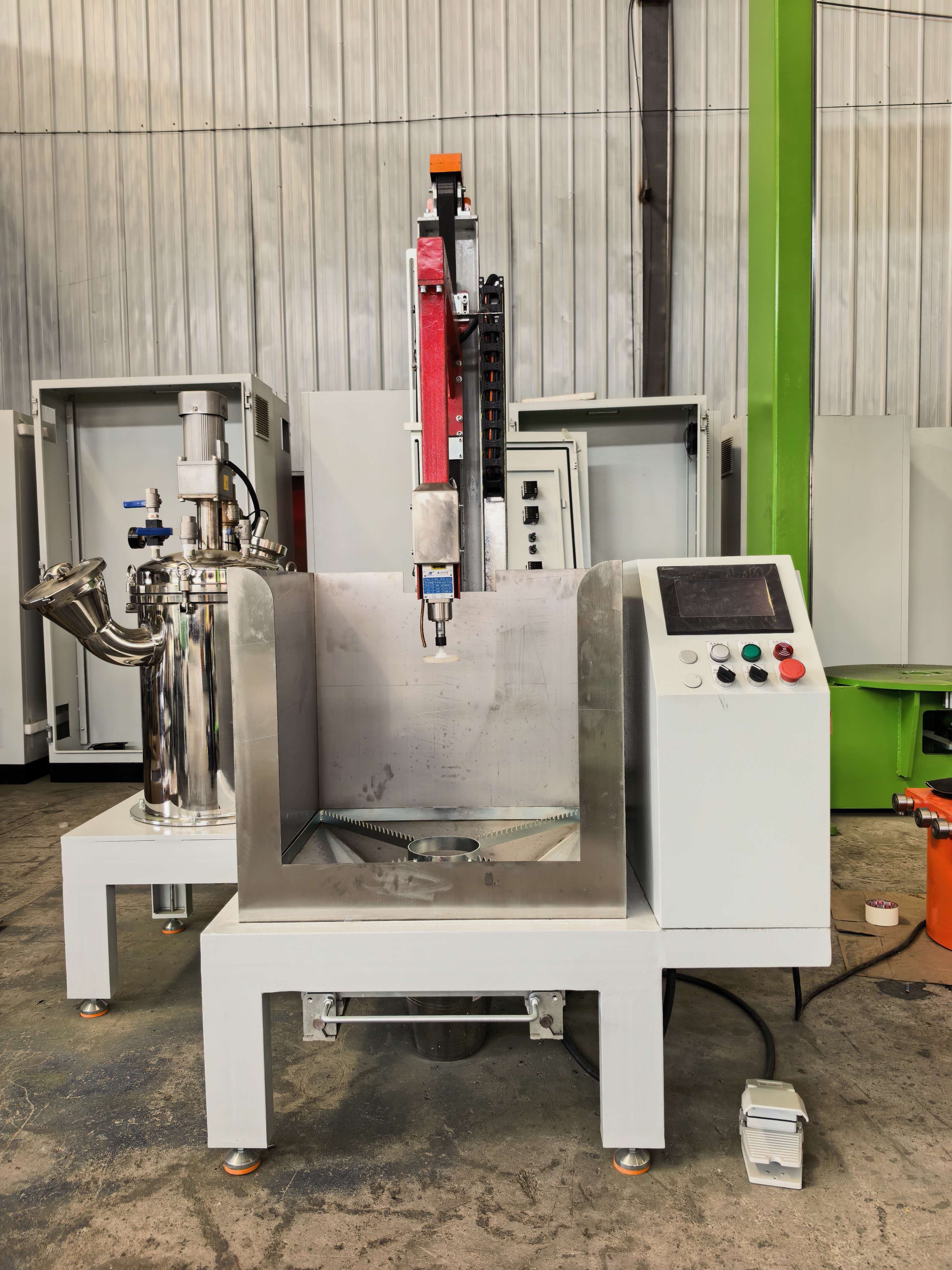
When a drawing calls out a ±2 µm flatness across a mating face, the usual shortcuts stop working. Thermal growth alone can eat that budget before a tool ever touches the part. Shops that survive this space don't chase precision with better machines as much as they control variables: coolant temperature held within half a degree, metrology loops run in the same room where the part will live, and operators who know when to stop cutting and let the workpiece settle. It's a discipline of subtraction—removing every uncontrolled influence rather than adding more correction.
One practical shift is treating tolerances as a stack of environmental errors, not just feature dimensions. A 300 mm aluminium housing can move 2–3 µm for every 1°C change. If inspection happens at 22°C but machining at 25°C, the “good” part might be scrap on the customer's CMM. So the process has to include soak time, tool offsets recalculated after spindle warm-up, and sometimes a deliberate overcut that anticipates elastic springback. It's less about hitting a number and more about making the number reproducible across different rooms, days, and hands.
Another layer is fixture design. At micron level, clamping force distorts the part more than the cutting force. A vacuum chuck or a three-point kinematic mount can reduce distortion to the point where the machined surface is flat only when unclamped—which is the only state that matters. The best shops prototype the fixture as carefully as the part, using wax or low-melt alloys to add damping without adding strain. Once you accept that the machine, the tool, the fixture, and the air around them are all part of the tolerance chain, the work stops being about heroic cuts and becomes quiet systems thinking.
When Rubber Meets Extreme Conditions
Rubber often gets typecast as a soft, everyday material, but push it into extreme environments and it reveals a startling range of personalities. In sub-zero Arctic cold, standard rubber turns brittle and snaps like glass, while specially formulated compounds stay pliable, their polymer chains slipping past each other even at minus sixty degrees. Conversely, in the blistering heat of desert machinery or automotive engine bays, ordinary rubber softens into a sticky mess; heat-resistant variants, cross-linked with sulfur or peroxide, refuse to melt, holding their shape and sealing ability when metal itself starts to glow.
Chemical exposure is another brutal test. Drop a generic rubber gasket into concentrated acid or a tank of aromatic solvents, and it swells, cracks, or dissolves within hours. Yet fluoroelastomers and perfluoroether rubbers shrug off these aggressive fluids, their carbon-fluorine bonds acting like molecular armor. Even radiation, the silent killer of many polymers, meets its match in specially cured EPDM or silicone rubbers that maintain elasticity inside nuclear facilities or spacecraft, where a single failed seal could spell catastrophe.
What makes rubber so adaptable is its hidden architecture: a tangled web of long-chain molecules that engineers can tune with fillers, plasticizers, and curing agents. Carbon black, for instance, not only lends the classic black color but also reinforces the matrix, boosting tensile strength and abrasion resistance for mining tires that grind over razor-sharp rocks. Silica fillers trade some of that toughness for lower rolling resistance, ideal for fuel-efficient passenger tires. By rethinking the recipe, rubber morphs from a fragile novelty into a material that thrives where metals corrode, plastics shatter, and ceramics crack—a quiet hero of extreme engineering.
Rethinking Automation for Irregular Shapes
Conventional automation leans heavily on the assumption that a part can be described by a handful of dimensions—length, width, height, maybe a tolerance band. Irregular shapes dismantle that assumption. A stamped bracket with a curled edge, a molded connector with asymmetric ribs, or a piece of trimmed foam doesn't sit still in a standard gripper's logic. The usual fix has been to add fixtures, custom jaws, or vision templates tuned to one exact orientation. That approach works until the product changes, and then the whole line gets rebuilt.
A more durable path treats irregularity as a normal condition rather than an edge case. Instead of forcing every shape into a rectangular coordinate frame, the control system has to reason about contact points, local curvature, and how the part might shift when lifted. This doesn't demand a perfect 3D model. It demands a planning strategy that can revise itself mid-motion. Soft grippers, suction arrays, and even simple parallel jaws benefit when the robot stops expecting symmetry and starts probing for what is actually there.
Keeping Heat in Check During High-Speed Cycles
At sustained speeds above 40 mph, disc brakes become the primary heat sink, and they can saturate quickly if you're late on the levers. Switching to larger rotors (180 mm or 203 mm) spreads thermal load across more surface area, while finned pads and aluminum-backed designs help pull heat away from the caliper pistons. For long alpine descents, consider a metallic pad compound—though noisier, it maintains bite at temperatures that would glaze organic pads.
Wheels aren't immune either. On rim-brake setups, carbon clinchers can exceed 200°C on repeated hard stops, risking resin breakdown and blowouts. If you're running tubeless, excessive rim heat also lowers tire pressure and can unseat the bead. Give rotors and rims a chance to shed heat between corners, and avoid constant brake dragging—pulse braking is more effective at scrubbing speed without building thermal runaway.
Scaling Custom Designs Without Losing Precision
Scaling a custom design system often feels like trying to photocopy a handwritten note—each copy gets a little blurrier unless you guard the source. The trick isn't to standardize everything into rigid templates, but to define the rules that make a design feel intentional at any size. Colors, spacing, typography, and component behavior need to live in a shared language that designers and developers both actually use, not just a dusty style guide.
Precision slips when decisions get remade in silos. Instead of allowing one-off tweaks for every new page or product, build reusable parts with clear boundaries: a button can have variants, but its core proportions stay locked. That way, a team can ship ten new landing pages in a week and still have the same visual rhythm. Regular design reviews that focus on exceptions—not just output—help catch small deviations before they become the new normal.
FAQ
Standard machines force your process into a fixed envelope. Bespoke builds start from your exact shrinkage rates, cavity pressures, and flash tolerances, then engineer the clamping, injection, and demolding around those numbers. You stop compensating for the machine and start controlling the part.
When your scrap rate creeps past 4% despite stable material and tooling, or when operators keep adding manual shims to hold a tolerance, the machine itself is the limiter. Another sign is cycle time that cannot be reduced without sacrificing repeatability. That is the point where a custom frame, screw, and platen design pays for itself within a year.
Thermal expansion of the mold and platen usually gets more attention than the viscosity shift during injection. Yet inconsistent fill speed changes the molecular orientation and final dimensions more than a ten-degree barrel swing. Also, demolding force spikes from undercuts or vacuum can distort a part after it has already met spec inside the cavity.
Yes, but only if the control architecture is built for rapid recipe changes rather than just speed. A well-designed custom machine uses servo-driven injection units and quick-change mold interfaces, so you can run fifty prototype shots in the morning and switch to a production mold after lunch without touching a single mechanical stop.
Closed-loop cavity pressure sensing is non-negotiable. Beyond that, a stiff C-frame or four-post design with minimal platen deflection, a screw geometry matched to your compound's shear sensitivity, and vacuum-assisted venting all contribute more than a faster injection rate. The machine should be able to hold a fill pressure plateau within a fraction of a bar for several seconds.
By removing the variability of manual placement and timing. Custom end-of-arm tooling, integrated vision checks, and part-specific ejection profiles ensure that each cavity sees the same preform weight and orientation. The machine also logs per-shot data, so a drift in one parameter does not turn into a full batch of rejects before anyone notices.
It is the difference between the first good part and the thousandth good part. Multi-zone mold heating with independent PID loops keeps the cavity surface within a narrow band, while cooled platens prevent heat soak from changing the frame geometry. Without that, dimensions can wander by several tenths of a millimeter between a cold start and hour six.
Build in modular clamping and injection units that can be re-rated for higher tonnage or different shot sizes without replacing the entire machine. Also specify a control platform that accepts new sensors and software updates, so you can add cavity pressure monitoring or switch to a different compound family later. A custom machine should be a platform, not a single-purpose fixture.
Conclusion
Standard rubber processing equipment rarely survives contact with real production demands. Once tolerances drop below a few microns, off-the-shelf frames flex, thermal expansion creeps in, and repeatability vanishes. Bespoke machinery starts from the opposite end: the specific part geometry, elastomer behavior, and cycle time target define every structural and control decision. That means thicker stress-relieved platens, linear guides ground in place, and closed-loop feedback that corrects for drift before it becomes scrap. It also means designing for material reality: high-temperature silicones, abrasive compounds, or oil-swollen seals do not all behave like generic rubber. Custom barrels, screw geometries, and nozzle materials keep degradation in check when chemistry turns hostile.
Automation for odd-shaped parts is another place generic systems stall. Standard pick-and-place assumes symmetry and stable dimensions; custom end-of-arm tooling with compliant grips and vision-guided placement handles flash, flex, and slight lot-to-lot variation. Heat management often decides whether a high-speed cycle stays stable. Bespoke machines integrate targeted cooling channels in the tooling, not just the barrel, and use thermal imaging feedback to adjust dwell in real time. Scaling up a proven custom design does not mean copying drawings to a bigger frame. It means re-running modal analysis, recalibrating servo tuning, and often re-machining critical interfaces so that a 20 percent larger mold still fills and cures with the same micron-level consistency. That iterative, engineering-first approach is why bespoke systems win where precision cannot be compromised.
Contact Us
Contact Person: Lareina
Email: [email protected]
Tel/WhatsApp: +86 17561696737
Website: https://www.auguauto.com/