

Bath Bench Makers You Can Trust for Sturdy, Slip-Resistant Seating
2026-08-16
When a bath bench wobbles, the risk isn’t just discomfort—it’s a fall waiting to happen. That’s why so many caregivers and seniors skip the guesswork and turn to bath bench makers known for solid construction and slip-resistant seating. Suncare has earned that trust by obsessing over the details you can’t always see: reinforced joints, textured seats that grip even when wet, and weight ratings that hold up in real bathrooms. If you’ve ever wondered why some benches feel like an afterthought while others feel like a permanent part of your routine, you’re about to find out.
The Real Test: Does It Stay Put When You Reach for the Shampoo?
Most products behave well during the first minute. You press them into place, step back, and everything looks promising. The moment that actually matters arrives later, when you're halfway through a shower and blindly reaching for a bottle on the far edge of the ledge. Your weight shifts, one foot leaves the floor, and suddenly every bit of grip is tested at a slight angle. If the item needs readjusting after that, it's not really doing its job.
That single reach reveals more than any spec sheet. A well-designed surface or holder should feel almost boring—no slide, no tilt, no subtle creep toward the drain. You shouldn't have to think about whether it will hold because it simply does, even with wet hands and a full bottle in your grip. If you catch yourself bracing or compensating, that hesitation is your answer.
The shampoo test sounds simple, but it exposes weak points you'd otherwise miss. Lateral pressure, uneven weight, and slick conditions all happen at once. If something stays put through that, it'll likely handle daily use without drama. If not, better to find out before someone takes a spill.
Why Some Bath Benches Feel Rock-Solid and Others Sway
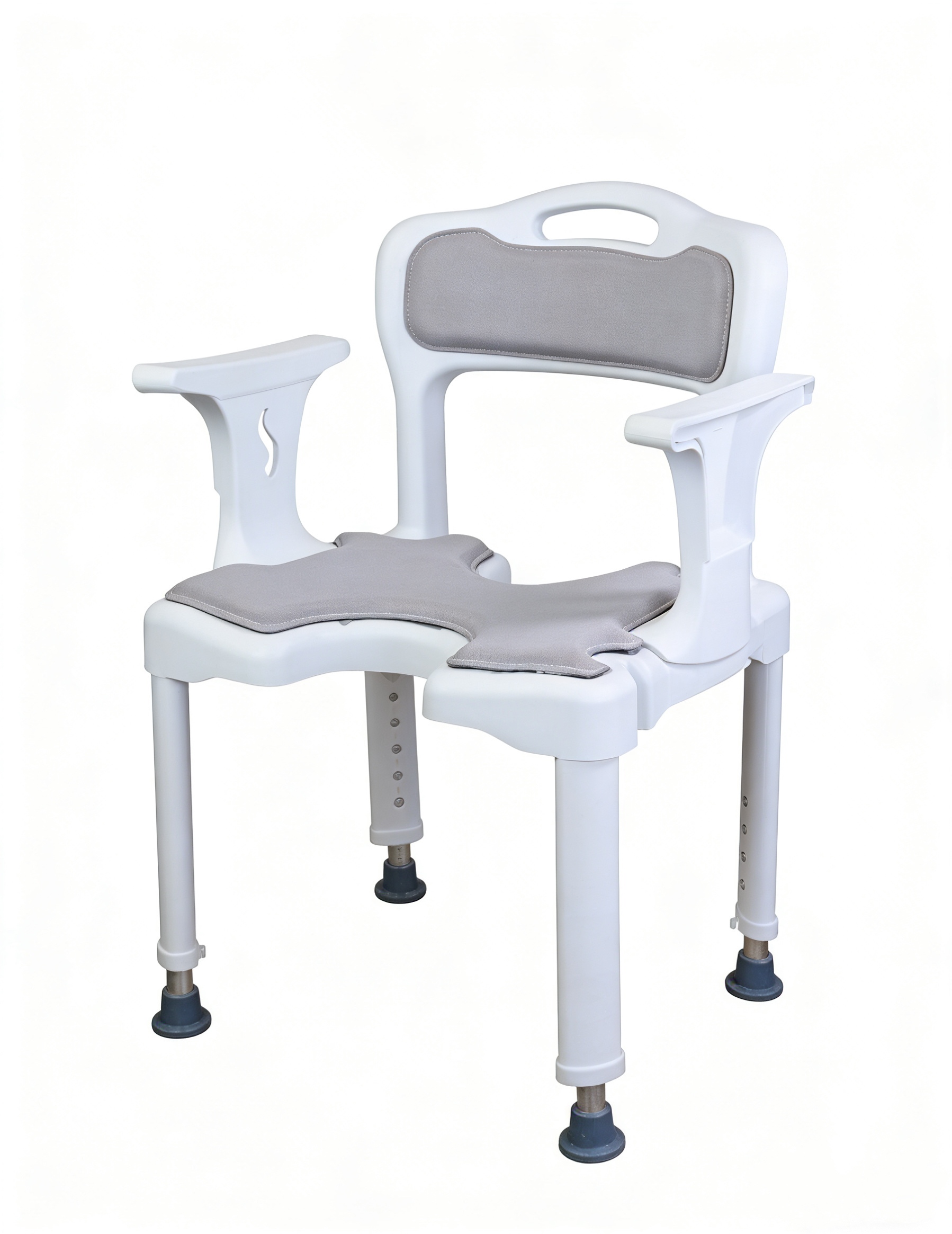
The difference usually comes down to frame geometry and how the legs meet the seat. Cheaper benches often use thin, hollow aluminum tubing with simple welded joints, and when you shift your weight, those joints flex just enough to create a subtle rocking motion. Higher-end models typically use thicker, extruded aluminum or reinforced steel with cross-bracing between the legs, which limits lateral movement before it starts.
Another overlooked factor is the foot design. Many swaying benches have small, hard plastic tips that lose grip on wet tile or uneven tub floors. Rock-solid versions tend to use wide, suction-style rubber feet with multiple contact points, plus adjustable leveling mechanisms on at least two legs. If one leg sits slightly higher than the others, even a sturdy frame will wobble — so a bench that lets you fine-tune each leg independently makes a big difference on older or sloped bathroom floors.
Finally, assembly tolerances play a hidden role. Benches that rely on simple push-button pins or thumb screws often develop play over time as those connections wear. Models with threaded, metal-on-metal locking collars or bolted crossbars maintain their rigidity far longer. If you can push down on one corner and feel the opposite corner lift even a millimeter, that bench will sway under body weight — no matter how heavy it feels in the box.
Textured Seats and Feet That Grip Even When Soap Gets Involved
The seat surface doesn't settle for a few scattered bumps that turn slippery the moment shampoo hits the water. Instead, it's covered in a fine, irregular texture that works like the tread on a trail shoe—each groove and ridge gives water somewhere to escape while your skin finds something to hold onto. Even after a generous lather, you can shift your weight without that sudden slide that makes you grab for the tub edge.
Underneath, the feet take a different approach. Rather than relying on suction cups that give up when soap film coats the tub floor, they use a softer, high-friction compound with a slightly concave base. As you sit, the weight presses them outward just enough to create a firm grip on wet enamel or acrylic. Small channels cut into the edges let soapy water flow through instead of pooling underneath, so the stool stays planted instead of hydroplaning across the bottom.
Together, these two surfaces work in quiet tandem—your body stays put on top, the base stays put below, and you don't have to think about either one. That's the whole point: in a room where everything is wet by design, stability shouldn't be the thing you're constantly testing with your toes.
The Role of Frame Thickness and Joint Design in Daily Use
Frame thickness does more than define the silhouette. In day-to-day handling, heavier-gauge material resists the slow twist that comes from taking glasses off with one hand or resting them unevenly on a table. But thicker doesn't always mean better if the weight isn't balanced; a dense front can slide down your nose or leave marks behind your ears. The best frames use thickness where stress concentrates, like the end pieces and bridge, without adding bulk across the entire front.
Joint design is the quieter half of the equation. Hinges take repeated abuse every time you open or close the temples, and a poorly matched screw or barrel can loosen after a few weeks. Spring hinges reduce sudden strain by letting the temple flex outward a few degrees, which protects the joint and keeps the frame from pinching. Welded or reinforced joints in metal frames handle daily pocket-and-bag cycles better than simple riveted ones, though they still need occasional tightening.
What you notice in daily use is the combination. A thick front paired with fragile joints still loosens at the corners, while thin, flexible temples connected to sturdy barrels can outlast bulkier designs. After a month of constant wear, the difference shows up in how often you reach for a screwdriver or push the frame back up your nose.
No-Rust Hardware That Survives Constant Humidity
Constant humidity eats through standard fasteners and brackets within months. The real fix isn't a thicker coat of paint—it's choosing alloys that form their own oxide armor. 316 stainless steel holds up because molybdenum resists chloride attack, while titanium and certain bronze blends shrug off moisture entirely. Even the threading matters: coarse, rolled threads shed water instead of trapping it in crevices where rust starts.
Beyond the metal itself, surface treatment does the heavy lifting. A hot-dip galvanized zinc layer sacrifices itself slowly, keeping the steel underneath intact for decades. Ceramic and PVD coatings add a hard, non-porous skin that water simply can't grip. For moving parts, self-lubricating polymer bushings eliminate the metal-on-metal wear that exposes fresh, rust-prone surfaces.
What a Well-Made Bath Bench Feels Like Under Your Hands
Run your palm across the seat of a properly built bath bench and you'll notice the subtle give of a material that doesn't feel like cheap plastic. The surface might be lightly textured—never rough enough to catch on wet skin, but with enough grip that your hand doesn't skate. There's a reassuring heft when you press down; nothing flexes or squeaks. The edges are rounded rather than sharp, so trailing your fingers along the rim feels like following a smooth, continuous curve instead of a seam.
Pick it up by the legs and you'll feel the difference in the joints. A well-fitted connection sits flush under your thumb, with no wobble or exposed screw heads. If the legs are adjustable, the locking tabs click into place with a firm snap that you can feel through the handle. The metal or reinforced composite stays cool to the touch, but it doesn't have that hollow, brittle vibration that cheaper alternatives give off when you tap it.
Set it down in the tub and lean into it with both hands. The bench should stay put without grabbing at the tub floor, and the feet—often rubber or silicone—offer a slight resistance that tells you they're doing their job. When you sit, the weight transfers evenly, and there's no sharp pressure point under your thighs. It's the kind of quiet solidity that makes you forget the bench is even there.
FAQ
Focus on rubberized feet, textured seat surface, and drainage holes. Anodized aluminum frames resist rust while still staying light. Check that the feet are wide and have grip even on wet tile.
Teak is a classic for natural slip resistance and water durability, but high-grade aluminum with a powder-coated finish is also excellent for rust-free longevity. Plastic benches are budget-friendly but should have UV inhibitors so they don't become brittle.
Most well-made models handle between 250 and 500 pounds. Look for benches that state a tested weight capacity rather than a guessed figure. Bariatric options exist that go up to 700 pounds or more with reinforced cross-bracing.
Drive Medical, Medline, Moen, and Carex are widely used in home care settings. Smaller companies like Teakworks4u and HealthCraft also get strong reviews for durable construction and thoughtful design details.
Rinse it after each use and let it air dry away from standing water. For plastic or metal, a weekly wipe with diluted white vinegar or a mild bathroom cleaner works well. Teak needs occasional light sanding and teak oil to maintain its grip and color.
Yes, look for compact corner models or fold-down wall-mounted benches if floor space is tight. Measure your shower floor before buying, and make sure the bench legs can sit flat without overlapping the drain or threshold.
The whole design matters. Wide-set legs with rubber suction-style feet reduce shifting. A seat with raised front edge or slight contour helps you stay centered. Some benches also have armrests or backrests that give extra stability when sitting or standing.
Conclusion
The real test of a bath bench isn't how it looks in the showroom—it's whether it stays put when you lean sideways to grab the shampoo with wet, soapy hands. Trustworthy makers design for that exact moment. They use wide, splayed legs with thick rubber feet that grip tile even through a slick of conditioner. The seat itself has a textured, slotted surface so water drains instead of pooling, and your skin doesn't slide. You'll notice the difference immediately: a well-built bench feels like it's bolted to the floor, not perched on it. That stability comes from frame thickness and joint design—reinforced corners, cross-bracing, and welded or double-bolted connections that don't flex or creak under shifting weight.
Humidity is relentless in a bathroom, so the best benches use anodized aluminum, stainless steel hardware, and rust-proof coatings that won't pit or leave orange stains. Run your hand along the edges—they should be rounded and smooth, with no sharp seams or rough plastic burrs. When you press down on the armrest or give the frame a gentle shake, there's no wobble or metallic rattle. Height adjustments lock firmly into place without slipping mid-shower. That's what separates a bench you trust from one you merely tolerate: every detail, from the grip of the feet to the feel of the seat under your hands, is built for daily wet conditions and real, unsteady moments.
Contact Us
Contact Person: Frank Chan
Email: [email protected]
Tel/WhatsApp: 0086-13924529088
Website: https://www.suncare-medical.com